Growing up, I thought lobster was strictly a special occasion food that we’d only get at fancy restaurants. My mom would save it for milestone anniversaries or big promotions at work. When I finally learned to cook it myself, I discovered that turning it into a creamy bisque pasta wasn’t just doable – it was actually pretty straightforward.
The trick with lobster bisque pasta is that you don’t need to be a trained chef to make it taste good. Sure, there are some steps involved, but once you break it down, it’s really just about letting those seafood flavors slowly come together in a rich, creamy sauce. Trust me, if I can master this dish in my home kitchen, you absolutely can too.
Why You’ll Love This Lobster Bisque Pasta
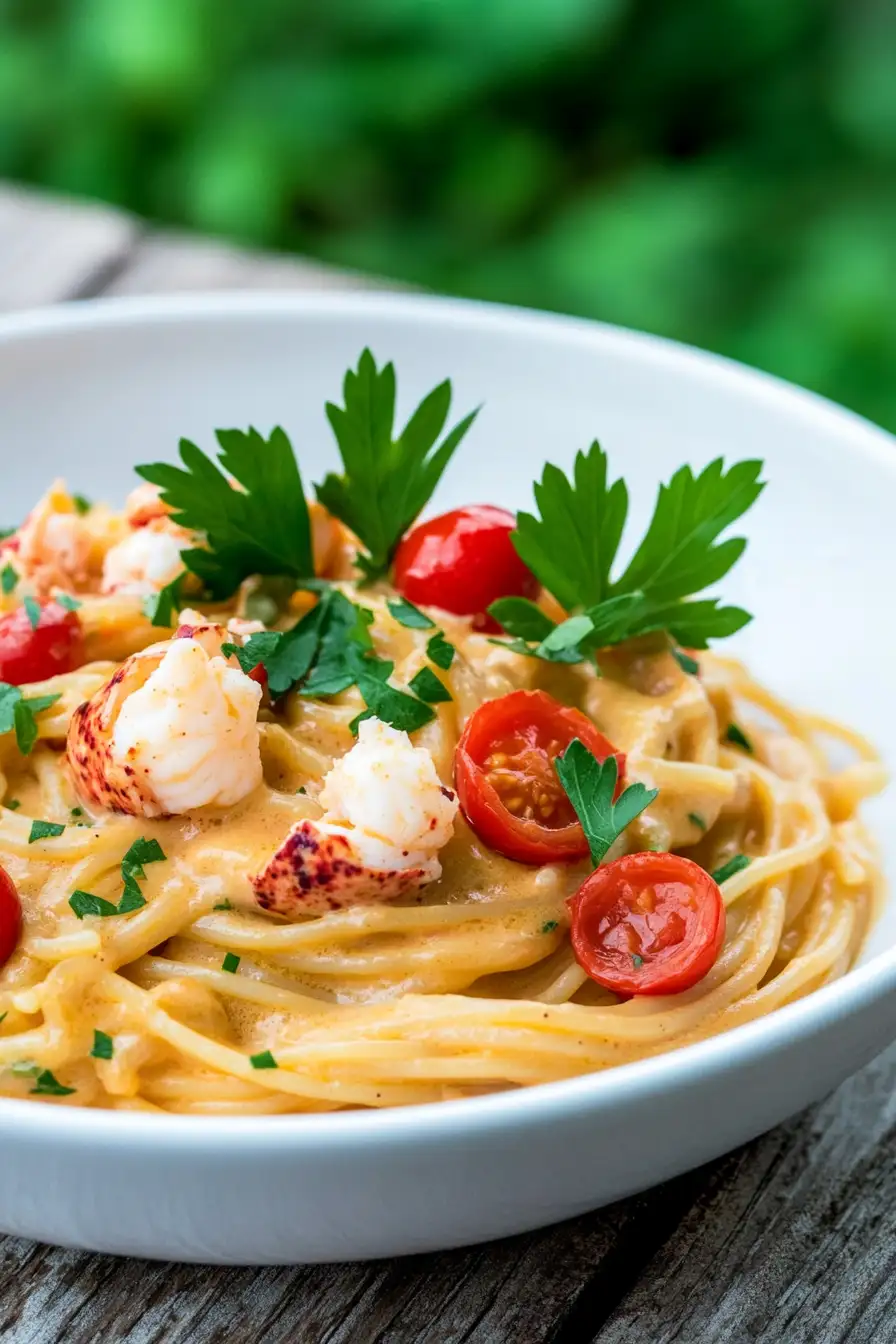
- Restaurant-quality at home – This pasta combines rich lobster bisque with fresh lobster meat to create a dish that tastes like it’s from a fancy Italian restaurant, but you can make it right in your kitchen.
- Quick preparation – Ready in under an hour, this impressive dish comes together faster than you might think, making it perfect for both weeknight dinners and special occasions.
- Simple cooking method – Despite its fancy appearance, the recipe uses straightforward techniques that any home cook can handle – just cook pasta and combine with a few fresh ingredients.
- Rich, creamy sauce – The lobster bisque creates an instant luxurious sauce that coats every strand of pasta perfectly, while fresh tomatoes and herbs add bright flavors and beautiful color.
What Kind of Lobster Bisque Should I Use?
You can find lobster bisque in most grocery stores either in the soup aisle or in the refrigerated section near the seafood counter. While homemade bisque is amazing, store-bought versions like Bar Harbor, Trader Joe’s, or Legal Sea Foods work great in this pasta dish. If you’re shopping for bisque, look for ones that list real lobster or lobster stock in the first few ingredients – this ensures you’re getting authentic flavor rather than just artificial seasonings. Just keep in mind that some prepared bisques can be quite salty, so you might want to taste before adding any extra salt to your pasta dish.
Options for Substitutions
Let’s talk about ways to switch things up in this pasta dish if you need to:
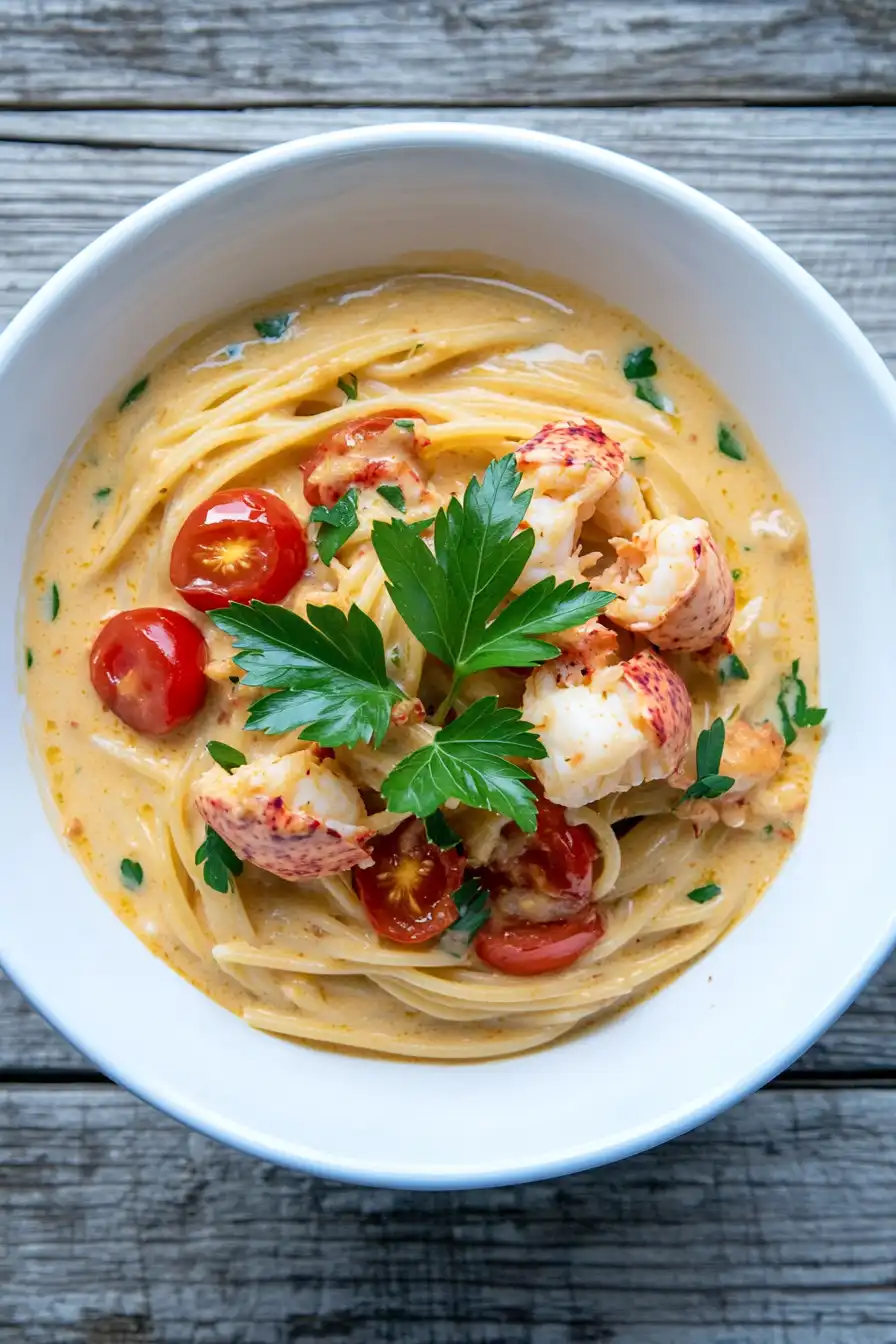
- Lobster bisque: If you can’t find lobster bisque, you can use crab bisque or seafood bisque instead. In a pinch, cream of shrimp soup mixed with a splash of sherry works too, though the flavor won’t be quite as rich.
- Lobster meat: While lobster gives this dish its signature taste, you can use lump crab meat or large shrimp if needed. Just cook the shrimp until just pink to keep them tender.
- Cherry tomatoes: Regular tomatoes work fine – just dice them into bite-sized pieces. You can also use drained canned diced tomatoes if fresh aren’t available.
- Spaghetti/linguine: Any long pasta works here – try fettuccine, bucatini, or even angel hair (just adjust cooking time). Gluten-free pasta is fine too.
- Fresh parsley: You can use dried parsley (about 1 tablespoon) or fresh basil as alternatives. If using dried herbs, add them earlier in the cooking process.
- Lemon juice: Bottled lemon juice works in a pinch, or try a splash of white wine vinegar for that acidic kick.
- Parmesan cheese: Pre-grated parmesan will work, though fresh is better. Romano or Pecorino make good substitutes too.
Watch Out for These Mistakes While Cooking
The biggest mistake when making lobster bisque pasta is overcooking the lobster meat, which can quickly turn it tough and rubbery – instead, add it towards the end of cooking just to warm it through since it’s usually pre-cooked. Another common error is boiling the bisque too aggressively, causing it to separate or become grainy – keep it at a gentle simmer and stir occasionally to maintain its smooth, creamy texture. To avoid gummy pasta, cook it just until al dente in well-salted water, and don’t rinse it after draining – the starch helps the sauce cling better to the noodles. For the best flavor development, make sure to properly brown the onions and garlic before adding the bisque, and don’t skip the final squeeze of lemon juice which adds brightness and helps cut through the richness of the dish.
What to Serve With Lobster Bisque Pasta?
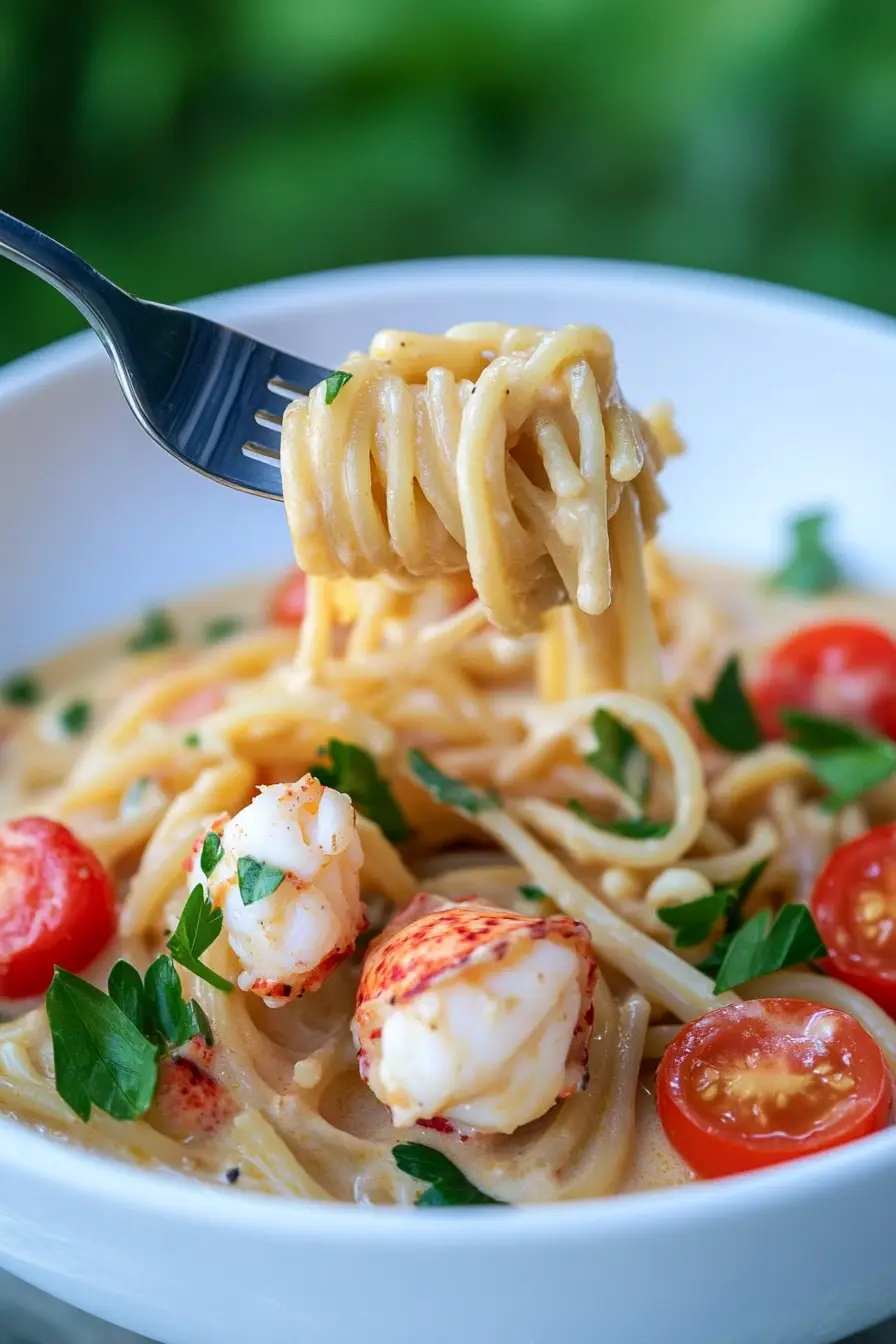
This rich and creamy pasta dish calls for simple, fresh sides that won’t compete with its luxurious flavors. A light mixed green salad dressed with lemon vinaigrette makes the perfect partner, cutting through the richness of the bisque sauce. For a warm side, try some roasted asparagus or steamed broccolini with just a touch of garlic and olive oil – these green veggies add nice color to the plate and complement the seafood beautifully. If you’re in the mood for bread (and who isn’t?), a crusty baguette or garlic bread works great for soaking up any extra sauce, though you might want to skip it if you’re watching your carbs since this is already a pasta dish.
Storage Instructions
Keep: Place your leftover lobster bisque pasta in an airtight container and pop it in the fridge for up to 3 days. The pasta might absorb some of the sauce overnight, but that’s totally normal – it’ll still taste great! Just keep in mind that seafood dishes are best enjoyed sooner rather than later.
Make Ahead: If you want to prep this dish in advance, you can make the sauce separately and cook the pasta fresh when you’re ready to serve. The bisque sauce keeps well in the fridge for up to 2 days, and cooking fresh pasta takes just minutes when you’re ready to combine everything.
Warm Up: To bring your leftover pasta back to life, warm it gently in a pan over medium-low heat, adding a splash of water or cream if needed to loosen up the sauce. Stir occasionally to heat it evenly, and try not to overheat – you want to keep that lovely lobster flavor just right.
| Preparation Time | 10-15 minutes |
| Cooking Time | 25-35 minutes |
| Total Time | 35-50 minutes |
| Level of Difficulty | Medium |
Estimated Nutrition
Estimated nutrition for the whole recipe (without optional ingredients):
- Calories: 1000-1200
- Protein: 60-70 g
- Fat: 50-60 g
- Carbohydrates: 80-90 g
Ingredients
For the pasta:
- 8 oz spaghetti or linguine
For the sauce:
- 8 oz chopped lobster meat (use pre-cooked for convenience)
- 1 tbsp olive oil
- 12 oz cherry or Campari tomatoes (halved for faster cooking)
- 1/2 lemon, juiced (freshly squeezed for brighter flavor)
- salt
- red pepper flakes
- 1 tbsp butter
- 3 garlic cloves (finely minced for best flavor)
- pepper
- 1/2 large yellow onion
- 16 to 32 oz lobster bisque (I use a high-quality brand like Legal Sea Foods)
For the garnish:
- freshly grated Parmesan cheese
- 1 large handful fresh parsley (finely chopped)
Step 1: Cook the Pasta
Begin by bringing a large pot of water to a boil.
Once the water reaches a rolling boil, add a few pinches of kosher salt, followed by the pasta.
Cook the pasta according to the package instructions for optimal texture.
Once cooked, drain the pasta in a strainer and set aside.
Step 2: Sauté the Vegetables
In a large deep sauté pan, warm over medium-high heat.
Add a combination of butter and olive oil to the pan, allowing the butter to melt completely.
Introduce the diced onions and either halved or quartered tomatoes into the pan.
Cook the mixture while stirring occasionally for 5-8 minutes, or until the onions and tomatoes have softened nicely.
Step 3: Add Garlic and Lobster Bisque
Add the minced garlic to the sauté pan and continue cooking for an additional 2 minutes, or until the garlic becomes fragrant.
Pour in the lobster bisque, bringing the mixture to a gentle simmer.
Add the chopped lobster meat and stir well to combine all ingredients harmoniously.
Step 4: Season and Enhance the Sauce
Continue cooking until the bisque is hot and has thickened slightly, adjusting the seasoning with salt, pepper, and red pepper flakes to taste.
To enhance and brighten the flavor, gradually add lemon juice a little at a time, taking care not to overpower the sauce.
Step 5: Combine and Serve the Pasta
With the sauce perfectly seasoned and thickened, toss the cooked pasta into the pan with the lobster bisque mixture.
Stir everything together to ensure the pasta is well-coated with the sauce.
Serve the pasta hot, garnished with fresh chopped parsley and grated parmesan cheese, if desired, for added flavor and presentation.

