I was well into my thirties before I tried cooking fish at home. Growing up, seafood meant fish sticks or the occasional tuna sandwich. The idea of cooking a whole fish fillet seemed way too complicated.
Turns out, I was making it harder than it needed to be. Mediterranean mahi mahi is actually one of the easiest fish dishes you can make. The Mediterranean flavors do all the heavy lifting, and the fish itself is pretty forgiving – even if you’re not totally sure what you’re doing in the kitchen.
Why You’ll Love This Mediterranean Mahi Mahi
- Quick weeknight dinner – Ready in just 30 minutes, this fish dish is perfect for those busy evenings when you want something special but don’t have hours to spend in the kitchen.
- Healthy and nutritious – Packed with lean protein from the mahi mahi and heart-healthy fats from olive oil and pine nuts, this Mediterranean-style dish fits perfectly into a healthy eating plan.
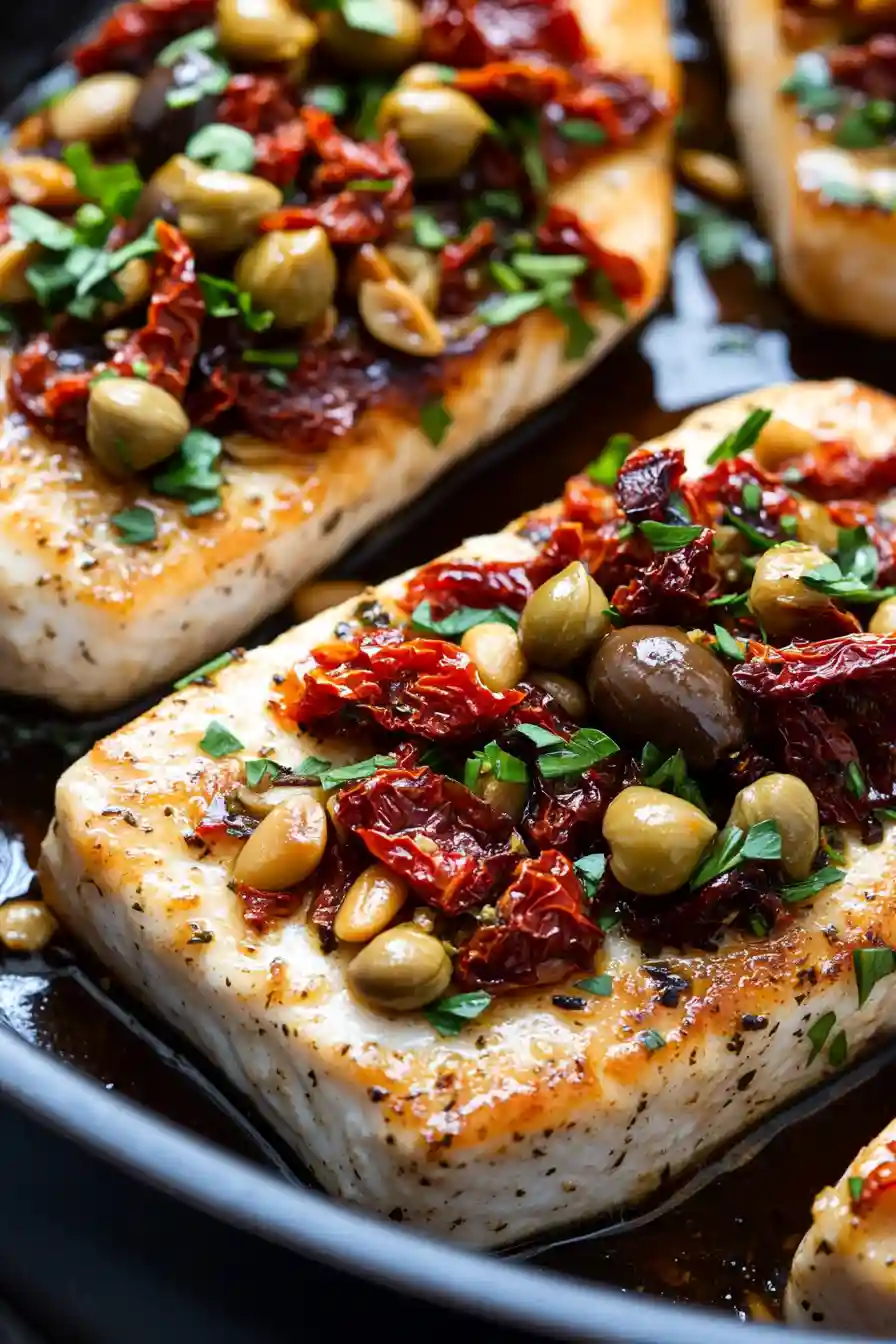
- Restaurant-quality taste – The combination of kalamata olives, sun-dried tomatoes, and capers creates a sauce that tastes like something you’d get at your favorite seafood restaurant.
- Low-carb friendly – This naturally low-carb recipe is perfect for anyone watching their carbohydrate intake while still wanting big, bold flavors.
What Kind of Mahi Mahi Should I Use?
Fresh mahi mahi is your best bet for this recipe, but don’t worry if you can only find frozen – just make sure it’s properly thawed in the refrigerator overnight. Look for fillets that are firm and pinkish-white in color, without any brown spots or strong fishy smell. For the best results, choose pieces that are similar in thickness (about 1 to 1½ inches) so they’ll cook evenly. If you’re shopping at the fish counter, ask for center-cut portions since they tend to be more uniform in size and cook more consistently than tail pieces.
Options for Substitutions
This Mediterranean fish dish is pretty flexible with substitutions. Here’s what you can swap if needed:
- Mahi Mahi: If you can’t find Mahi Mahi, try using other firm white fish like halibut, cod, or sea bass. Just watch the cooking time as thinner fillets will cook faster.
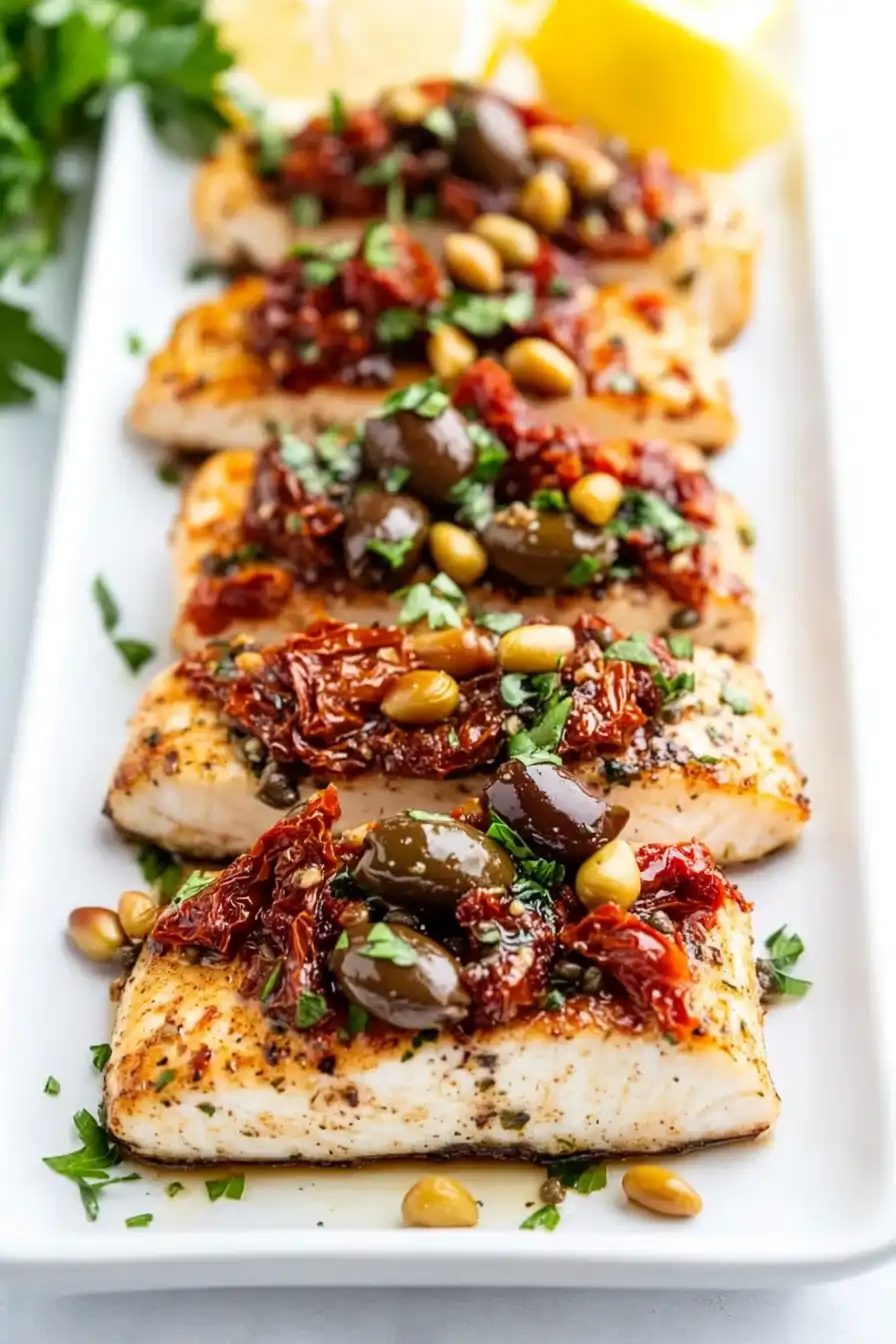
- Kalamata olives: Any black or purple olives will work here. Green olives can work too, though they’ll give a slightly different flavor profile.
- Sun-dried tomatoes: Regular roasted tomatoes can work in a pinch. If using oil-packed tomatoes but don’t have the oil, just use olive oil instead.
- Pine nuts: These can be pricey! Feel free to swap with chopped almonds, walnuts, or even pistachios. Just make sure to toast them first.
- Fresh parsley: Fresh basil or a mix of fresh herbs works great too. If using dried parsley, cut the amount to 2 teaspoons since dried herbs are more concentrated.
- Capers: If you’re not a fan or can’t find them, try finely chopped green olives or just skip them – the dish will still taste great!
Watch Out for These Mistakes While Cooking
The biggest mistake when cooking Mahi Mahi is overcooking the fish, which can quickly turn this tender fillet tough and dry – aim for an internal temperature of 137°F, as it will continue cooking slightly after being removed from the heat. Getting your pan temperature right is crucial: if it’s not hot enough, you won’t achieve that perfect golden crust, but if it’s too hot, the garlic and pine nuts can burn before the fish is done (medium-high heat is your sweet spot). Another common error is not patting the fish dry before cooking, which prevents proper searing and can make the fish steam instead – use paper towels to remove excess moisture, and don’t forget to season both sides. For the best Mediterranean flavors, avoid rushing the process of combining the sun-dried tomatoes, olives, and capers; letting these ingredients warm together for a few minutes allows their flavors to meld beautifully with the garlic and lemon.
What to Serve With Mediterranean Mahi Mahi?
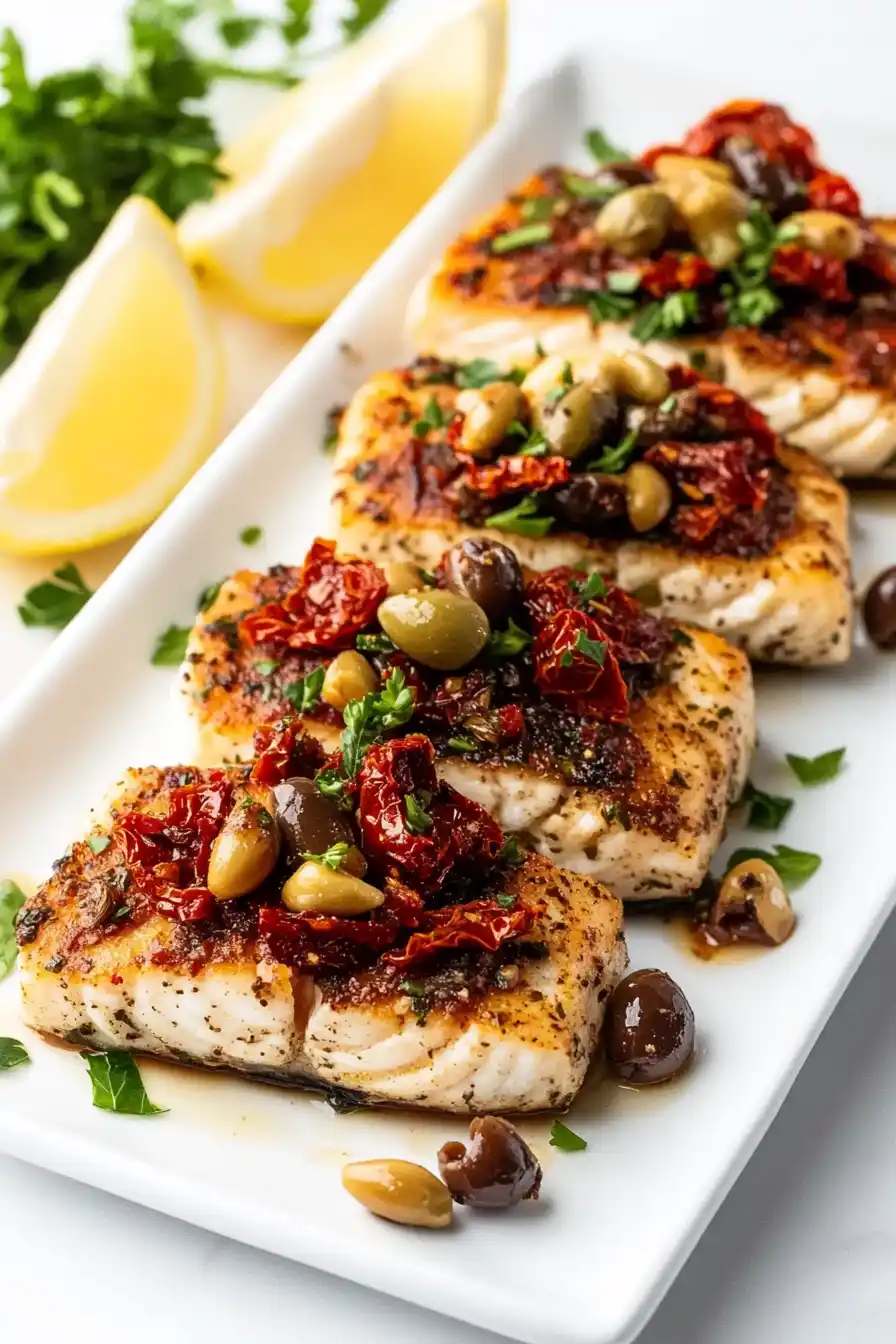
This Mediterranean-style fish calls for sides that complement its sunny, briny flavors without overshadowing the delicate fish. A simple bed of fluffy couscous or orzo pasta makes an excellent base to soak up all the tasty olive and caper sauce. For vegetables, try roasted asparagus drizzled with lemon, or a quick sauté of zucchini and yellow squash with herbs. If you want to keep things light and fresh, a Greek-style salad with cucumbers, tomatoes, and feta cheese fits right in with the Mediterranean theme. You can also serve some warm pita bread on the side to scoop up any extra sauce.
Storage Instructions
Keep Fresh: Once cooked, place your Mediterranean Mahi Mahi in an airtight container and pop it in the fridge. It’ll stay good for up to 3 days. The flavors actually get even better as they mingle together overnight, making this a great make-ahead dish for busy weekdays.
Prepare Ahead: You can prep all the toppings (olives, sun-dried tomatoes, capers, and garlic) up to 2 days in advance and store them in the fridge. Just keep the pine nuts separate until serving to maintain their crunch. When you’re ready to cook, just grab your prepped ingredients and fresh fish!
Serve Later: To enjoy your leftover Mahi Mahi, gently warm it in a covered skillet over low heat for about 3-4 minutes. Try not to microwave it, as fish can get a bit rubbery. A squeeze of fresh lemon juice right before serving brings back all those bright Mediterranean flavors!
| Preparation Time | 10-15 minutes |
| Cooking Time | 15-20 minutes |
| Total Time | 25-35 minutes |
| Level of Difficulty | Medium |
Estimated Nutrition
Estimated nutrition for the whole recipe (without optional ingredients):
- Calories: 2200-2400
- Protein: 180-190 g
- Fat: 150-160 g
- Carbohydrates: 30-40 g
Ingredients
For the mahi mahi:
- 1/4 tsp black pepper
- 2 lb mahi mahi
- 1/2 tsp garlic salt
- 1/2 tsp smoked paprika
For the sauce base:
- 1/4 cup toasted pine nuts
- 1 lemon (zested and juiced)
- 1/2 cup Kalamata olives (quartered)
- 2 tbsp oil from sun-dried tomatoes (divided, use for sautéing and finishing)
- 1.5 tbsp capers
- 1/2 cup sun-dried tomatoes (diced, I use Bella Sun Luci brand for best flavor)
- 1 tbsp butter (I prefer Kerrygold unsalted butter for its rich taste)
- 4 garlic cloves (minced for optimal flavor distribution)
- 2 tbsp fresh parsley (chopped)
Optional:
- 1 pinch red pepper flakes (optional, for a subtle kick)
Step 1: Prepare the Mahi Mahi
Begin by cutting the Mahi Mahi into 8 pieces.
Use paper towels to pat both sides of the fish dry.
Season all pieces with smoked paprika, salt, and pepper to enhance the flavor of the fish.
Step 2: Sear the Mahi Mahi
Heat a large nonstick skillet over medium heat.
Add in the butter and half of the sun-dried tomato oil.
Once the butter has melted and is sizzling, place the Mahi Mahi pieces skin side up in the skillet.
Sear the fish for a few minutes until a golden crust forms, then gently flip it over to cook the other side.
Cook until the internal temperature reaches between 125°F and 145°F, checked with an instant-read thermometer.
Once done, remove the fish from the skillet and set it aside.
Step 3: Make the Sauce Base
Using the same skillet, add the garlic and sauté for about 15 seconds, ensuring the garlic does not brown to avoid bitterness.
Stir in the remaining sun-dried tomato oil, and add the lemon juice and zest to form a flavorful base.
Stir everything together until well combined.
Step 4: Add Aromatics and Vegetables
To the skillet, add the sun-dried tomatoes, olives, capers, and parsley.
Cook these ingredients together for another 2 minutes, allowing the flavors to meld.
At this point, also add the toasted pine nuts and give everything a toss to ensure it’s all evenly mixed.
Step 5: Combine and Serve
Return the Mahi Mahi pieces to the skillet, spooning the aromatic mixture over the tops of the fish.
Allow the fish to heat through in the skillet with the toppings.
Once thoroughly heated, remove from the skillet and serve immediately while warm.
Enjoy this flavorful and succulent dish!