Finding the perfect fall side dish that’s both healthy and crowd-pleasing can feel like an uphill battle. Between trying to get enough vegetables on the table and making sure everyone actually wants to eat them, it’s easy to fall back on the same old steamed broccoli or basic salad night after night.
That’s where this roasted butternut squash with sage comes to the rescue. It’s naturally sweet, requires minimal prep work, and the crispy sage leaves add just the right amount of earthy flavor to make it feel special enough for company but simple enough for a Tuesday night dinner.
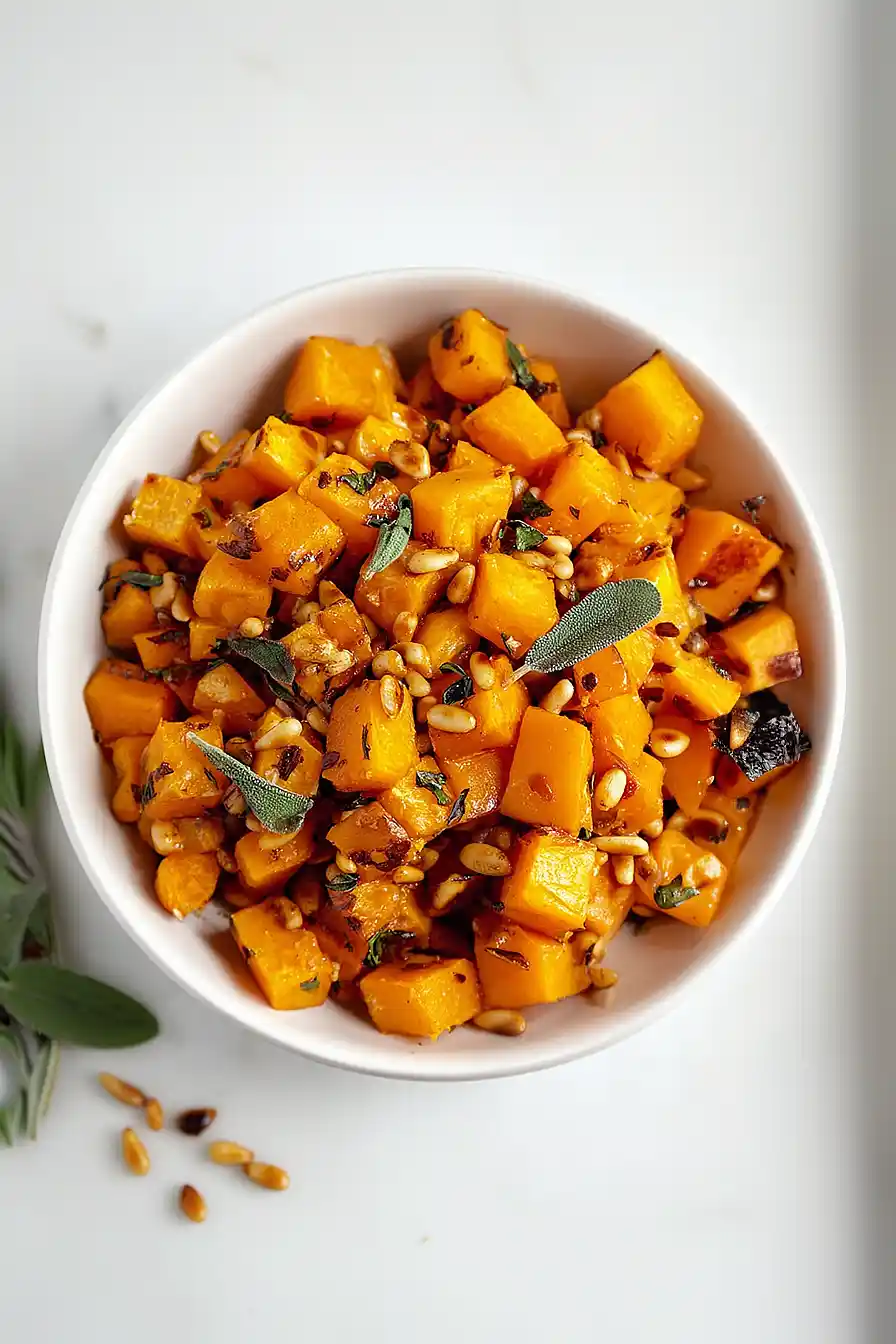
Why You’ll Love This Roasted Butternut Squash
- Simple, wholesome ingredients – This recipe uses just a handful of fresh ingredients that you can easily find at any grocery store, making it accessible and budget-friendly.
- Naturally healthy side dish – Packed with vitamins and fiber, this roasted butternut squash is a nutritious addition to any meal and naturally gluten-free and vegetarian.
- Easy preparation – Just cube the squash, toss with seasonings, and let the oven do the work while you prepare the rest of your meal.
- Perfect fall flavors – The combination of sweet roasted squash, aromatic sage, and crunchy pine nuts creates a cozy, seasonal dish that pairs well with almost any main course.
- Great for meal prep – This roasted squash keeps well in the fridge and tastes just as good reheated, making it perfect for weekly meal planning.
What Kind of Butternut Squash Should I Use?
When picking out butternut squash at the store, look for one that feels heavy for its size and has a tan, matte skin without any soft spots or green patches. The neck of the squash should be long and thick since that’s where most of the flesh is – the bulbous end is mostly seeds. You can buy pre-cut butternut squash cubes from the produce section if you want to save time, but whole squash will stay fresh longer and often tastes better. If you’re dealing with a whole squash, make sure your knife is sharp since the skin can be tough to cut through, and consider microwaving it for a minute or two to soften it slightly before peeling.
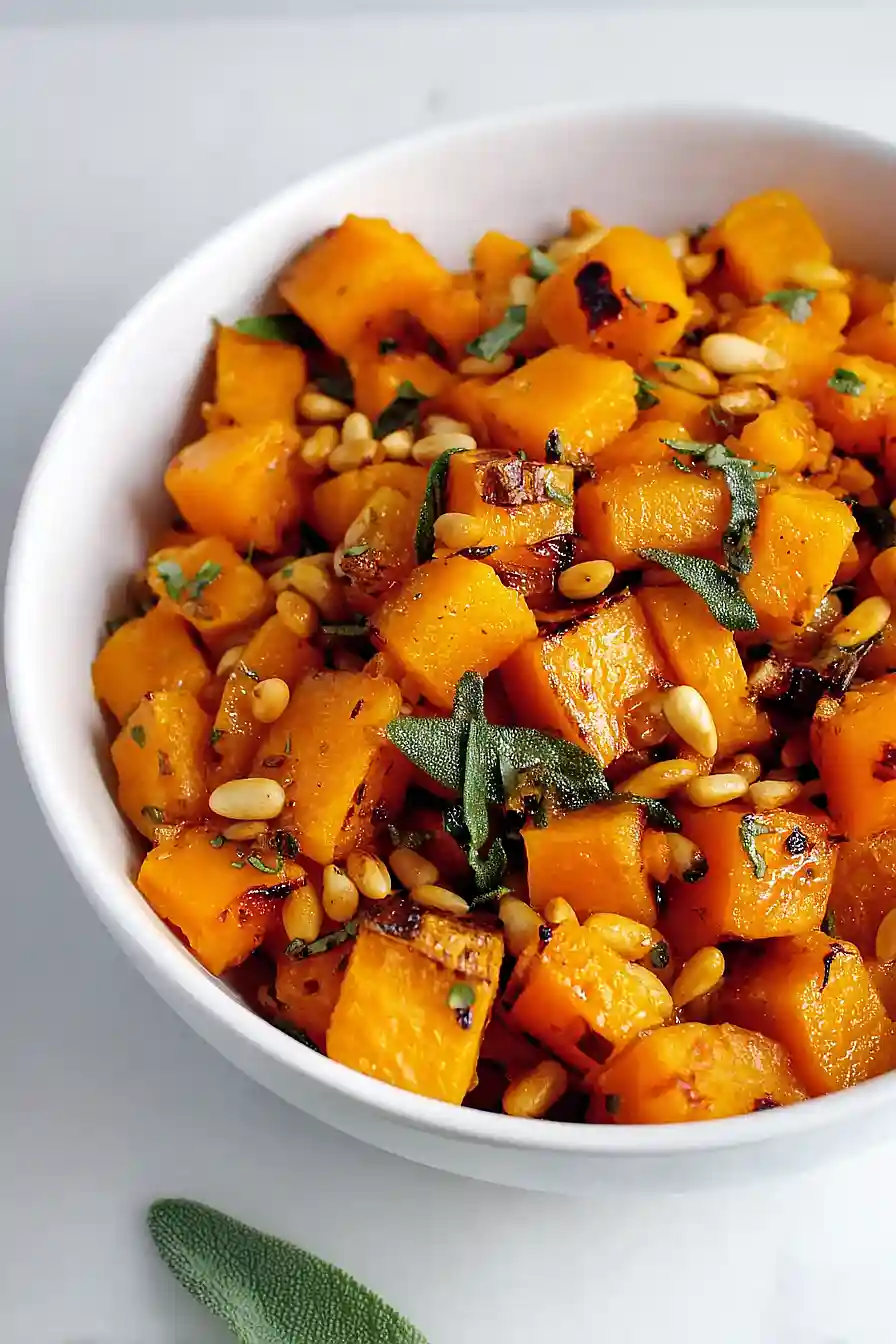
Options for Substitutions
This simple roasted squash recipe is pretty forgiving when it comes to swaps:
- Butternut squash: You can easily swap butternut squash with other winter squashes like acorn, delicata, or kabocha. They all roast beautifully and have similar cooking times when cut into similar-sized pieces.
- Fresh sage: If you don’t have fresh sage, try dried sage (use about 2 teaspoons) or switch it up with fresh thyme or rosemary. Add dried herbs earlier in the cooking process, but fresh herbs can go on halfway through roasting.
- Pine nuts: Pine nuts can be pricey, so feel free to use chopped walnuts, pecans, or pumpkin seeds instead. Toast them lightly in a dry pan for a few minutes before adding to get that same nutty crunch.
- Olive oil: Any neutral cooking oil like avocado oil or vegetable oil works fine here. You could even use melted butter for extra richness.
- Garlic: Fresh garlic is best, but if you’re out, use 1/2 teaspoon garlic powder mixed in with the other seasonings.
Watch Out for These Mistakes While Roasting
The biggest mistake when roasting butternut squash is cutting the pieces too large or unevenly, which leads to some cubes being perfectly tender while others remain hard and undercooked – aim for consistent 3/4-inch pieces for even cooking.
Overcrowding your baking sheet is another common error that causes the squash to steam instead of roast, so use two pans if needed and make sure there’s space between each cube for proper browning.
Don’t add the garlic and sage too early in the cooking process, as they can burn and turn bitter – instead, toss them with the squash during the last 10-15 minutes of roasting.
For extra flavor, toast your pine nuts separately in a dry pan for 2-3 minutes until golden, then sprinkle them over the finished dish to maintain their crunch.
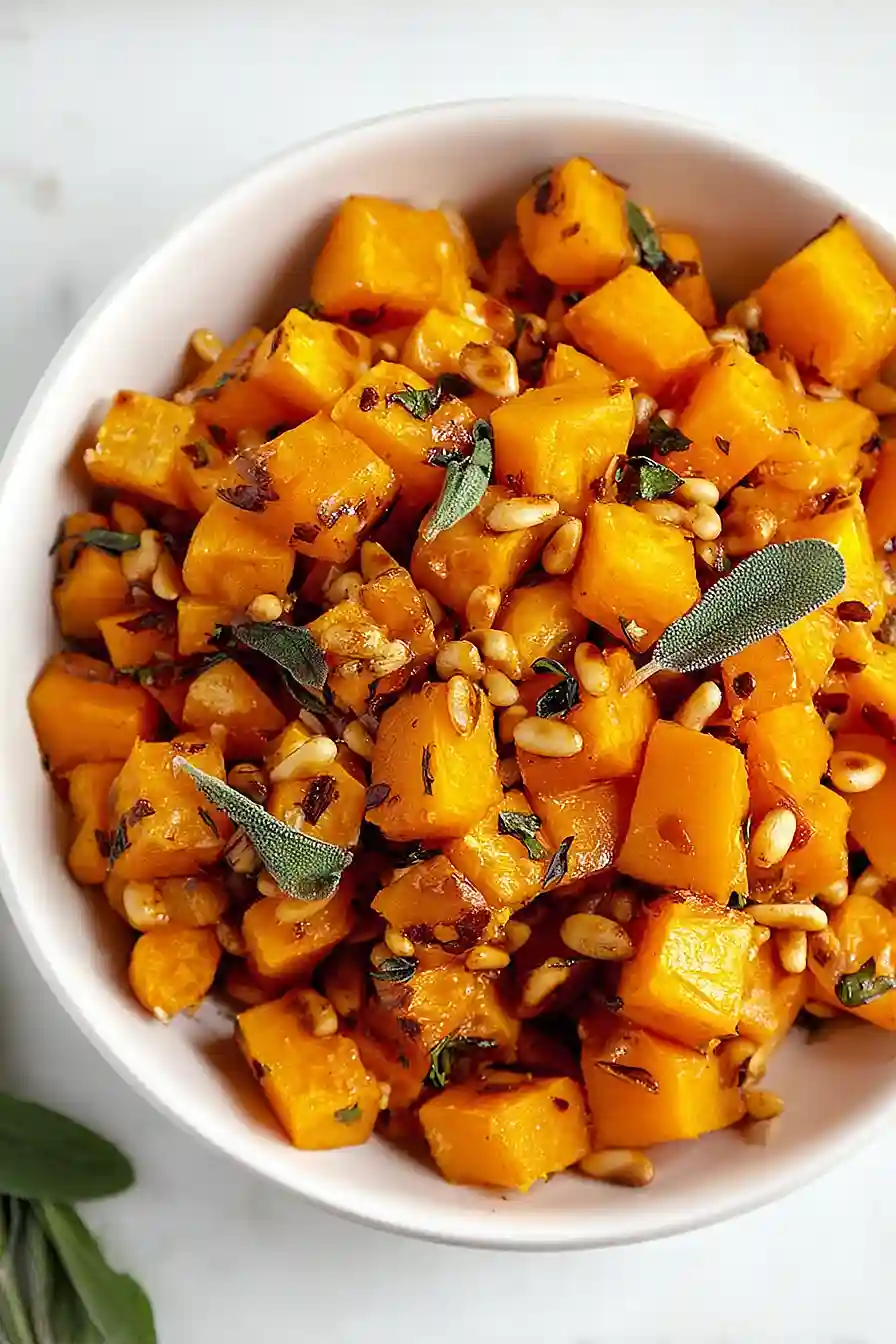
What to Serve With Roasted Butternut Squash?
This roasted butternut squash makes a perfect side dish for so many fall and winter meals! It pairs beautifully with roasted chicken, pork tenderloin, or even a simple grilled steak since the sweet squash balances out savory proteins really well. I love serving it alongside other roasted vegetables like Brussels sprouts or carrots to create a colorful autumn spread. You can also toss it over mixed greens with some goat cheese and dried cranberries for a hearty salad, or mix it into grain bowls with quinoa or farro for a more filling meal.
Storage Instructions
Refrigerate: This roasted butternut squash keeps really well in the fridge for up to 5 days in an airtight container. I actually think it tastes even better the next day after all those sage flavors have had time to meld together. It’s perfect for adding to salads or grain bowls throughout the week.
Freeze: You can freeze this dish for up to 3 months in freezer-safe containers or bags. Just keep in mind that the pine nuts might lose a bit of their crunch after freezing, but the squash and sage flavors will still be delicious.
Warm Up: To enjoy it warm again, spread the squash on a baking sheet and pop it in a 350°F oven for about 10-15 minutes until heated through. You can also microwave individual portions, but the oven method helps keep that nice roasted texture better.
| Preparation Time | 10-15 minutes |
| Cooking Time | 35-45 minutes |
| Total Time | 45-60 minutes |
| Level of Difficulty | Easy |
Estimated Nutrition
Estimated nutrition for the whole recipe (without optional ingredients):
- Calories: 800-900
- Protein: 15-18 g
- Fat: 45-50 g
- Carbohydrates: 90-100 g
Ingredients
For the roasted squash:
- 1 tsp kosher salt
- 3 lb butternut squash (peeled, seeds removed, diced into 3/4-inch pieces)
- 1 1/2 tbsp olive oil (I use Colavita extra virgin)
- 1/2 tsp black pepper
For the aromatic topping:
- 2 large garlic cloves (finely chopped for best flavor)
- 2 tbsp fresh sage (minced, about 8-10 leaves)
- 1/2 tbsp olive oil
- 1/3 cup pine nuts
Step 1: Prepare and Season Butternut Squash
- 3 lb butternut squash, peeled, seeds removed, diced into 3/4-inch pieces
- 1 1/2 tbsp olive oil
- 1 tsp kosher salt
- 1/2 tsp ground black pepper
Preheat the oven to 450°F.
Line a baking sheet with parchment paper or spray it lightly with cooking spray.
In a medium bowl, toss the diced butternut squash with 1 1/2 tablespoons olive oil, kosher salt, and ground black pepper until evenly coated.
Step 2: Roast the Butternut Squash
- seasoned butternut squash from Step 1
Spread the seasoned butternut squash cubes evenly on the prepared baking sheet.
Roast in the preheated oven for 35 to 45 minutes, or until the squash is tender and lightly browned, turning halfway through for even cooking.
I sometimes roast an extra 5 minutes if I want deeper caramelization on the edges.
Step 3: Toast Sage, Garlic, and Pine Nuts
- 1/2 tbsp olive oil
- 2 large garlic cloves, finely chopped
- 2 tbsp fresh sage, minced
- 1/3 cup pine nuts
While the squash is roasting, heat 1/2 tablespoon olive oil in a small skillet over medium heat.
Add the finely chopped garlic, minced fresh sage, and pine nuts.
Sauté, stirring often, until the pine nuts are lightly browned and fragrant, and the garlic is just golden.
Remove the skillet from the heat promptly to avoid burning the nuts.
Step 4: Combine and Serve
- roasted butternut squash from Step 2
- toasted garlic, sage, and pine nuts from Step 3
Transfer the roasted butternut squash to a large serving bowl.
Scrape the toasted garlic, sage, and pine nuts from the skillet over the squash.
Gently toss everything together so the flavors are evenly distributed.
Serve immediately while warm.
For a final touch, I enjoy sprinkling a little extra fresh sage on top just before serving.

