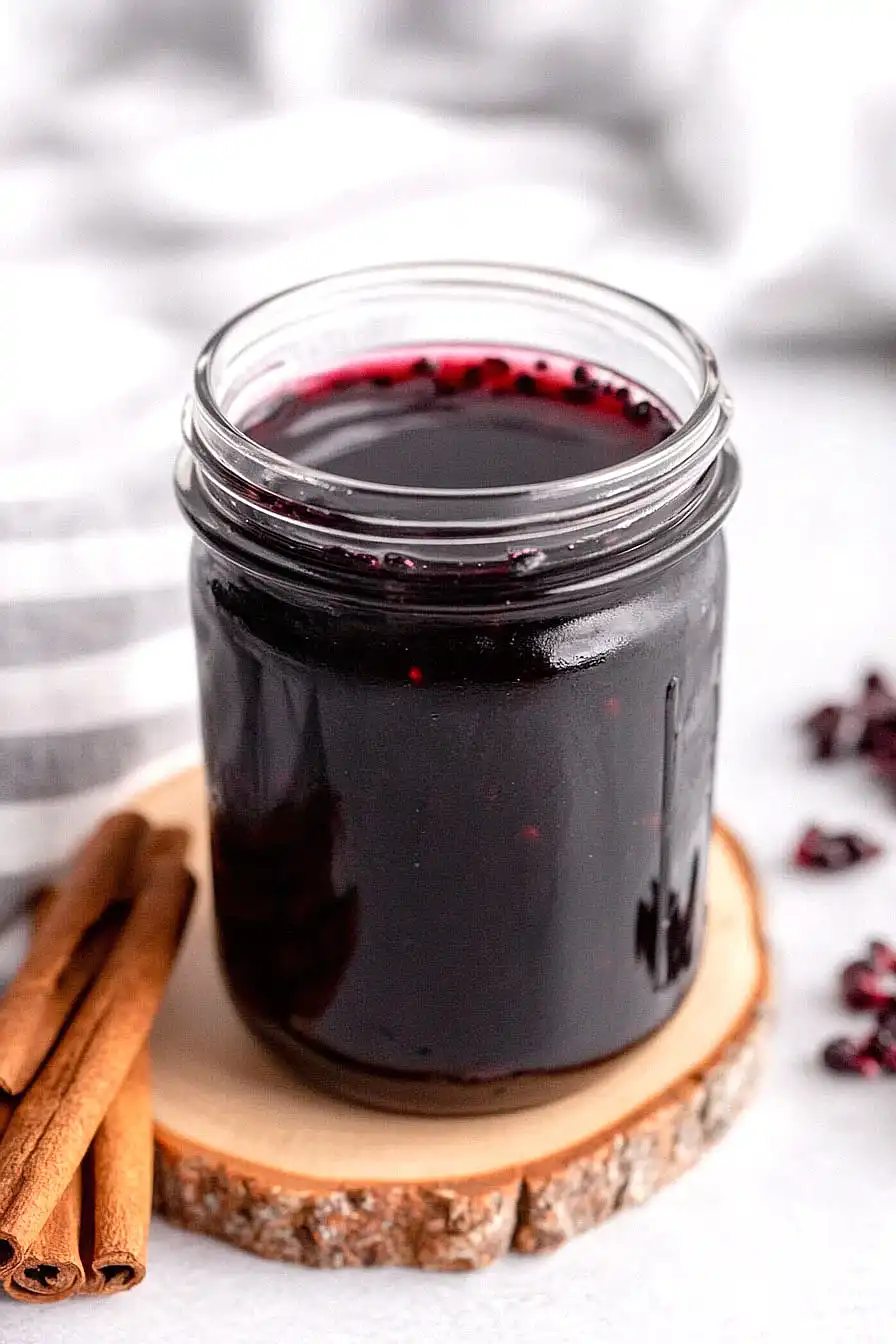
Here’s my go-to elderberry rose hip syrup recipe, combining fresh elderberries and rose hips with a touch of honey and cinnamon. It’s simple to make and turns out perfectly every time.
This syrup has become our family’s winter staple – I make a batch every month during cold season. We add it to tea, drizzle it over pancakes, or just take a spoonful when we’re feeling under the weather. My kids actually remind me when we’re running low!

Why You’ll Love This Elderberry Syrup
- Immune-supporting ingredients – Made with elderberries, rose hips, and raw honey, this syrup combines traditional immune-supporting ingredients in one delicious blend.
- Natural ingredients – Every ingredient is wholesome and natural – no artificial preservatives, colors, or flavors in sight.
- Customizable sweetness – You can adjust the honey amount to match your taste preferences, making it perfect for both adults and kids.
- Cost-effective – Making your own elderberry syrup at home costs much less than store-bought versions, and you’ll know exactly what’s in it.
- Long shelf life – When stored properly in the refrigerator, this syrup keeps well and is ready whenever you need it.
What Kind of Elderberries Should I Use?
When making elderberry syrup, dried organic elderberries are your best bet since fresh ones can be tricky to find and raw elderberries actually contain compounds that can make you sick. Most recipes call for dried elderberries because they’re shelf-stable, readily available online or in health food stores, and they’ve already been properly processed for safe consumption. Black elderberries (Sambucus nigra) are the most common and recommended variety for making syrup, as they have the highest concentration of beneficial compounds. Just make sure to source your dried elderberries from a reputable supplier, and always check that they’re labeled as food-grade and organic to ensure the best quality and safety for your syrup.

Options for Substitutions
While some ingredients in this immune-supporting syrup are essential, there are a few substitutions you can try:
- Elderberries: This is the star ingredient and can’t be substituted – it’s what makes this syrup special and provides its immune-supporting properties.
- Rose hips: If you can’t find rose hips, you can use hibiscus flowers instead. They’ll add a similar tartness and vitamin C content, though use only ¼ cup as hibiscus is more potent.
- Raw honey: While raw honey is best for its natural benefits, you can use regular honey in a pinch. Maple syrup works too for a vegan option, but reduce to ⅓ cup as it’s thinner.
- Fresh ginger: Out of fresh ginger? Use 1 teaspoon of dried ginger powder instead. You can also skip it if you’re not a fan of the spice.
- Cinnamon and cloves: These warming spices can be adjusted to taste. Ground cinnamon (½ teaspoon) can replace the stick, and ground cloves (¼ teaspoon) can substitute whole ones.
Watch Out for These Mistakes While Cooking
The biggest mistake when making elderberry rose hip syrup is overcooking the herbs, which can destroy their beneficial properties – keep the simmer gentle and watch your timing carefully, reducing the liquid by half but no more. A common error is adding honey while the mixture is still hot, which can diminish its raw benefits and therapeutic properties, so always let your herbal mixture cool to room temperature first. To get the most out of your ingredients, avoid using reactive metal pots (like aluminum or copper) and stick to stainless steel or enameled cookware, as certain metals can interact with the herbs and affect both taste and benefits. For the best extraction, make sure to gently crush the rose hips and elderberries before cooking, and strain the mixture through a fine-mesh strainer lined with cheesecloth to ensure a smooth, seed-free syrup.
What to Serve With Elderberry Rose Hip Syrup?
This sweet and fragrant syrup is super flexible when it comes to serving options! The most straightforward way to enjoy it is stirred into hot water or tea for a comforting immune-boosting drink, but don’t stop there. Try adding a splash to sparkling water or club soda for a refreshing homemade soda, or drizzle it over yogurt and granola for a nutritious breakfast boost. You can also use it as a natural sweetener in smoothies, or pour it over pancakes and waffles instead of maple syrup for a unique twist on your morning favorites. For the grown-ups, this syrup makes an excellent addition to cocktails or can be mixed into champagne for a fancy brunch beverage.
Storage Instructions
Keep Fresh: Pour your finished elderberry rose hip syrup into a clean glass bottle or jar with a tight-fitting lid. Keep it in the refrigerator where it’ll stay good for about 3-4 months. The honey acts as a natural preservative, helping your syrup last longer.
Portion: Consider dividing the syrup into smaller containers or ice cube trays. Once frozen into cubes, transfer them to a freezer bag – this way you can thaw just what you need. They’ll keep well in the freezer for up to 6 months.
Tips: Always use a clean spoon when scooping out your syrup to prevent contamination. If you notice any unusual smell, color changes, or mold, it’s best to make a fresh batch. Give the bottle a gentle shake before each use, as natural ingredients may settle over time.
| Preparation Time | 15-20 minutes |
| Cooking Time | 75-90 minutes |
| Total Time | 90-110 minutes |
| Level of Difficulty | Medium |
Estimated Nutrition
Estimated nutrition for the whole recipe (without optional ingredients):
- Calories: 550-750
- Protein: 1-3 g
- Fat: 0-1 g
- Carbohydrates: 140-180 g
Ingredients
For the syrup base:
- 1/2 cup dried elderberries (look for organic, culinary-grade dried elderberries)
- 1 inch fresh ginger (peeled and finely chopped for maximum flavor infusion)
- 2.5 cups filtered water
- 1/2 cup dried rose hips (I use organic whole rose hips)
- 6 whole cloves
- 1 cinnamon stick
For cooling the syrup:
- cold tap water
- ice cubes
For the final syrup:
- 1/2 to 1 cup raw honey (I prefer local, unfiltered honey for best benefits)
Step 1: Prepare Ingredients
Begin by measuring out all the ingredients.
Prepare the ginger by removing the outer skin and then grating or finely chopping it.
Step 2: Create Elderberry Base
Add the dried elderberries, a cinnamon stick, whole cloves, prepared ginger, and filtered water to a medium-size saucepan.
Cover the saucepan with a lid and place it on the stovetop over high heat.
Bring the mixture to a boil, then reduce the heat to low.
Let it simmer, covered, for 45 minutes to infuse the spices and flavors thoroughly.
Step 3: Cool and Steep with Rosehips
After the elderberry mixture has cooked, remove the saucepan from the heat.
Allow it to sit and cool for about 10 minutes.
Once cooled, remove the lid to add the rosehips.
Cover again and let them steep for an additional 30 minutes to impart their unique flavor.
Step 4: Strain the Mixture
Place a fine mesh strainer over a large measuring cup or bowl.
Carefully pour the elderberry mixture through the strainer, using the back of a spoon to mash the elderberries and extract as much liquid as possible.
Discard the spices and mashed elderberries, retaining the flavorful liquid.
Step 5: Cool the Elderberry Liquid
Prepare an ice bath by filling a large bowl halfway with ice cubes and cold tap water.
Set the measuring cup with the elderberry mixture into the ice bath, ensuring no water from the ice bath enters the mixture.
Allow the elderberry liquid to cool in the ice bath for about 15 minutes or until fully cooled.
Remove the liquid from the ice bath once it has cooled.
Step 6: Combine with Honey and Store
In a wide mouth mason jar, add the raw honey.
Pour the cooled elderberry mixture into the mason jar.
Stir until the honey and elderberry liquid combine.
If necessary, allow the mixture to sit at room temperature briefly to help the honey dissolve, then stir again until well mixed.
Secure the lid on the mason jar and store it in the refrigerator for preservation and use.

