I didn’t try ceviche de camaron until I was in my thirties, and I couldn’t believe I’d missed out on it for so long. Growing up in the Midwest, our shrimp usually came breaded and fried, or maybe in a scampi if we were feeling fancy.
What really surprised me was learning that the lime juice actually “cooks” the shrimp – no heat needed! Once my friend Maria showed me how simple it was to make at home, I wondered why I’d been intimidated by it for so long. If you can chop vegetables and squeeze limes, you can make this dish.

Why You’ll Love This Shrimp Ceviche
- No cooking required – The lime juice does all the work of ‘cooking’ the shrimp, making this a perfect no-heat meal for hot summer days.
- Fresh and light – Packed with crisp vegetables, zesty lime, and tender shrimp, this ceviche is refreshing and won’t weigh you down.
- Make-ahead friendly – You can prepare this dish hours before serving, and it actually gets better as the flavors meld together in the fridge.
- Customizable heat level – With the option to adjust peppers and remove seeds, you can make this ceviche as mild or spicy as you prefer.
- Perfect for entertaining – This dish serves well as an appetizer or light meal, and it’s sure to impress guests with its restaurant-quality taste.
What Kind of Shrimp Should I Use?
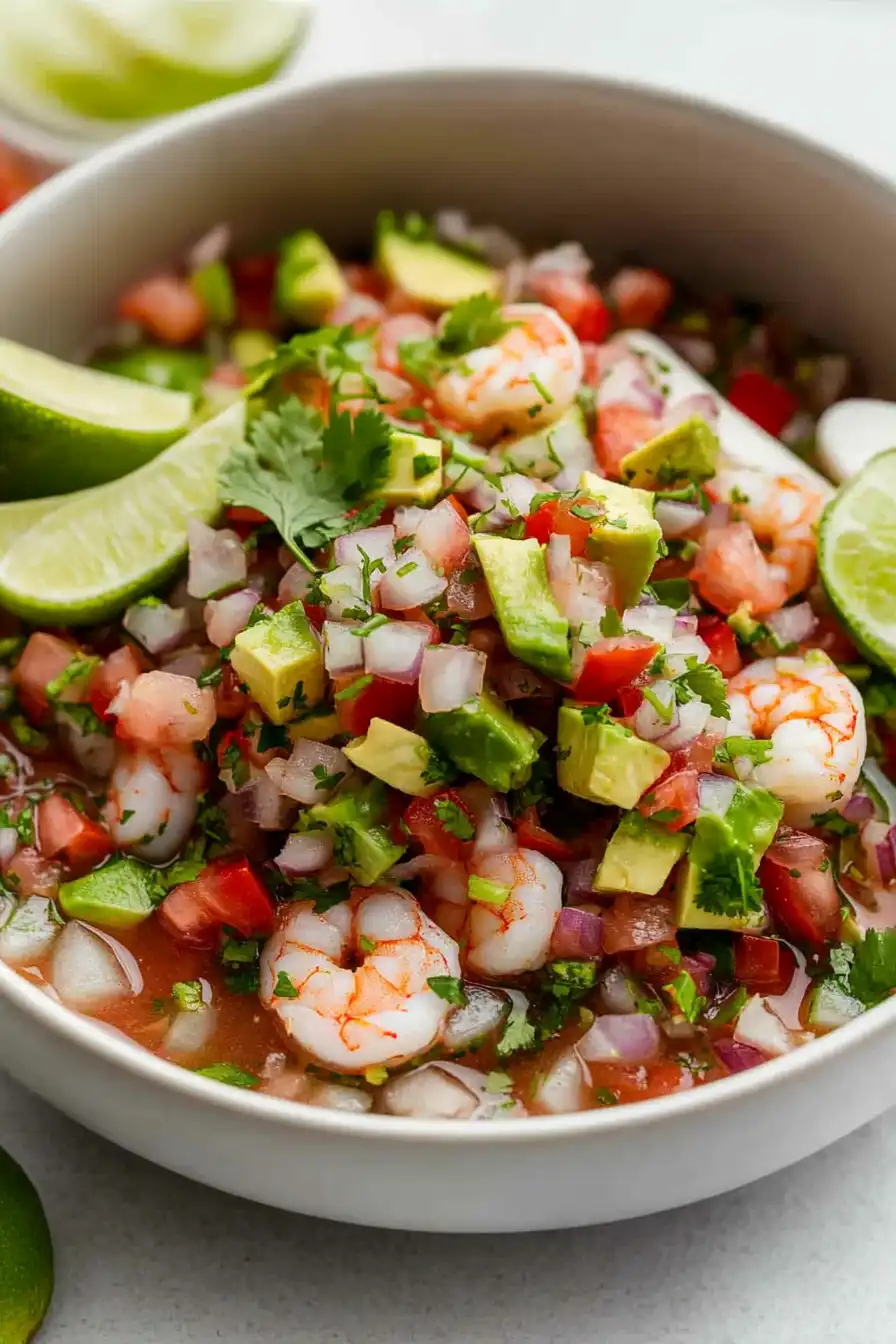
For ceviche, medium to large shrimp (around 21-25 count per pound) work best since they’re easier to handle and won’t overcook too quickly in the lime juice. While fresh shrimp is fantastic if you can get it, good quality frozen shrimp is perfectly fine – just make sure to thaw it completely and pat it dry before using. Raw shrimp is essential for traditional ceviche since it “cooks” in the citrus juice, but look for shrimp that’s already been peeled and deveined to save yourself some prep time. If you’re buying from the seafood counter, ask for shrimp that’s still translucent with a grayish-blue tint rather than anything that looks chalky or overly white, as this indicates freshness.
Options for Substitutions
This refreshing ceviche recipe can be adjusted with several substitutions, though some ingredients are key to its authentic taste:
- Shrimp: While shrimp is the star here, you can use other seafood like firm white fish (like cod or tilapia) or even a mix of seafood. Just keep in mind that cooking times in lime juice may vary.
- Lime juice: This is a must-have ingredient that can’t really be substituted since it ‘cooks’ the shrimp. In a real pinch, you could use lemon juice, but the taste won’t be quite the same.
- Clamato/V8: You can use plain tomato juice instead. If using tomato juice, add a pinch of celery salt to get closer to that Clamato flavor.
- Serrano/Jalapeño peppers: Feel free to swap with any fresh chili peppers you have – habanero (use less!), fresno, or even a dash of cayenne pepper will work.
- Cucumber: You can skip it or replace with jicama or celery for that fresh crunch.
- Cilantro: If you’re not a cilantro fan, try using fresh parsley instead, though this will change the traditional flavor profile.
- Avocado: This is optional and can be left out if you don’t have any ripe ones on hand.
Watch Out for These Mistakes While Cooking
The biggest mistake when preparing ceviche is using old or questionable shrimp – always start with the freshest seafood possible and keep it properly chilled throughout the preparation process. A common error is not letting the shrimp “cook” long enough in the lime juice – the citrus needs at least 15-20 minutes to properly denature the proteins and turn the shrimp from translucent to opaque pink. Another crucial mistake is oversalting your ceviche at the beginning – remember that the Clamato juice already contains salt, and as the liquid reduces, the saltiness becomes more concentrated, so it’s better to adjust the seasoning just before serving. For the best texture and flavor, dice all your vegetables in similar small sizes (about 1/4 inch), and add the avocado last to prevent it from getting mushy or discolored.

What to Serve With Ceviche?
This fresh and zesty shrimp ceviche pairs perfectly with crispy tostadas or saltine crackers – both give you that satisfying crunch against the tender shrimp. You can set up a casual spread with diced avocados, lime wedges, and hot sauce on the side so everyone can customize their portions. For a more filling meal, serve your ceviche alongside Mexican rice or a simple side of black beans. If you’re hosting friends, don’t forget to put out some tortilla chips for scooping – they’re always a crowd favorite with any Mexican seafood dish!
Storage Instructions
Keep Chilled: Shrimp ceviche is best enjoyed fresh, but you can keep it in the fridge in an airtight container for up to 24 hours. The lime juice will continue to ‘cook’ the shrimp, so the texture might change slightly over time. For the best taste and texture, try to enjoy it the same day you make it!
Prep Ahead: If you want to get a head start, you can dice all your vegetables and store them separately in the fridge for up to a day before mixing. Just wait to cut the avocado until you’re ready to serve – nobody likes brown avocados! The shrimp should be prepared fresh for the best results.
Serve: Take your ceviche out of the fridge about 5 minutes before serving to take the edge off the cold – this helps the flavors shine through better. Give it a quick stir before plating, as some liquid might settle at the bottom.
| Preparation Time | 15-20 minutes |
| Cooking Time | 180-240 minutes |
| Total Time | 195-260 minutes |
| Level of Difficulty | Easy |
Estimated Nutrition
Estimated nutrition for the whole recipe (without optional ingredients):
- Calories: 600-700
- Protein: 60-70 g
- Fat: 25-30 g
- Carbohydrates: 30-35 g
Ingredients
For the shrimp:
- 1 lb raw shrimp (peeled and deveined)
- Juice from 5 limes (freshly squeezed for best flavor)
For the vegetables:
- 1/3 cup fresh cilantro (chopped)
- 1/3 medium white onion (finely diced)
- 2 serrano peppers (finely chopped, remove seeds for less heat)
- 1 avocado (diced just before serving to prevent browning)
- 2 small tomatoes (diced)
- 1 cucumber (diced into 1/2-inch pieces)
For assembly and serving:
- Salt
- 1 cup Clamato juice (or V8 vegetable juice for a similar taste)
- Ketchup
- Pepper
Step 1: Prepare the Shrimp
Begin by cutting the shrimp into small, bite-sized pieces.
Place the shrimp pieces into a plastic or glass container.
Pour enough lime juice over the shrimp to ensure all pieces are covered.
You may need to add more lime juice if necessary to submerge all the shrimp pieces.
Cover the container and refrigerate for at least three hours or, for the best results, overnight.
This process will “cook” the shrimp by marinating them in the lime juice.
Step 2: Prepare and Chill Vegetables
While the shrimp is marinating, chop and mix all the vegetables you plan to use for the dish.
You can include ingredients like diced tomatoes, onions, cucumbers, or avocado, based on your preference.
Once mixed, set the vegetables aside in the fridge to keep them fresh and crisp until the shrimp is ready.
Step 3: Combine Ingredients
Once the shrimp is fully “cooked” and appears pink, take it out of the refrigerator.
Drain any excess lime juice.
Add the pre-chilled vegetables to the shrimp.
Pour in a desired amount of clamato juice and season with salt and pepper to taste.
Mix everything together until well combined.
Step 4: Serve and Enjoy
Serve the shrimp and vegetable mixture with tostadas, saltines, or tortilla chips for a crunchy contrast.
For a personalized touch, you may add a little ketchup to individual servings if desired.
Enjoy your refreshing and zesty dish!