Here is my go-to pork belly kimchi stew recipe, combining tender pieces of pork belly with tangy kimchi, simple vegetables, and a rich broth that simmers until everything comes together just right.
This comforting stew has become our family’s favorite weeknight dinner during the colder months. I often make a big batch on Sundays so we can have leftovers for lunch the next day. Nothing better than a warm bowl of stew to get you through a busy week, right?
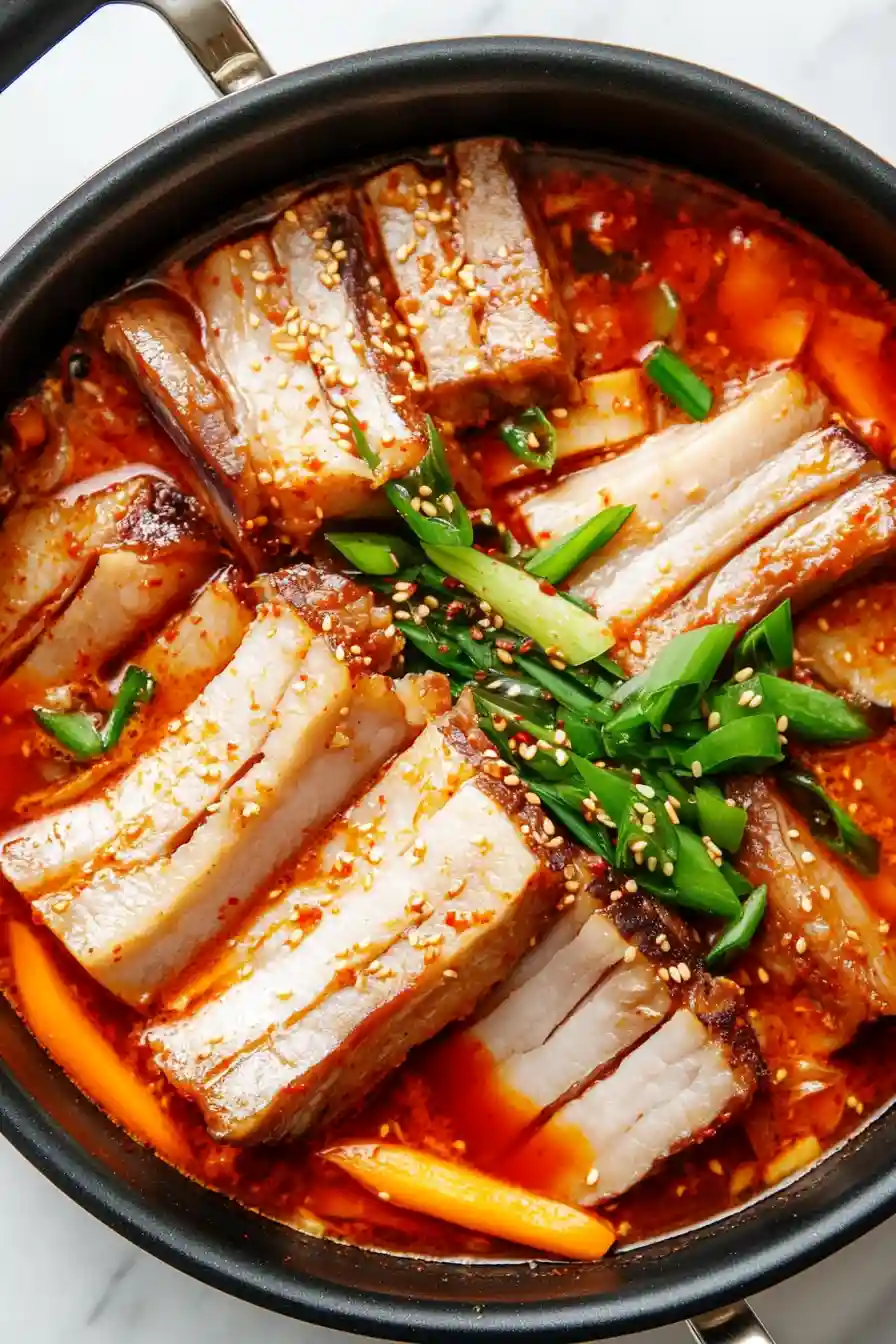
Why You’ll Love This Kimchi Stew
- Rich and satisfying – The combination of tender pork belly and tofu in a savory broth creates a deeply satisfying meal that warms you from the inside out.
- Authentic Korean flavors – With traditional ingredients like doenjang, gochugaru, and beef bone broth, this stew delivers genuine Korean taste right from your kitchen.
- One-pot meal – Everything cooks in a single pot, making cleanup quick and easy while the flavors blend perfectly together.
- Customizable heat level – You can easily adjust the amount of Korean red pepper flakes to make the stew as mild or spicy as you prefer.
Which Kind of Pork Belly Should I Use?
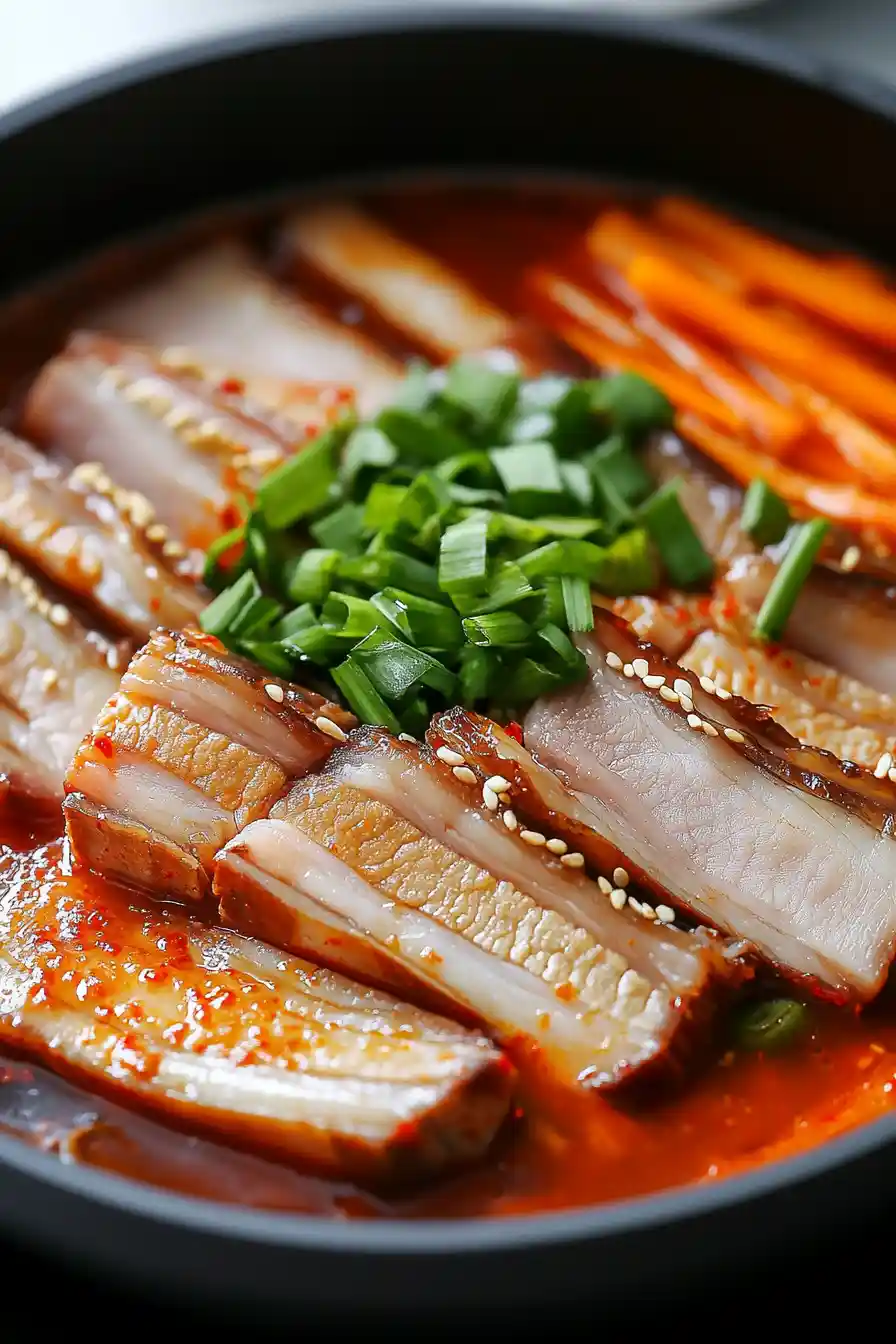
For this Korean stew, you’ll want to look for fresh, uncured pork belly with a good ratio of meat to fat – aim for pieces that have distinct layers of both. Most Asian markets and well-stocked grocery stores sell pork belly either pre-sliced or in whole pieces. If you’re buying a whole piece, ask your butcher to slice it into 1/2-inch thick strips, or do it yourself at home when it’s slightly frozen (this makes cutting easier). While both skinless and skin-on pork belly work in this recipe, skinless is more commonly used and tends to absorb the flavors better. Just make sure to pick pieces that look fresh with a pinkish color and no dark spots or strong odors.
Options for Substitutions
While some ingredients are key to keeping this stew authentic, there are several substitutions you can try:
- Pork belly: If pork belly is hard to find, you can use thick-cut bacon or pork shoulder cut into chunks. Just keep in mind that the fat content will be different, which might affect the richness of the stew.
- Doenjang (Korean soybean paste): This gives a unique flavor, but in a pinch, you can use Japanese miso paste. Start with half the amount as miso can be saltier.
- Sogogi Taja (Korean beef bouillon): Regular beef bouillon cubes work fine here – use one regular-sized cube crushed up. You might need to adjust the salt.
- Gochugaru (Korean red pepper flakes): This is pretty important for authentic flavor, but if you can’t find it, mix regular red pepper flakes (half the amount) with a bit of sweet paprika. The texture and taste won’t be exactly the same, but it’ll work.
- Beef bone broth: Regular beef broth or stock works well too. You can even use chicken broth if that’s what you have, though the flavor will be lighter.
- Tofu: Any firmness of tofu works here – soft, medium, or firm. You can even skip it if you’re not a tofu fan, but it helps soak up all the good flavors.
Watch Out for These Mistakes While Cooking
The biggest mistake when making pork belly kimchi stew is rushing the cooking process – the pork belly needs time to become tender, so resist the urge to increase the heat and let it simmer slowly for at least 45 minutes. A common error is adding the tofu too early in the cooking process, which causes it to break apart; instead, add it during the last 10 minutes of cooking to maintain its shape while still absorbing the rich flavors of the stew. For the best results, don’t skip browning the pork belly first – this crucial step creates a deeper flavor base and renders some of the fat that will enhance the entire dish. When seasoning the stew, start with less gochugaru (Korean red pepper flakes) than you think you need, as you can always add more later – remember that the heat level will intensify as the stew simmers.
What to Serve With Kimchi Stew?
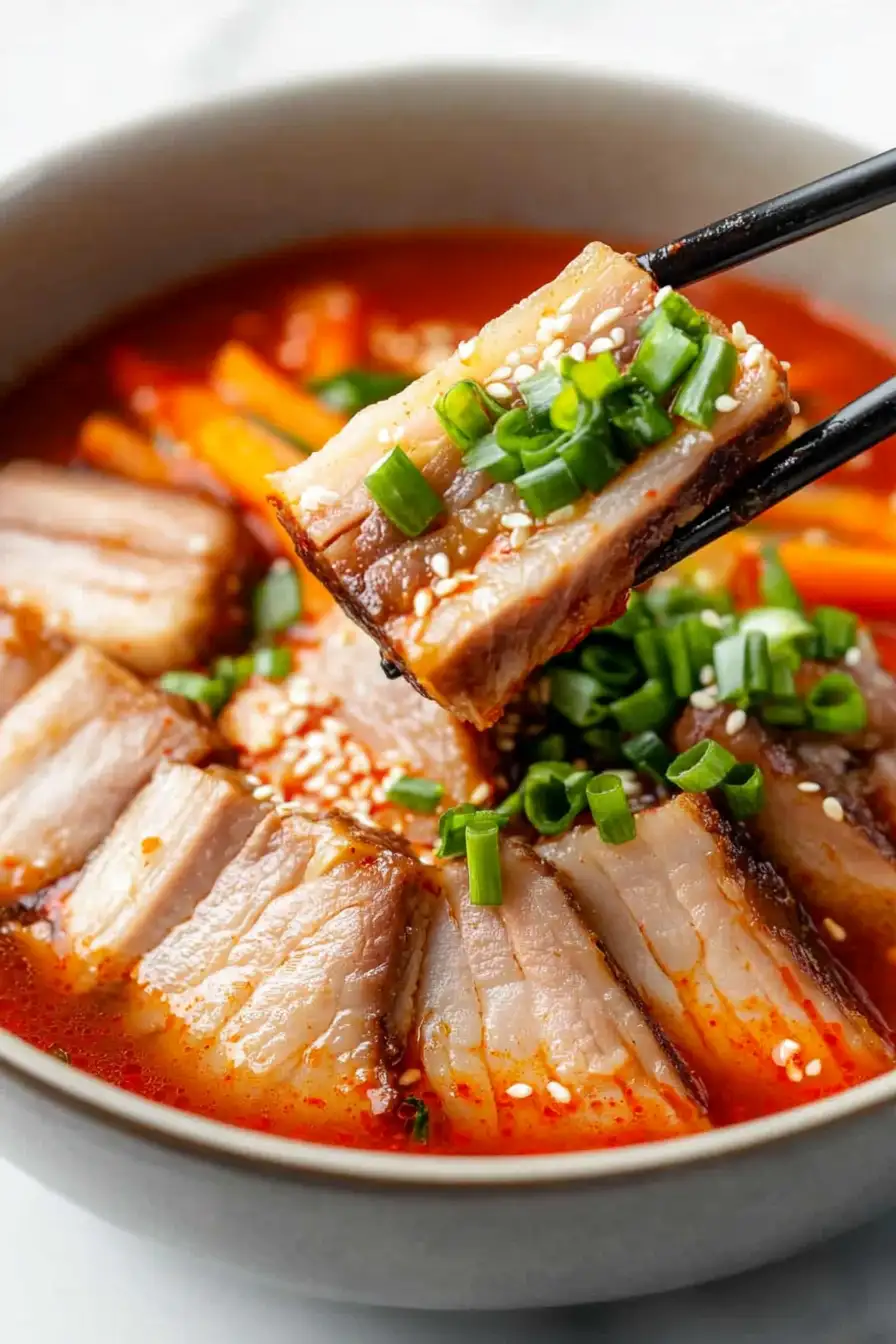
This hearty Korean stew pairs perfectly with a bowl of steamed white rice – it’s practically required to soak up all that rich, spicy broth! A few simple Korean side dishes (banchan) like seasoned spinach, bean sprouts, or quick pickled cucumbers help balance out the bold flavors of the stew. I like to serve this with both white and brown rice options since some people prefer one over the other. If you want to keep things super simple, just add a plate of fresh lettuce leaves on the side – they work great as wraps for the tender pieces of pork belly and help cool down the spice.
Storage Instructions
Keep Fresh: This hearty kimchi stew tastes even better the next day! Place it in an airtight container and keep it in the fridge for up to 3 days. The flavors will continue to develop and meld together, making each serving more flavorful than the last.
Freeze: If you want to save some for later, let the stew cool completely and transfer it to a freezer-safe container. It’ll keep well for up to 2 months in the freezer. Just remember that the tofu texture might change slightly after freezing.
Warm Up: To enjoy your leftover stew, simply heat it gently on the stovetop over medium-low heat, stirring occasionally. If it seems a bit thick, add a splash of broth or water to reach your desired consistency. The pork belly might release some extra fat – you can skim this off if you prefer, or stir it back in for extra richness.
| Preparation Time | 14 days |
| Cooking Time | 25 minutes |
| Total Time | 14 days and 25 minutes |
| Level of Difficulty | Medium |
Estimated Nutrition
Estimated nutrition for the whole recipe (without optional ingredients):
- Calories: 1500-1700
- Protein: 90-100 g
- Fat: 120-130 g
- Carbohydrates: 20-25 g
Ingredients
For the stew:
- 1 tbsp olive oil (or any neutral cooking oil)
- 1 tbsp Korean soybean paste (doenjang)
- 2 cloves garlic (freshly minced for best flavor)
- 3 cups beef bone broth (I like Kettle & Fire for this stew)
- 2 green onions (sliced, whites and greens separated)
- 1 tbsp Korean beef bouillon powder (sogogi taja)
- 1 lb pork belly (skinless, cut into 1-inch pieces)
- coarse salt
- 1/2 medium onion (thinly sliced)
- 1/2 block firm tofu (firm or extra-firm preferred)
- 1 tbsp Korean red pepper flakes (gochugaru)
Optional:
- 1 tbsp butter (for added richness)
Step 1: Prepare and Ferment the Pork Belly
Begin by rubbing coarse salt on both sides of the pork belly.
Apply extra kimchi paste generously, then place the pork belly in a container, sandwiching it between layers of kimchi.
Allow the pork belly to ferment for two weeks.
If you don’t have homemade kimchi, store-bought kimchi can be used for fermenting the pork belly.
Step 2: Prepare the Ingredients
After two weeks, remove the fermented pork belly from the kimchi and score the skin in a crisscross pattern to enhance flavor absorption during cooking.
Prepare your other ingredients by finely mincing 4 cloves of garlic, slicing 2 stalks of green onions, and chopping ½ medium-sized onion.
Open the tofu container, cut it into half, and set the other half aside for later use.
Then cut the tofu half into six slices.
Step 3: Prepare the Base for Cooking
Gather additional flavor enhancers such as Korean beef bouillon powder (so Kogi tada) and Korean soybean paste (doenjang).
Optionally, you can prepare a tablespoon of butter for extra flavor.
Heat a wide shallow pot over high heat and add 1 tablespoon of olive oil.
Add the sliced onions to the pot and lay the tofu slices on top.
Step 4: Assemble and Cook the Stew
Wedge the fermented pork belly into the pot, along with any leftover vegetables and a drizzle of kimchi juice from the fermentation process.
Pour in about 1 cup of kimchi juice from the container.
Add 3 cups of piping hot beef bone broth to the pot, ensuring it covers the kimchi and pork belly without submerging completely.
Reduce the heat to medium or medium-low, cover the pot, and let it cook for 15 minutes.
Step 5: Adjust Flavors and Finish Cooking
After 15 minutes, carefully turn the pork belly over to let the fat side soak in the flavorful broth, and also turn the kimchi.
Cover and cook for another 10 minutes.
Taste the broth, and adjust the seasoning by adding additional Korean beef bouillon powder (start with ½ tablespoon) and optionally stir in a tablespoon of butter.
Once the butter has melted, add the sliced green onions as garnish.
Step 6: Serve and Enjoy
Serve the kimchi stew hot, ideally accompanied by Korean rice.
Enjoy the tender, flavorful pork belly and savory broth for a comforting and satisfying meal.