I always thought prime rib was something you only ordered at fancy restaurants for special occasions. Growing up, my mom never attempted it at home – she was convinced it was too complicated and expensive to risk messing up.
Turns out, making prime rib isn’t nearly as scary as I once believed, especially when you’re just cooking for two. With the right temperature and timing (and a good meat thermometer!), you can make a restaurant-worthy prime rib right in your own kitchen without breaking a sweat or your budget.
Why You’ll Love This Prime Rib
- Perfect for special occasions – This scaled-down version gives you all the luxury of a traditional prime rib roast without having to feed a crowd – ideal for date nights or intimate celebrations.
- Restaurant-quality results – With simple ingredients and clear instructions, you’ll get that perfectly pink center and seasoned crust you’d expect from a high-end steakhouse.
- Straightforward preparation – Don’t let prime rib intimidate you – this recipe uses basic ingredients and techniques that any home cook can master.
- Minimal ingredients – You only need a handful of common ingredients to create this impressive main dish, most of which you probably already have in your kitchen.
What Kind of Prime Rib Should I Use?
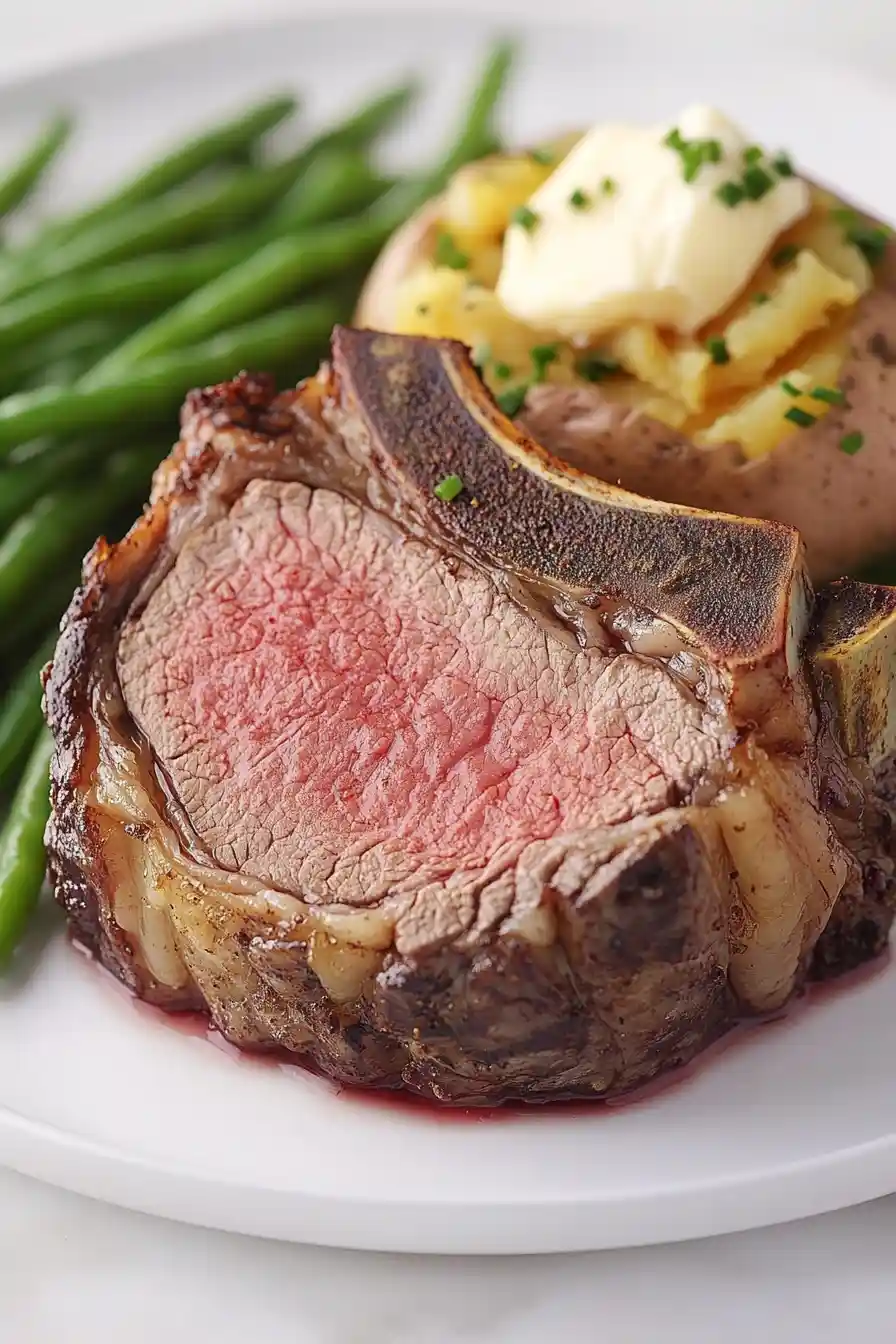
For a dinner for two, you’ll want to look for a small bone-in prime rib roast, which usually comes from the center portion of the rib section. While USDA Prime is the highest grade with beautiful marbling, Choice grade will also give you excellent results at a more budget-friendly price point. When shopping, ask your butcher for a cut from ribs 10-12, as this section tends to be the most tender and well-marbled. For the best results, look for meat that has a bright red color and white fat that’s evenly distributed throughout – and don’t worry if you see a small bone, as this actually adds flavor during cooking and makes it easier to determine the roast’s orientation while cooking.
Options for Substitutions
While some ingredients in this recipe are essential, there are a few substitutions you can make if needed:
- Prime rib roast: This is the star of the show and really shouldn’t be substituted. However, if you absolutely must, you could use a ribeye roast or top loin roast – just know the results won’t be quite the same.
- Fresh rosemary: If you don’t have fresh rosemary, you can use dried rosemary instead – just use 1/2 teaspoon since dried herbs are more concentrated. You could also try fresh thyme as an alternative.
- Beef stock: You can swap beef stock with beef broth or even chicken stock in a pinch. If using chicken stock, add a beef bouillon cube to maintain that rich beef flavor.
- Butter: While butter adds great flavor, you could use ghee or even extra olive oil if needed. Just keep in mind that butter helps create that nice crust on the outside.
- Fresh garlic: If you’re out of fresh garlic, you can use 1/2 teaspoon of garlic powder – but fresh really does work best for those tasty garlic slivers in the meat.
Watch Out for These Mistakes While Roasting
The biggest mistake when cooking prime rib is not letting your meat come to room temperature before roasting – take it out of the fridge at least 2 hours before cooking to ensure even cooking from edge to center. Temperature control is crucial, so invest in a reliable meat thermometer and remove the roast when it reaches 120°F for medium-rare, as the internal temperature will rise another 5-10 degrees while resting. Another common error is slicing into the meat too soon after cooking – give it at least 15-20 minutes to rest, allowing the juices to redistribute throughout the roast instead of spilling onto your cutting board. For the most flavorful crust, don’t forget to pat the surface completely dry before seasoning, and make sure to position the fat cap on top so it can baste the meat as it melts during cooking.
What to Serve With Prime Rib?
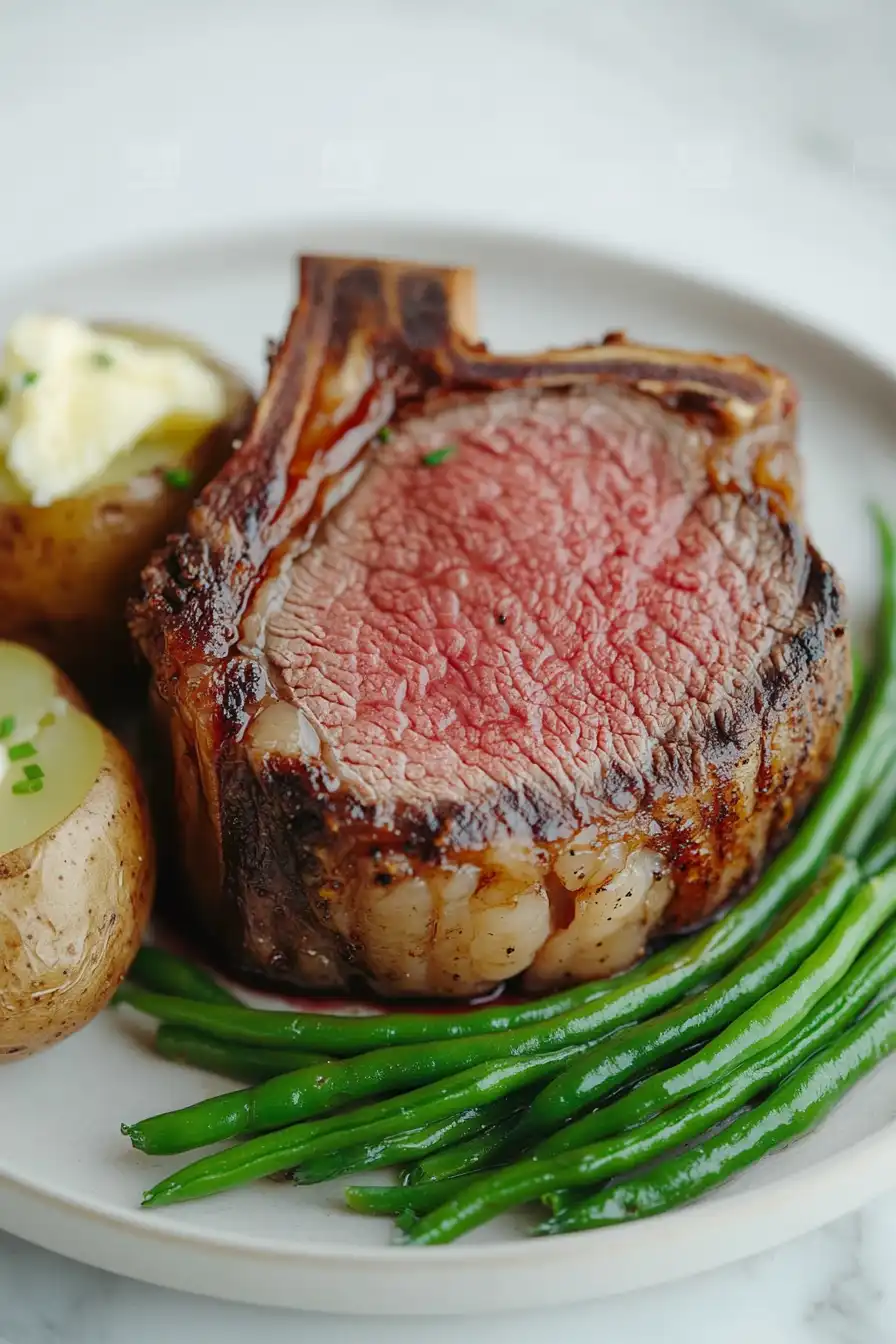
This special cut of beef deserves some equally tasty sides to round out your meal! A classic pairing would be creamy mashed potatoes, which are perfect for soaking up all those delicious meat juices. For vegetables, roasted asparagus or green beans work really well since they can cook at the same temperature as your meat – just pop them in during the last 15 minutes of cooking. You might also want to include Yorkshire puddings or warm dinner rolls to make the meal feel extra special. Since prime rib is rich, a simple horseradish sauce on the side gives a nice kick that cuts through the meat’s richness.
Storage Instructions
Keep Fresh: Got leftover prime rib? Lucky you! Place it in an airtight container and pop it in the fridge within 2 hours of cooking. It’ll stay good for up to 4 days. Pro tip: keep any leftover au jus in a separate container – it’s great for reheating or dipping later!
Freeze: If you want to save your prime rib for later, wrap it tightly in plastic wrap, then foil, and place it in a freezer bag (squeeze out as much air as possible). It’ll keep well in the freezer for up to 6 months. Just remember that the texture might be slightly different after freezing.
Warm Up: To keep your prime rib juicy when reheating, wrap it in foil and warm it in the oven at 250°F until it reaches your desired temperature (usually 10-15 minutes). You can also slice it thinly and give it a quick warm-up in some hot au jus on the stovetop. Just avoid the microwave – it can make your perfectly cooked prime rib tough!
| Preparation Time | 30-45 minutes |
| Cooking Time | 45-55 minutes |
| Total Time | 75-100 minutes |
| Level of Difficulty | Medium |
Estimated Nutrition
Estimated nutrition for the whole recipe (without optional ingredients):
- Calories: 3000-3200
- Protein: 240-260 g
- Fat: 220-240 g
- Carbohydrates: 10-15 g
Ingredients
For the roast:
- 2.5 lb bone-in rib roast
For the butter rub:
- 1 tbsp olive oil
- 1.5 tsp fresh rosemary (finely chopped for even distribution)
- 2 cloves garlic (freshly minced)
- 3 tbsp softened butter (I like Kerrygold unsalted butter)
- 2 tsp salt
- 0.5 tsp ground black pepper
For the au jus:
- 3 cups beef stock (low sodium is preferred)
Step 1: Prepare the Roast
Remove your roast from the refrigerator and allow it to sit on the counter until it reaches room temperature.
This typically takes about 30 minutes, but if your roast is over 2 1/2 pounds, it may require more time.
Meanwhile, preheat your oven to 450°F.
Step 2: Make the Butter Mixture
In a small mixing bowl, combine butter, olive oil, chopped rosemary, salt, and ground black pepper.
Mix these ingredients together until they are well combined.
Set this seasoned butter mixture aside for later use.
Step 3: Prepare the Roast for Cooking
Place the roast on a baking pan fitted with a wire rack, ensuring the fat side is facing up.
Use a sharp knife to cut slits into the top of the roast, making enough for each garlic sliver.
Insert the garlic slivers into the slits.
Then, generously rub the butter mixture all over the surface of the roast.
Step 4: Cook the Roast
Pour 2 cups of beef broth into the baking pan.
The broth will serve as the base for your au jus.
Place the roast in the oven, and bake for 15 minutes at 450°F.
Reduce the temperature to 325°F, and continue cooking until the internal temperature reaches 120°F for rare or 130°F for medium rare.
This should take about 30-40 minutes for a 2 1/2 pound roast.
It’s highly recommended to use a meat thermometer to ensure precise doneness.
If a different level of doneness is desired, refer to your steak doneness chart for guidelines.
Step 5: Rest the Roast
Once the roast reaches the desired temperature, cover it with foil and allow it to rest for 20 minutes.
This resting period will help lock in the juices, preparing your roast for serving.
Step 6: Make the Au Jus
Pour the roasting pan drippings into a saucepan, along with the remaining 1 cup of beef broth.
Skim off any excess fat, and simmer the drippings on medium-low heat for a few minutes to meld the flavors.
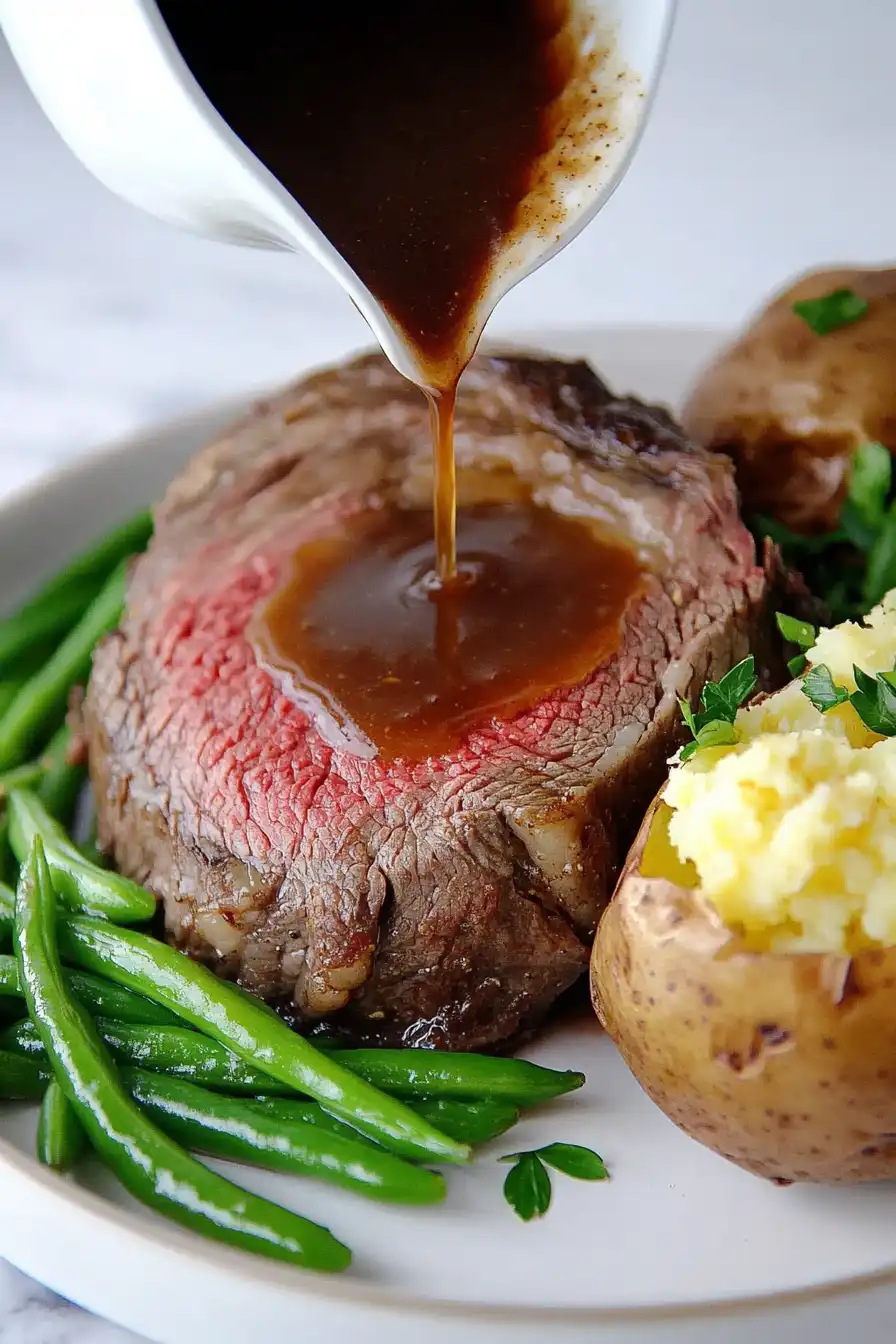
When ready, pour the au jus over the prime rib before serving for an added layer of flavor and moisture.