Here’s my go-to recipe for rhubarb applesauce, combining fresh garden rhubarb with sweet apples, a touch of cinnamon, and just enough sugar to balance out the tartness.
This sauce has become a springtime staple in our house, and I often make a double batch because it disappears so quickly. It’s perfect on morning oatmeal, swirled into yogurt, or just eaten straight from the jar with a spoon – which happens more often than I’d like to admit!
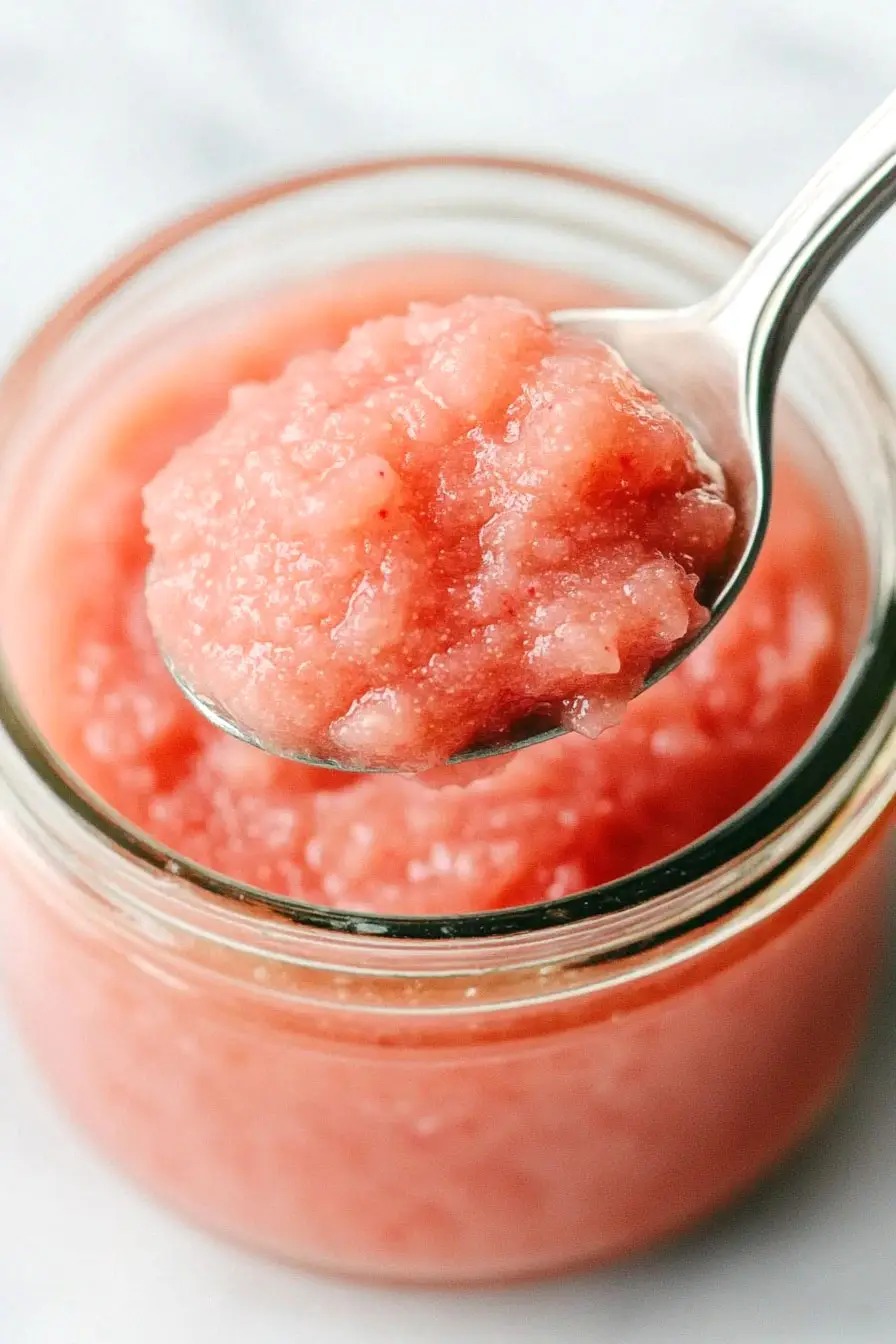
Why You’ll Love This Rhubarb Applesauce
- Simple ingredients – You only need 5 basic ingredients to make this sauce – apples, rhubarb, sugar, water, and a splash of lemon juice.
- Quick preparation – This sauce comes together in just 30-40 minutes, making it perfect for a weekend morning or afternoon project.
- Naturally sweet-tart flavor – The combination of tart Granny Smith apples and tangy rhubarb creates a perfect balance, while letting you control the sweetness to your taste.
- Make-ahead friendly – You can make a big batch and store it in the fridge for quick breakfasts, snacks, or dessert toppings throughout the week.
What Kind of Apples Should I Use?
While this recipe calls for Granny Smith apples, you’ve actually got quite a few options when it comes to making applesauce. Granny Smiths are a great choice because their tartness pairs well with rhubarb, and they break down nicely when cooked. If you want to try something different, Pink Lady or Honeycrisp apples work really well too – they offer a nice balance of sweet and tart flavors. For the smoothest sauce, pick apples that are ripe but still firm, and avoid any with bruises or soft spots. If you’re using sweeter apple varieties like Fuji or Gala, you might want to reduce the sugar in the recipe since these naturally contain more sweetness.
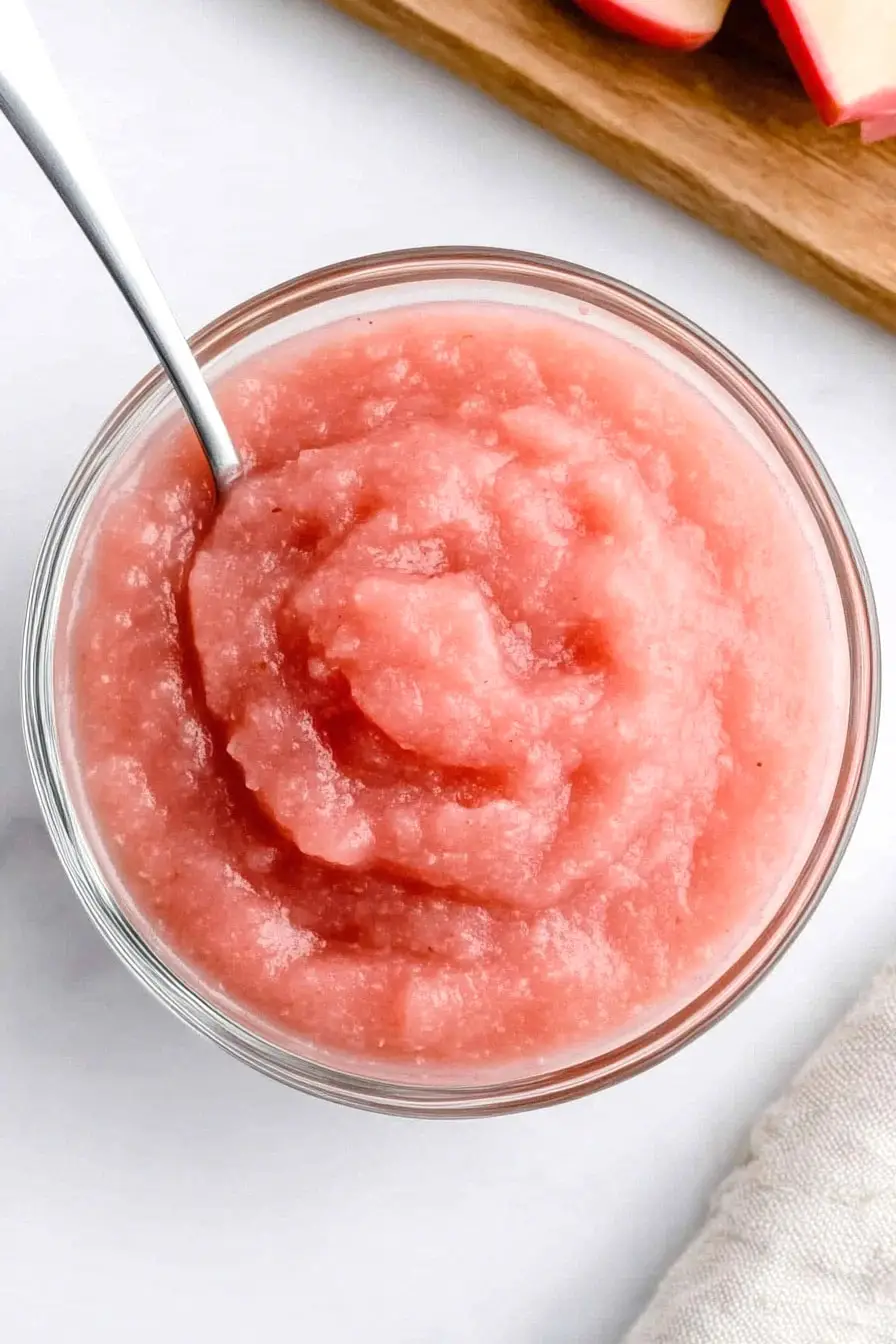
Options for Substitutions
This simple sauce recipe can be adapted with a few easy swaps:
- Granny Smith apples: While Granny Smiths give the best tart flavor, you can use other firm cooking apples like Honeycrisp, Pink Lady, or Braeburn. Just note that sweeter apples might need less sugar in the recipe.
- Rhubarb: If fresh rhubarb isn’t available, frozen works just as well – no need to thaw it first. You can also skip the rhubarb for classic applesauce, but you’ll want to reduce the sugar since rhubarb’s tartness won’t be there.
- Granulated sugar: Feel free to swap in brown sugar, honey, or maple syrup. Start with about half the amount if using honey or maple syrup since they’re sweeter than regular sugar.
- Water: Apple juice or apple cider can replace water for extra apple flavor. You might want to reduce the sugar slightly if using juice.
- Lemon juice: If you’re out of lemons, try lime juice or a splash of apple cider vinegar – just use about half the amount since vinegar is stronger.
Watch Out for These Mistakes While Cooking
The biggest challenge when making rhubarb applesauce is getting the cooking time right – cooking it too long can turn your sauce into mush, while not cooking it enough will leave you with tough, stringy rhubarb pieces. To achieve the perfect texture, cook the apples first until they’re just starting to soften, then add the rhubarb and continue cooking until both are tender but still hold some shape. Another common mistake is skipping the taste test before adding sugar – since both Granny Smith apples and rhubarb vary in tartness, you’ll want to taste and adjust the sweetness gradually rather than adding all the sugar at once. For the best flavor balance, don’t forget to add a splash of lemon juice at the end if your sauce tastes a bit flat – this small addition can make a big difference in bringing out the natural fruity flavors.
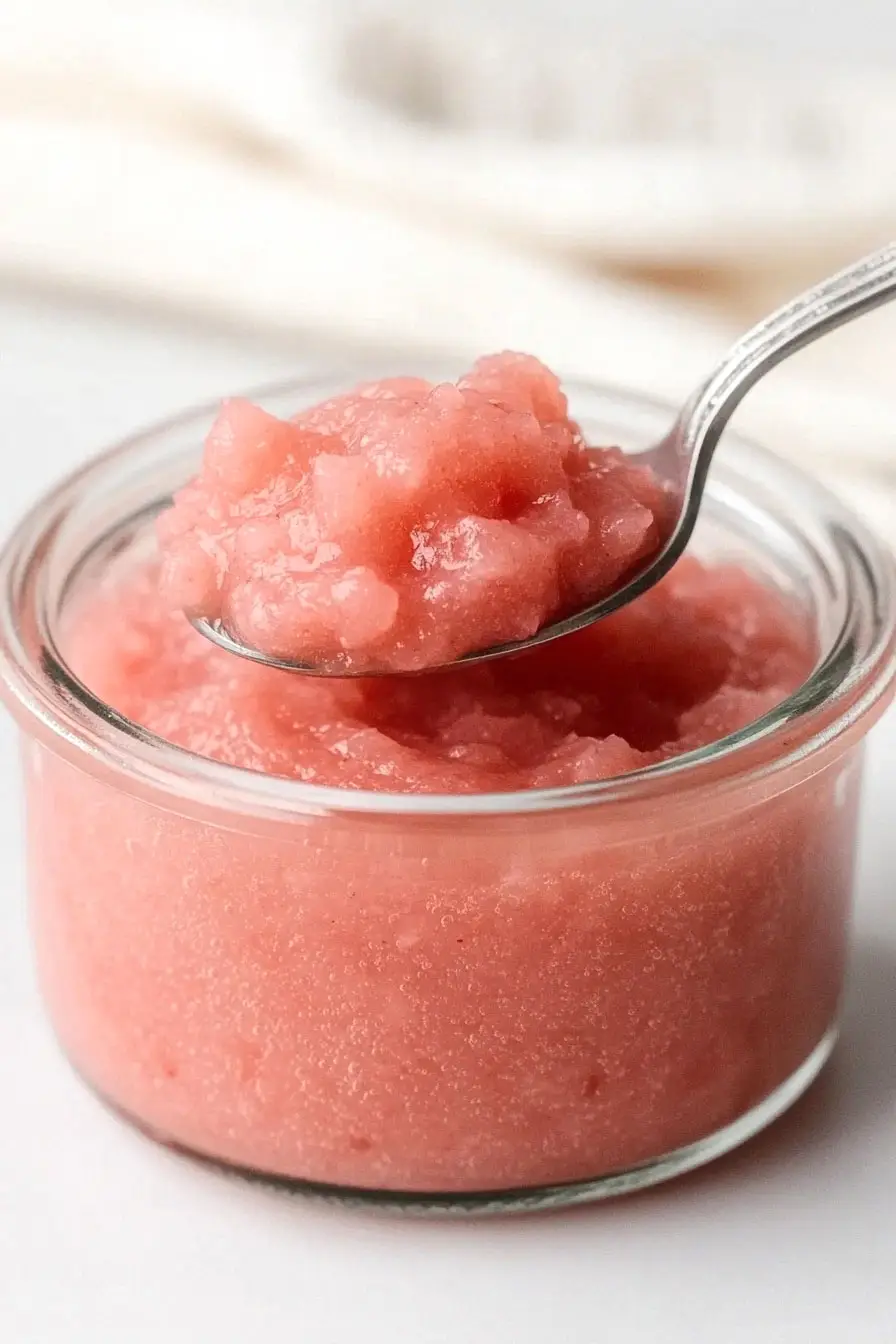
What to Serve With Rhubarb Applesauce?
This tangy-sweet rhubarb applesauce is super versatile and pairs well with so many breakfast and dessert options! For breakfast, try spooning it over warm oatmeal, yogurt parfaits, or your favorite pancakes and waffles. It’s also really good served alongside pork chops or roasted pork tenderloin for dinner – the natural tartness from the rhubarb helps cut through the richness of the meat. If you’re feeling fancy, you can even warm it up and serve it over vanilla ice cream or pound cake for an easy dessert that everyone will love.
Storage Instructions
Keep Fresh: Your homemade rhubarb applesauce will stay good in the refrigerator for up to 10 days when stored in airtight containers. The natural pectin in the apples helps maintain its consistency, and the sugar acts as a preservative. Give it a quick stir before serving, as some natural separation might occur.
Freeze: This sauce freezes really well! Pour it into freezer-safe containers or bags, leaving about an inch of headspace for expansion. It’ll keep its quality for up to 6 months in the freezer. I like to freeze it in smaller portions – perfect for quick snacks or recipe additions.
Can: For long-term storage, you can process this applesauce in a water bath canner. Pour the hot sauce into sterilized jars, leaving 1/2 inch headspace, and process according to your altitude. Properly canned applesauce will keep for up to a year in a cool, dark place.
| Preparation Time | 10-15 minutes |
| Cooking Time | 20-25 minutes |
| Total Time | 30-40 minutes |
| Level of Difficulty | Easy |
Estimated Nutrition
Estimated nutrition for the whole recipe (without optional ingredients):
- Calories: 800-900
- Protein: 3-5 g
- Fat: 0-1 g
- Carbohydrates: 200-220 g
Ingredients
- fresh lemon juice (about 1 tbsp for brightness)
- 1.5 lb rhubarb (trimmed and cut into 2-inch pieces)
- 5 lb Granny Smith apples (peeled, cored, and quartered)
- 1/2 cup granulated sugar
- 1/2 cup water
Step 1: Prepare and Cook the Fruit Mixture
In a large Dutch oven or stainless steel pot, combine all your ingredients and stir them well to ensure everything is evenly mixed.
Place the pot over medium-high heat and bring the mixture to a boil, making sure to stir often to prevent sticking.
Step 2: Simmer the Fruit
Once the mixture reaches a boil, reduce the heat to maintain a gentle boil and let it cook for about 20-25 minutes.
During this time, stir frequently as the fruit breaks down and softens.
After cooking, let the mixture cool for several minutes before moving on to the next step.
Step 3: Blend the Applesauce
Using a food processor or blender, process the mixture in 2 or 3 batches, depending on the capacity of your device.
Blend until smooth; your applesauce should have no lumps but may retain some texture.
Be careful when blending hot foods to avoid any accidents.
Step 4: Adjust Flavor
Taste your homemade applesauce and assess if it needs a touch of acidity.
If necessary, add a bit of fresh lemon juice to balance the flavors to your liking.
Step 5: Store the Applesauce
Transfer the blended applesauce into storage jars.
Allow the sauce to cool completely before sealing the jars with their caps.
Refrigerate the applesauce, where it will keep for about a week.
For long-term storage, freeze the applesauce.