When it comes to desserts that really show off the best of spring, rhubarb custard pie with meringue is a clear winner. Between juggling after-school activities and trying to get dinner on the table, I know how tricky it can be to find time for baking something special that the whole family will enjoy.
That’s why I love this rhubarb custard pie – it combines the tart freshness of seasonal rhubarb with smooth, creamy custard, all topped with fluffy meringue. It’s straightforward to make when you break it down step by step, and it never fails to bring smiles to the dinner table.
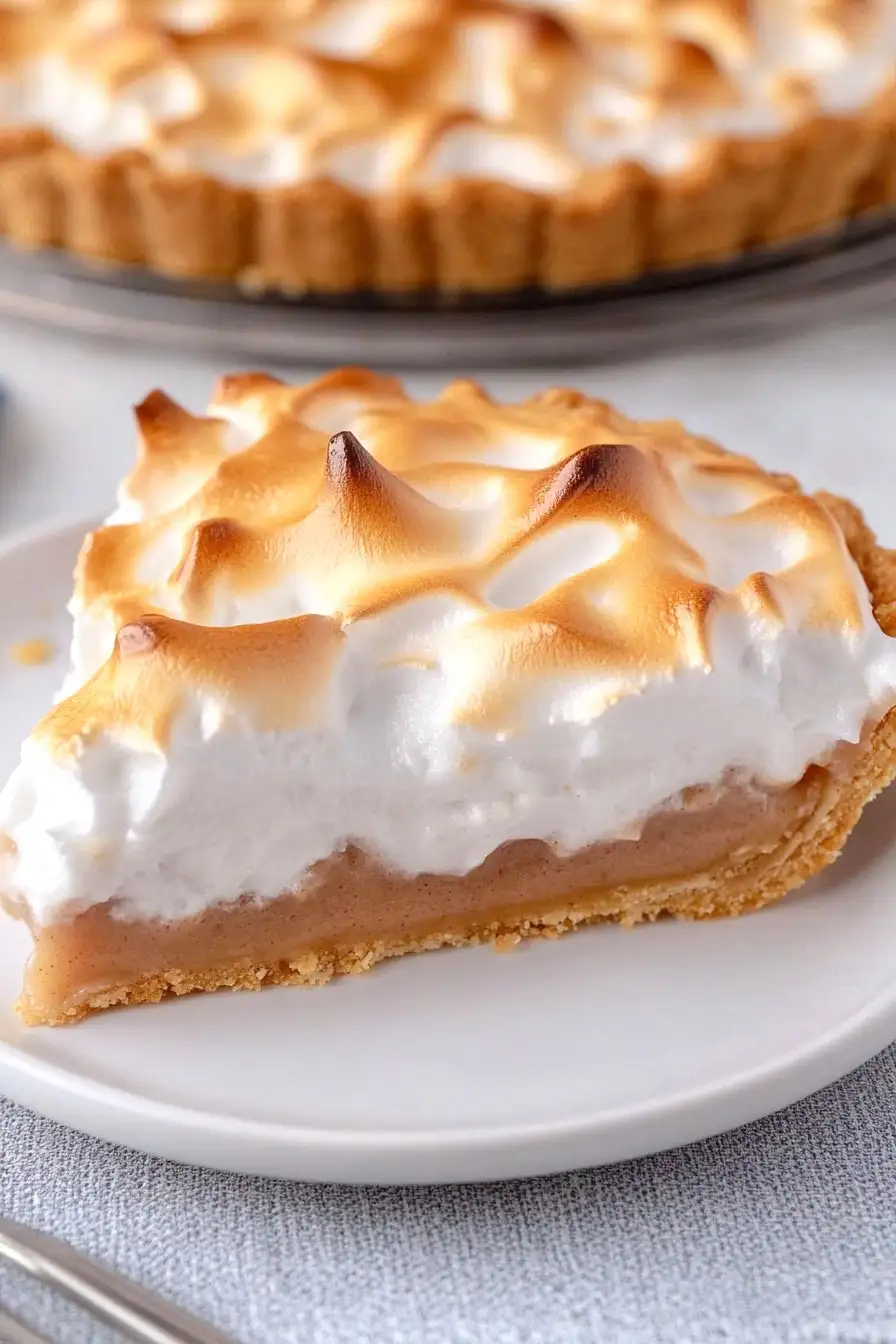
Why You’ll Love This Rhubarb Custard Pie
- Perfect balance of flavors – The tart rhubarb pairs beautifully with the sweet, creamy custard filling, while the fluffy meringue topping adds just the right amount of sweetness.
- Three distinct layers – You get a buttery crust, silky custard filling, and cloud-like meringue topping – each bite is an exciting mix of textures and tastes.
- Make-ahead friendly – You can prepare the crust and filling a day ahead, then top with fresh meringue just before serving.
- Classic spring dessert – This recipe makes the most of seasonal rhubarb, turning it into a nostalgic dessert that’s perfect for family gatherings or special occasions.
What Kind of Rhubarb Should I Use?
For pie making, both field-grown and hothouse rhubarb will give you great results. Field-grown rhubarb, which shows up in spring and early summer, tends to have a deeper red color and slightly more intense flavor, while hothouse rhubarb is usually a prettier pink and slightly milder. When shopping, look for stalks that are firm and crisp – if they’re floppy or soft, they’re past their prime. Keep in mind that color isn’t an indicator of ripeness or sweetness, so don’t worry if your stalks are more green than red. Just remember to never use the leaves (they’re not edible) and trim off any tough ends before chopping your stalks for the pie.
Options for Substitutions
While some ingredients are essential for this classic pie, here are some helpful substitutions you can try:
- Rhubarb: If fresh rhubarb isn’t in season, frozen rhubarb works perfectly – just thaw and drain it well first. In a pinch, tart apples mixed with a tablespoon of lemon juice can work, though the flavor will be different.
- Heavy cream: You can use half-and-half, but the custard won’t be as rich. For a dairy-free version, full-fat coconut milk can work, though it will add a slight coconut flavor.
- Almond essence: Vanilla extract works great as a 1:1 replacement, or try orange extract for a different but complementary flavor.
- Cream of tartar: This is important for a stable meringue, but in a pinch, use 1/2 teaspoon lemon juice or white vinegar instead.
- Cornstarch: All-purpose flour can be used as a thickener – just double the amount to 2 tablespoons.
- Egg whites for meringue: These are essential and can’t be substituted – they’re what makes the meringue light and fluffy. Make sure they’re at room temperature for the best volume.
Watch Out for These Mistakes While Baking
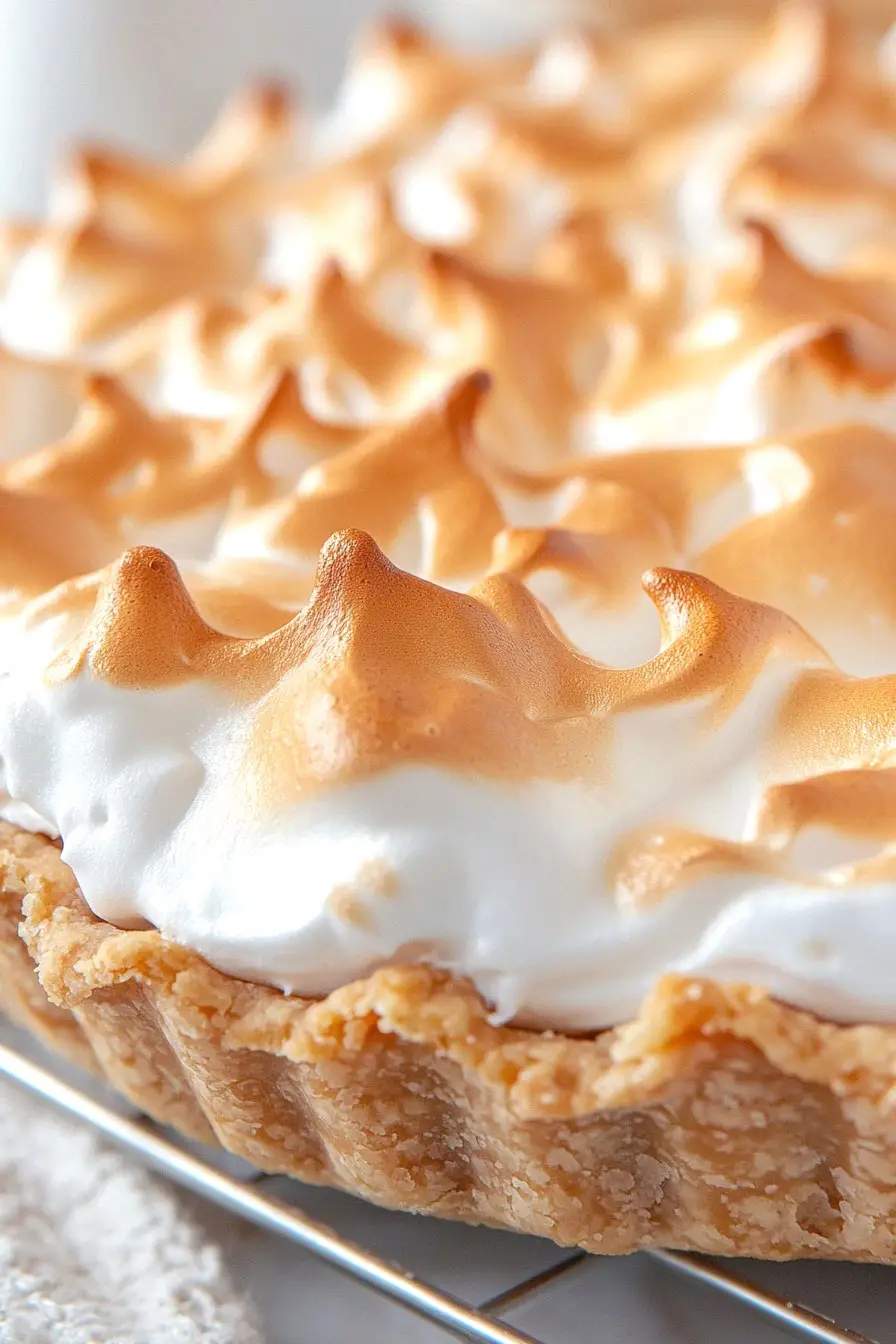
The trickiest part of making a rhubarb custard pie is preventing a soggy bottom crust – pre-baking your crust for 10-12 minutes before adding the filling will create a barrier that keeps the custard from seeping through. When it comes to the meringue, room temperature egg whites are essential – cold eggs won’t whip up to the same volume, so take them out of the fridge at least 30 minutes before starting. Another common mistake is adding sugar to your meringue too quickly – gradually sprinkle it in while beating to ensure it dissolves completely, otherwise you’ll end up with a grainy texture and weepy meringue. For the best results, make sure to spread your meringue all the way to the crust edges, sealing in the custard completely to prevent the meringue from shrinking during baking, and don’t skip the cream of tartar – it helps stabilize your meringue and prevents it from deflating.
What to Serve With Rhubarb Custard Pie?
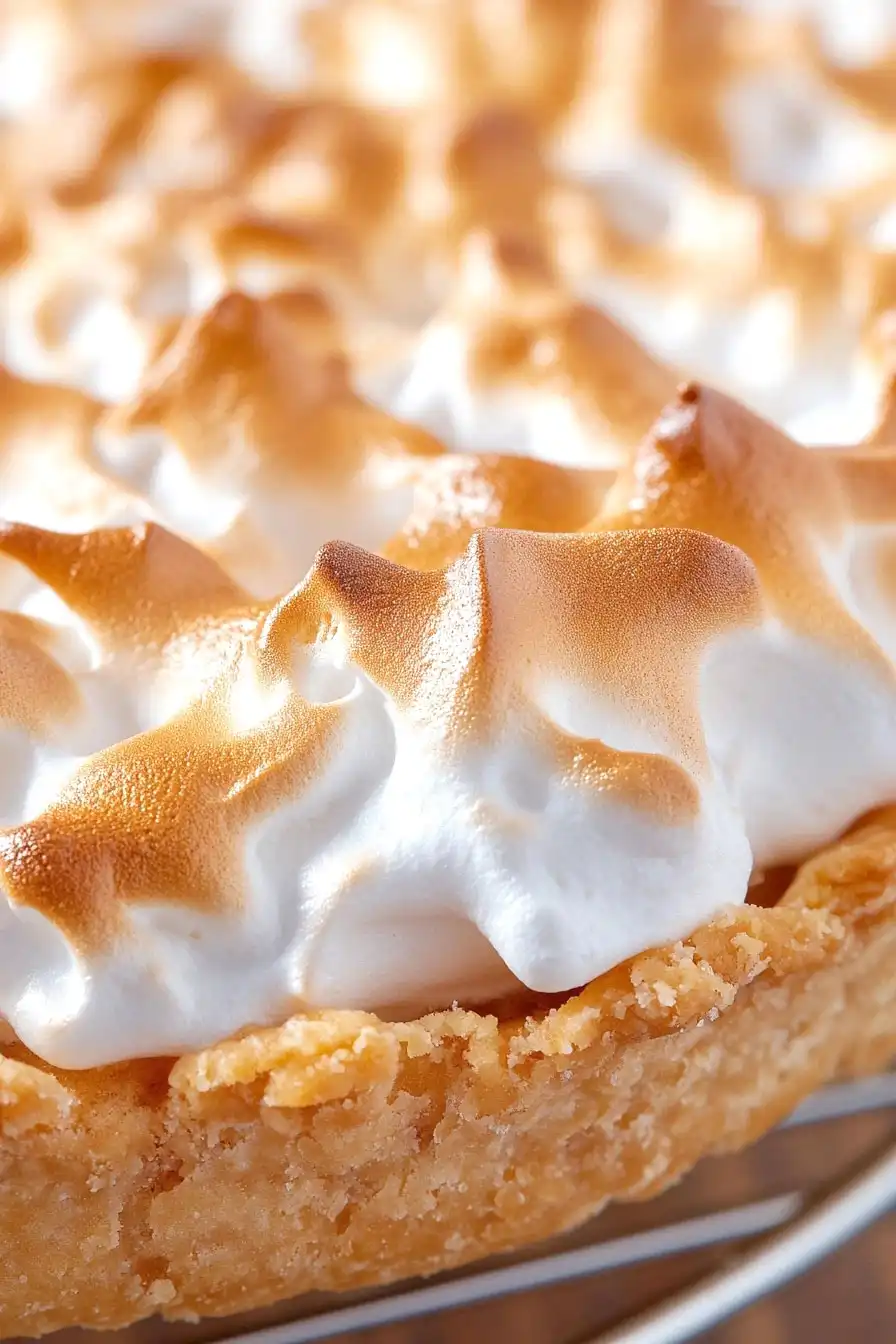
This sweet-tart pie is perfect on its own, but a few simple additions can make it even more special! A scoop of vanilla ice cream is my go-to choice – the cold, creamy texture pairs wonderfully with the warm pie and fluffy meringue. If you’re serving it after dinner, a cup of hot coffee or Earl Grey tea makes for a cozy combination that helps balance the dessert’s sweetness. For a little extra flair, you could add a small dollop of freshly whipped cream or a light dusting of powdered sugar right before serving, though the meringue topping is already pretty spectacular on its own.
Storage Instructions
Keep Cool: Since this pie contains custard and meringue, it needs to be kept in the refrigerator. Place it in there once it has cooled to room temperature, and it will stay good for up to 3 days. The meringue might weep a little bit – that’s totally normal for this type of pie!
Cover: To store your pie, use a pie keeper or loosely tent with foil, being careful not to squish the meringue. Try not to use plastic wrap as it can stick to the meringue and pull it off. The pie is best enjoyed within the first 24 hours when the meringue is at its peak texture.
Serve: When you’re ready to serve the pie after refrigeration, let it sit at room temperature for about 15-20 minutes. This helps bring out the flavors of the rhubarb and custard. Keep in mind that this pie isn’t suitable for freezing – the meringue and custard texture wouldn’t hold up well.
| Preparation Time | 20-30 minutes |
| Cooking Time | 65-70 minutes |
| Total Time | 85-100 minutes |
| Level of Difficulty | Medium |
Estimated Nutrition
Estimated nutrition for the whole recipe (without optional ingredients):
- Calories: 1700-2000
- Protein: 25-35 g
- Fat: 100-120 g
- Carbohydrates: 180-220 g
Ingredients
For the pie filling:
- 1 cup granulated sugar
- 1 unbaked pie crust (I use Pillsbury refrigerated pie crust)
- 3 tbsp all-purpose flour
- 1/4 tsp almond extract (for a delicate flavor)
- 1 cup heavy cream (makes a richer filling)
- 1/2 tsp salt
- 3 cups chopped rhubarb (fresh or frozen, thawed)
- 3 eggs, whisked
For the meringue:
- 1/4 tsp cream of tartar
- 4 egg whites (at room temperature for best volume)
- 1 tbsp cornstarch
- 1 tsp vanilla extract (I prefer McCormick vanilla)
- 1/2 cup granulated sugar (superfine sugar dissolves better)
- 1/3 cup water
Step 1: Prepare and Bake the Rhubarb Pie
Start by placing the rhubarb into an unbaked 9-inch pie shell.
Mix the remaining ingredients together until well combined, then pour this mixture over the rhubarb in the pie shell.
Preheat your oven to 400°F and bake the pie for 10 minutes.
After that, lower the oven temperature to 350°F and bake for an additional 40 minutes.
Once done, remove the pie from the oven and allow it to cool completely before topping.
Step 2: Prepare the Meringue Base
In the bowl of a stand mixer, combine the egg whites and vanilla.
Mix on medium-low speed until the egg whites become frothy.
While the eggs are mixing, combine the water and cornstarch in a small saucepan.
Heat the mixture over medium-low heat until it thickens and becomes opaque.
Step 3: Incorporate Sugar and Beat the Egg Whites
Combine the sugar and the cream of tartar in a separate bowl.
Increase the mixer speed to medium-high and incorporate the sugar mixture into the frothy egg whites, adding 1 tablespoon at a time.
Continue beating the egg whites until they begin to stiffen.
Step 4: Add Cornstarch Mixture and Finalize Meringue
Once the egg whites are stiff, add the warm cornstarch mixture to the egg whites, 1 tablespoon at a time, while continuing to beat on high speed.
Continue to beat the mixture until the meringue is stiff and glossy.
Step 5: Top the Pie with Meringue
Mound the prepared meringue onto the slightly cooled pie, ensuring that the meringue completely covers the pie crust.
This coverage will help prevent shrinkage during baking.
Step 6: Brown the Meringue
Place the pie back into the oven set at 350°F and bake for 15-20 minutes or until the meringue is golden brown on top.
Remove the pie from the oven and let it cool before serving.
Enjoy your beautifully topped rhubarb pie!