I never thought much about freezer jam until my grandmother showed me her way of making it. Growing up, jam always meant long hours of sterilizing jars and processing fruit the traditional way. When things got busy with the kids, I pretty much gave up on making my own jam altogether.
But freezer jam changed everything for me – it’s basically jam-making for people who don’t have time for all the fuss. And strawberry rhubarb? That combo brings back memories of my mom’s garden, where those red stalks of rhubarb would pop up every spring right next to the strawberry patch. Now I can capture that same homegrown taste without spending all day in the kitchen.
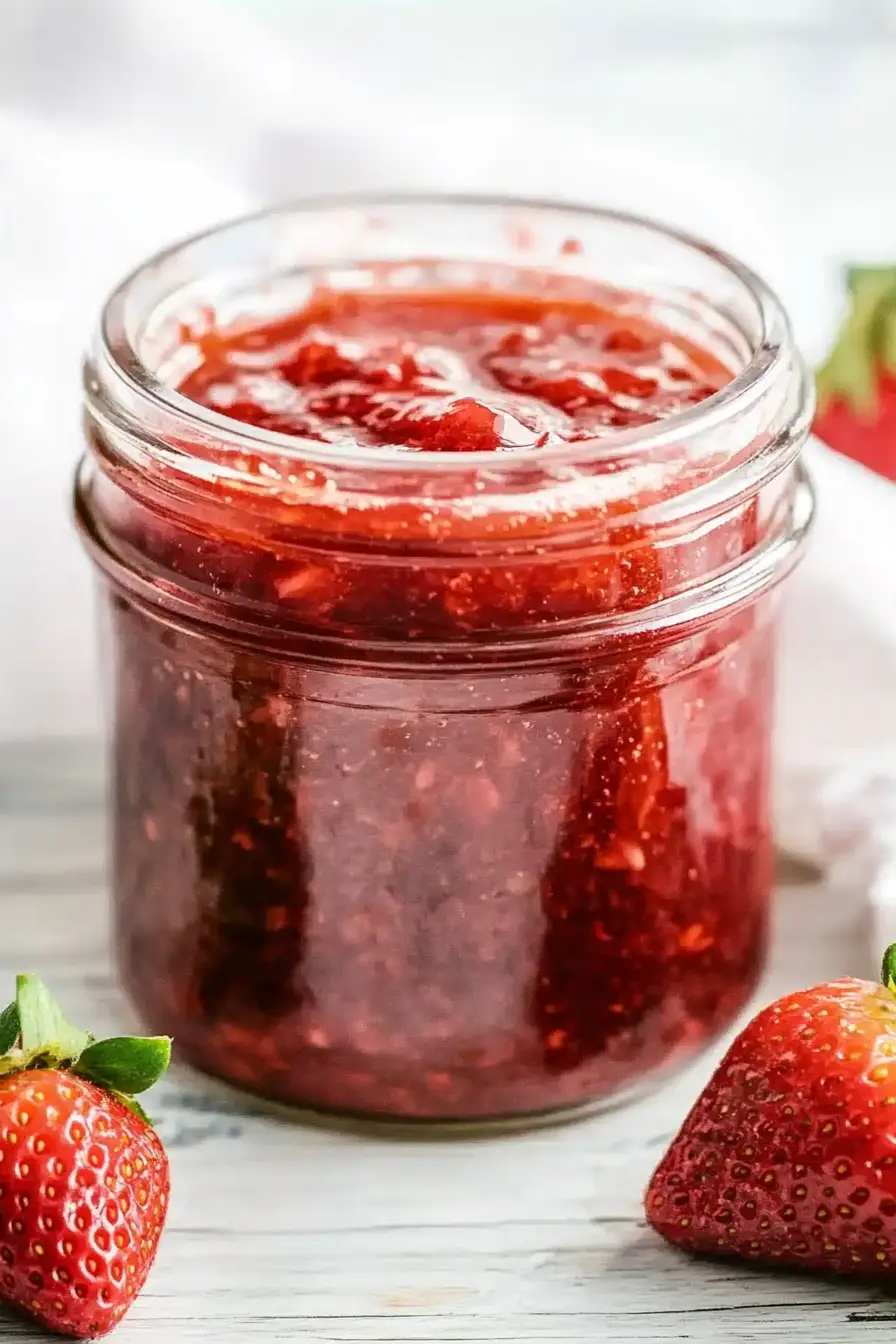
Why You’ll Love This Strawberry Rhubarb Jam
- Quick preparation – This freezer jam comes together in under 30 minutes, making it perfect for busy home cooks who want homemade jam without the traditional canning process.
- Simple ingredients – With just 4 basic ingredients, you can create a delicious homemade jam that tastes like summer in a jar.
- No special equipment needed – Unlike traditional jam-making, this recipe doesn’t require any special canning equipment or complicated water bath processing.
- Make-ahead friendly – Since it’s a freezer jam, you can make several batches when strawberries and rhubarb are in season and enjoy them for months to come.
What Kind of Strawberries Should I Use?
Fresh, ripe strawberries are the way to go for making freezer jam – you’ll want berries that are bright red all the way through and smell sweet. The good news is that even if your strawberries aren’t perfectly shaped or a bit overripe, they’ll still work great in jam since they’re getting mashed up anyway. Local, in-season strawberries usually have the best flavor, but store-bought ones will definitely work too. Just avoid using frozen strawberries for this recipe, as they can be too watery and might affect how well your jam sets up. When picking your berries, look for ones that are free from any soft spots or mold, and try to use them within a day or two of purchase for the freshest taste.
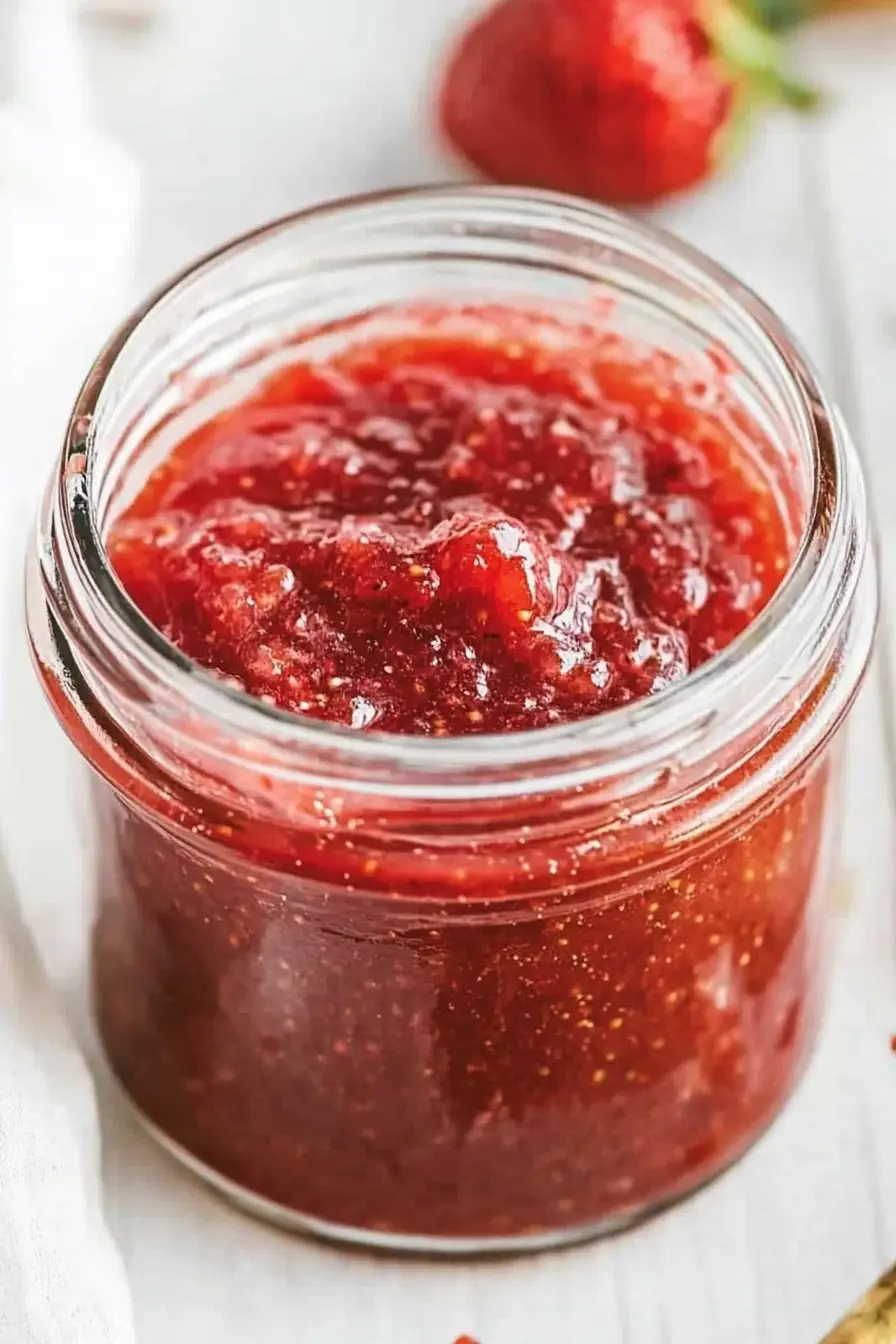
Options for Substitutions
While this jam recipe is pretty straightforward, here are some helpful substitution tips if you need them:
- Fresh strawberries: If fresh strawberries aren’t in season, you can use frozen ones – just thaw and drain them first. Keep in mind that frozen berries might make your jam a bit softer.
- Fresh rhubarb: Frozen rhubarb works just as well as fresh – no need to thaw it first. If you can’t find rhubarb at all, you could use tart apples, though this will change the classic flavor profile of the jam.
- White sugar: Regular white sugar is best for this recipe as it helps with preservation. While you could use honey or maple syrup, I don’t recommend it as it will change both the texture and shelf life of your jam.
- Lemon juice: Bottled lemon juice works fine here, or you can substitute with lime juice. The acid is needed for proper setting, so don’t skip it!
Watch Out for These Mistakes While Cooking
The biggest mistake when making freezer jam is not chopping the strawberries and rhubarb into small, consistent pieces – larger chunks won’t break down properly and can create an uneven texture in your final product. Another common error is skipping the crucial step of thoroughly crushing the strawberries (a potato masher works great for this), as this helps release the natural pectin needed for proper setting. To ensure your jam sets correctly, avoid reducing the amount of sugar called for in the recipe, as it works together with the natural fruit pectin to create the right consistency – if you prefer a less sweet jam, it’s better to add a bit more lemon juice instead. For the best results, leave about 1/2 inch of headspace in your containers before freezing, as the jam will expand slightly when frozen.
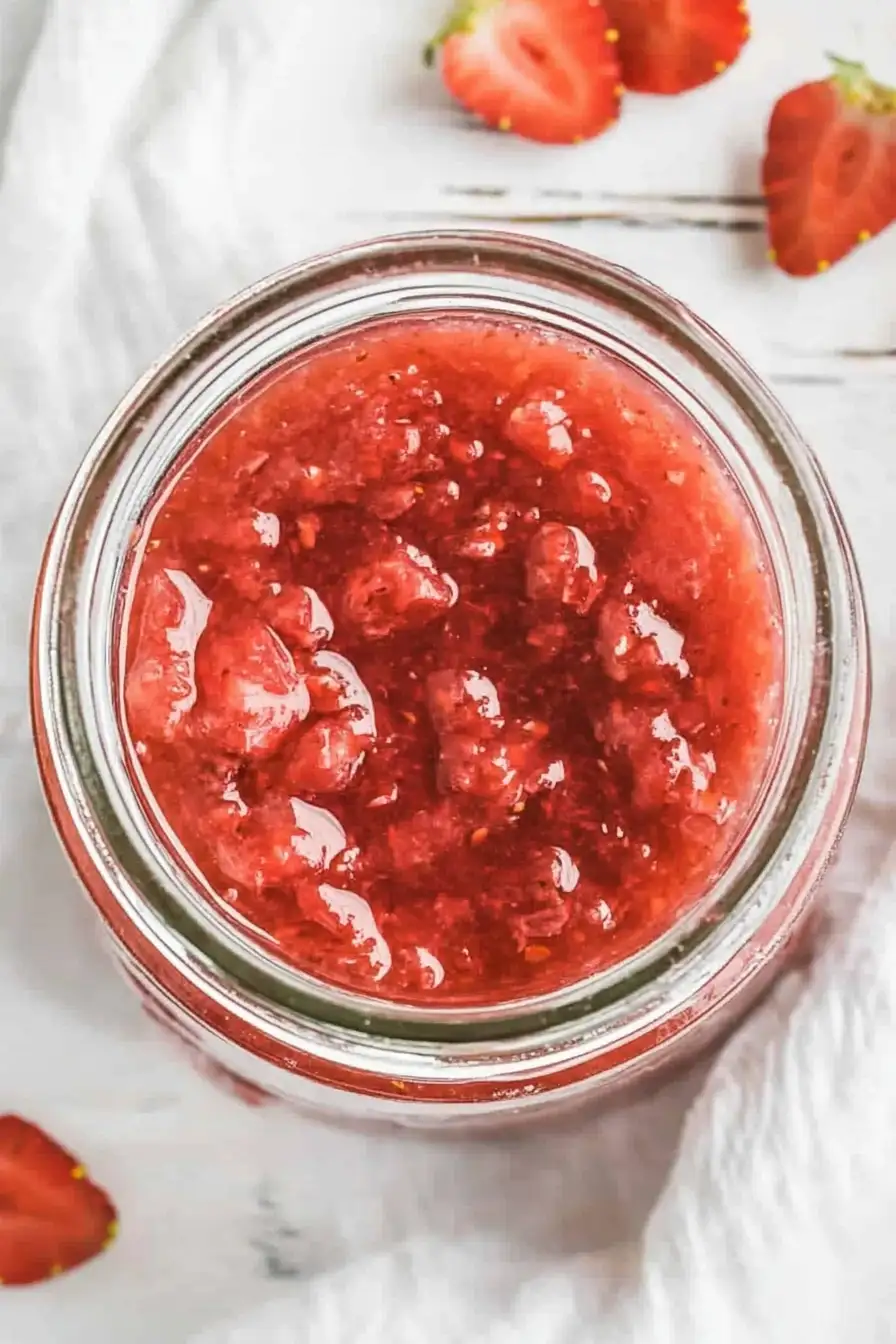
What to Serve With Strawberry Rhubarb Jam?
This sweet and tangy jam is perfect for your morning breakfast spread! The most classic way to enjoy it is simply spread on warm buttered toast, English muffins, or freshly baked scones. For a quick breakfast or snack, try it swirled into plain Greek yogurt or oatmeal – the jam adds just the right amount of sweetness and fruit flavor. If you’re feeling a bit fancy, use it as a filling for crepes or spread it between layers of a basic vanilla cake. And don’t forget about good old PB&J sandwiches – this homemade jam takes them to a whole new level!
Storage Instructions
Keep Fresh: Once your jam is made, let it cool completely at room temperature. Then, pop it in the fridge in airtight containers or mason jars – it’ll stay good for about 3 weeks. Since this is a freezer jam recipe, it’s meant to be stored cold rather than processed for shelf-stability.
Freeze: This jam is perfect for freezing – that’s why we call it freezer jam! Pour it into freezer-safe containers, leaving about 1/2 inch of space at the top for expansion. It’ll keep its fresh taste for up to 6 months in the freezer. I like to make a big batch in summer when strawberries are at their peak.
Thaw: When you’re ready to use your frozen jam, just transfer a container to the fridge and let it thaw overnight. Give it a good stir before using, and remember to keep it refrigerated once thawed. It’s that simple!
| Preparation Time | 10-15 minutes |
| Cooking Time | 8-15 minutes |
| Total Time | 18-30 minutes |
| Level of Difficulty | Easy |
Estimated Nutrition
Estimated nutrition for the whole recipe (without optional ingredients):
- Calories: 800-900
- Protein: 4-6 g
- Fat: 0-1 g
- Carbohydrates: 200-220 g
Ingredients
- 1 cup diced fresh rhubarb (about 1/2-inch pieces)
- 1 tbsp lemon juice (freshly squeezed for brighter flavor)
- 1.5 cups white sugar
- 4 cups hulled strawberries (fresh, for best flavor and sweetness)
Step 1: Combine Ingredients in a Pot
In a deep pot, add strawberries and rhubarb along with sugar and lemon juice.
Stir the mixture to combine all the ingredients well.
This creates a base for your jam with a mix of sweetness and acidity.
Step 2: Heat and Mash the Fruit
Turn the heat to high and stir the mixture occasionally until it starts to bubble and become hot.
Use a potato masher to mash the fruit until they begin to fall apart and the rhubarb gets stringy.
Continue mashing until you achieve the desired consistency, depending on how chunky you like your jam.
Step 3: Boil and Monitor Temperature
As the mixture begins to boil, keep stirring every 30 seconds or so to prevent sticking and to ensure even heating.
Use an instant-read thermometer to measure the temperature of the jam.
Make sure the thermometer is in the middle of the jam and not touching the bottom of the pot.
Continue boiling the jam until it reaches 220 degrees Fahrenheit (for low altitudes) or 218 degrees Fahrenheit (for high altitudes), which should take about 8 minutes.
This step is crucial to achieve the right consistency for the jam.
Step 4: Jar the Jam
Once the jam has reached the correct temperature, remove the pot from the heat.
Carefully spoon the hot jam into a standard mason jar.
At this point, the jam might be a little liquid, but it will thicken as it cools.
Be cautious while handling the hot mixture to avoid burns.
Step 5: Cool and Store
After filling the jars, secure the lids and allow the jam to cool completely at room temperature.
Once cooled, store the jam in the refrigerator for immediate use or freeze for long-term storage.
Enjoy your homemade strawberry-rhubarb jam on toast, scones, or however you prefer!