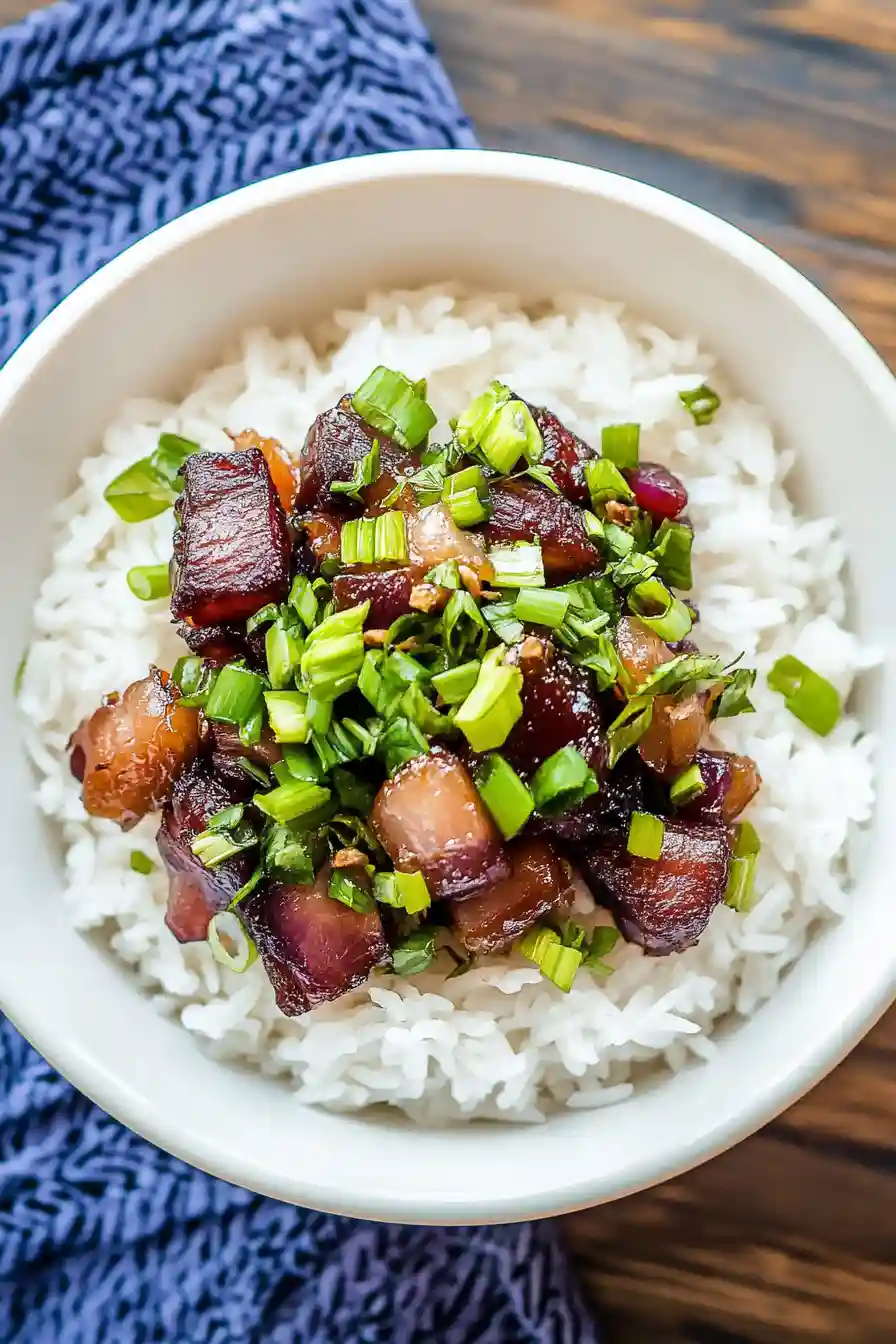
Here’s my go-to Vietnamese pork belly recipe, with tender meat that practically melts in your mouth, a perfectly crispy top layer, and a simple marinade made with fish sauce, brown sugar, and classic Asian seasonings.
This pork belly has become our Sunday dinner favorite, and I always make extra because everyone fights over the leftovers. Nothing beats turning the extras into banh mi sandwiches the next day, if they last that long!

Why You’ll Love This Vietnamese Pork Belly
- Rich, complex flavors – The combination of star anise, lemongrass, and ginger creates a perfect balance of sweet, savory, and aromatic notes that make this dish truly special.
- Tender, melt-in-your-mouth meat – The slow cooking process breaks down the pork belly until it’s perfectly tender, while the fat renders and becomes incredibly succulent.
- Simple ingredient list – Most of these ingredients are easy to find at your local grocery store or Asian market, and you’ll only need a handful of items to create this flavorful dish.
- Make-ahead friendly – This dish actually tastes even better the next day, making it perfect for meal prep or when you want to impress guests without last-minute cooking.
What Kind of Pork Belly Should I Use?
For Vietnamese pork belly, you’ll want to look for a piece that has a good balance of meat and fat layers – ideally with about 50/50 ratio. Fresh pork belly is available both with and without the skin (rind), but for this recipe, skinless pork belly works best since it allows the marinade to penetrate the meat more effectively. When shopping, look for pieces that have a pinkish-red color in the meat layers and white (not yellowish) fat. It’s perfectly fine to buy a whole piece and cut it into strips yourself, or you can ask your butcher to do this for you – just aim for strips about 1-inch thick for the best results.
Options for Substitutions
Need to make some swaps for this Vietnamese dish? Here are some helpful substitutions:
- Pork belly: While pork belly gives the best results with its rich fat content, you can use pork shoulder or even thick-cut bacon as alternatives. Just keep in mind the cooking time might need adjusting – shoulder will need longer, bacon will cook faster.
- Dark soy sauce: Regular soy sauce works too, but add 1 teaspoon of molasses or brown sugar to get that deeper color and flavor. Tamari is another good option if you need a gluten-free choice.
- Fish sauce: This gives the dish its authentic taste, but if you need to skip it, try using a mix of soy sauce and a tiny splash of anchovy paste. For a vegetarian option, use coconut aminos plus a pinch of salt.
- Lemongrass: If fresh lemongrass isn’t available, use 1 teaspoon of lemongrass paste from a tube, or mix 1/4 teaspoon lemon zest with a tiny pinch of ginger.
- MSG: You can skip MSG entirely or replace it with a pinch of mushroom powder or a splash of coconut aminos for that extra savory kick.
- Dried chili peppers: Feel free to use fresh Thai chilies, crushed red pepper flakes, or even a dollop of sambal oelek. Start with less and adjust to your heat preference.
Watch Out for These Mistakes While Cooking
The biggest challenge when cooking pork belly is achieving that perfect balance of crispy exterior and tender meat – rushing the cooking process will result in chewy, tough meat instead of that melt-in-your-mouth texture we’re after. To get it right, start by scoring the fat cap in a crosshatch pattern (but don’t cut into the meat) and cook the belly skin-side down first to render the fat properly. Another common mistake is adding the brown sugar too early, which can burn and become bitter – instead, wait until the last 10-15 minutes of cooking to add it, allowing it to caramelize just enough to create a glossy glaze. For the best flavor development, don’t skip pounding the lemongrass before adding it to the dish – this releases the essential oils and ensures the citrusy notes infuse throughout the meat. Finally, resist the urge to stir too frequently; giving the pork belly time to develop a golden crust will reward you with deeper flavors and better texture.

What to Serve With Vietnamese Pork Belly?
This rich and flavorful pork belly pairs perfectly with steamed jasmine rice, which helps soak up all those amazing savory-sweet juices. For a complete meal, I like to add some quick-pickled vegetables like carrots and daikon radish on the side – their tangy crunch helps balance out the richness of the pork. A simple cucumber salad with rice vinegar dressing also works great as a fresh side dish. If you want to make it more filling, serve it with some stir-fried morning glory (water spinach) or baby bok choy to add some greens to your plate.
Storage Instructions
Keep Fresh: This tasty Vietnamese pork belly will stay good in an airtight container in the fridge for up to 3 days. The flavors actually get even better after a day as all those amazing spices continue to mingle together!
Freeze: Want to save some for later? Let the pork belly cool completely, then pack it in a freezer-safe container with its sauce. It’ll keep well for up to 2 months. Just remember to label it with the date so you know when you made it.
Warm Up: To enjoy your leftover pork belly, gently heat it in a pan over medium-low heat until warmed through. The microwave works too – just use 50% power and heat in short bursts, stirring in between. If it seems a bit dry, add a splash of water to the sauce while reheating.
| Preparation Time | 15-20 minutes |
| Cooking Time | 65-70 minutes |
| Total Time | 80-90 minutes |
| Level of Difficulty | Medium |
Estimated Nutrition
Estimated nutrition for the whole recipe (without optional ingredients):
- Calories: 800-900
- Protein: 40-50 g
- Fat: 60-70 g
- Carbohydrates: 20-30 g
Ingredients
For the main dish:
- 14 oz pork belly strips (cut into 1-inch pieces)
- 1 stalk lemongrass (finely minced)
- 1 red bell pepper (cored and cut into 1-inch pieces)
- 1/8 tsp msg
- 15g ginger (freshly grated for best flavor)
For the sauce:
- 2 tbsp brown sugar
- 2 star anise
- 6 small dried chili peppers (I use Mekhala brand dried chilis)
- 3 tbsp dark soy sauce
- 1 tbsp fish sauce
Step 1: Prepare the Ingredients
Begin by cutting the pork belly into chunks that are 1-2cm thick across the strip.
Then, cut the red pepper into a 1cm dice.
Using the side of a knife, gently bash the piece of ginger and the lemongrass to bruise them.
This will release their flavors more effectively during cooking.
Step 2: Cook the Pork
Heat a wok over medium-low heat.
Add the pork chunks into the wok without any oil, as the pork will render its own fat.
Stir the pork every couple of minutes to ensure even browning.
This process will take about 20 minutes.
Once the pork is nicely browned, remove it from the wok and place it in a bowl.
Step 3: Prepare the Sauce
In the same wok, without cleaning it, add brown sugar, soy sauce, and fish sauce.
Stir the mixture until the sugar dissolves and the sauce begins to bubble.
At this point, add the star anise and chilli peppers, stirring for about 30 seconds to infuse the flavors into the sauce.
Step 4: Combine and Cook
Return the browned pork to the wok along with the diced red pepper, bruised lemongrass, and ginger.
Pour in enough water to cover the pork by around 5-6mm (¼”).
Sprinkle in the MSG and stir everything together to combine.
Step 5: Simmer and Reduce
Increase the heat to medium and allow the mixture to cook at a medium boil for 45-50 minutes.
During this time, the liquid should reduce significantly, leaving you with a viscous and shiny coating on the pork.
Stir occasionally to ensure even cooking and to prevent sticking.
Step 6: Serve and Enjoy
Once the liquid has reduced and the pork is tender with a glossy sauce, remove the wok from the heat.
Serve the dish hot, savoring the aromatic blend of flavors from the pork and spices.
Enjoy your deliciously rich pork belly dish!