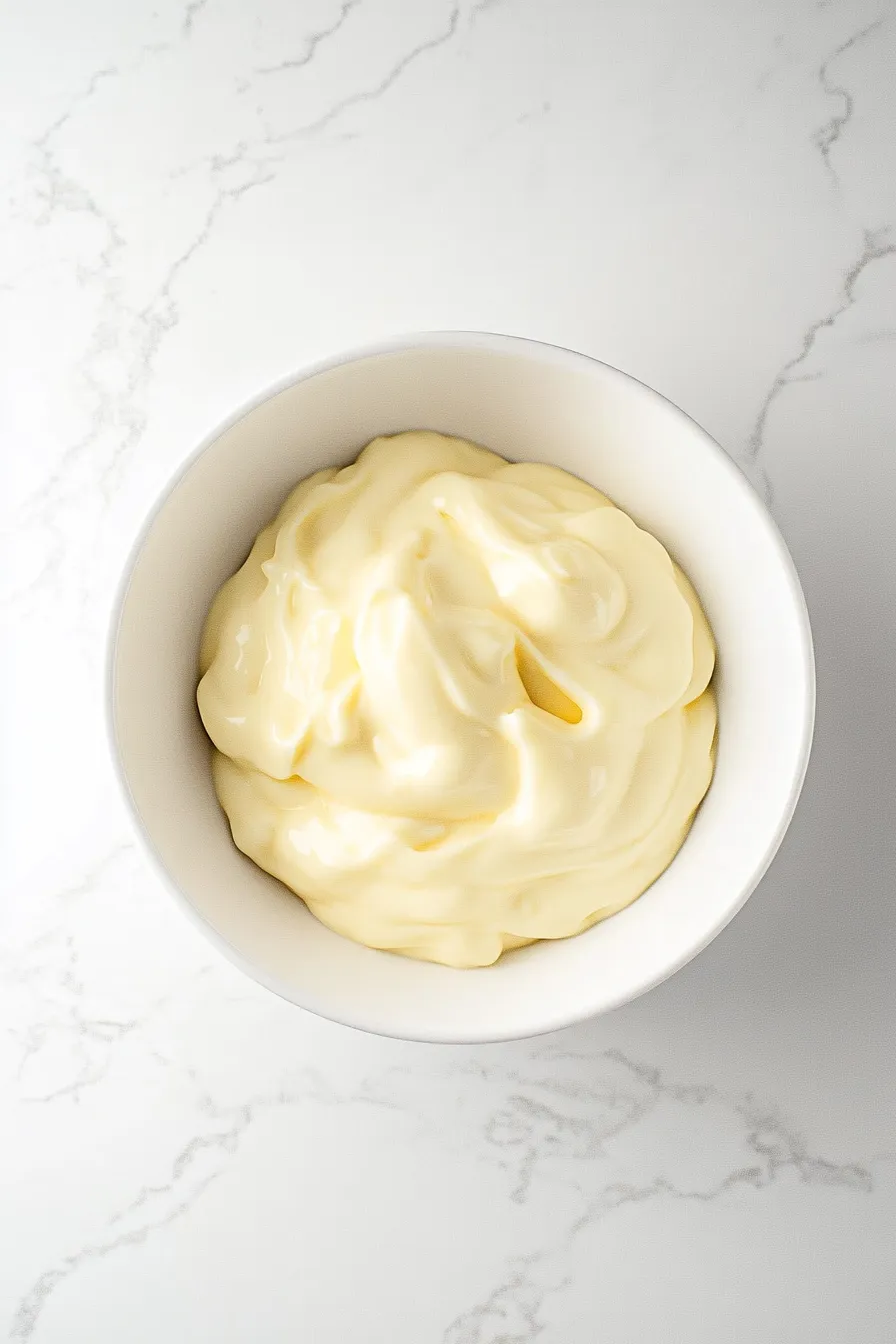
Making homemade mayonnaise from scratch can seem like a daunting task, especially when there are so many ready-made options sitting right there on the grocery store shelf. Trust me, I used to think the same way until I discovered just how simple and rewarding it is to whip up a batch of egg yolk mayonnaise in my own kitchen.
The good news? This recipe is foolproof and takes just minutes to prepare. Plus, you’ll know exactly what goes into your mayo – no preservatives or mysterious ingredients, just simple, fresh components that come together to make something way better than anything you’ll find at the store.
Why You’ll Love This Homemade Mayo
- Quick preparation – This mayo comes together in just minutes – faster than a trip to the grocery store to buy the pre-made stuff!
- Clean ingredients – Unlike store-bought versions, you control exactly what goes into your mayo – no preservatives or artificial ingredients needed.
- Cost-effective – Using basic pantry staples like egg yolks and oil, you can make fresh mayo whenever you need it for a fraction of the price of premium store brands.
- Better taste – The fresh, rich flavor beats anything from a jar, with a smooth, creamy texture that’s perfect for sandwiches, salads, and dips.
- Customizable – You can easily adjust the seasonings and acidity to match your taste preferences or add extra flavors like garlic or herbs.
What Kind of Oil Should I Use?
For homemade mayonnaise, you’ll want to use a neutral-flavored oil that won’t overpower the other ingredients. Safflower oil is an excellent choice because it has almost no taste and creates a light, creamy mayo. Regular vegetable oil or canola oil work great too, and they’re usually more budget-friendly options. Just steer clear of olive oil for this recipe – while it’s great in other dishes, its strong flavor can make your mayonnaise taste bitter or too intense. Whatever oil you choose, make sure it’s fresh and hasn’t been sitting in your pantry for too long, as rancid oil will ruin your mayo.

Options for Substitutions
While homemade mayo needs certain key ingredients to work properly, there are still some swaps you can try:
- Egg: The egg yolk is essential for mayonnaise and cannot be substituted – it’s what makes the emulsion happen. Always use fresh, room temperature eggs for best results.
- Dijon mustard: You can use yellow mustard instead of Dijon, though the flavor will be different. The mustard helps with emulsification, so try not to skip it completely.
- Vinegar: Feel free to use any light-colored vinegar – apple cider vinegar or plain white vinegar work well. Just avoid dark vinegars like balsamic that will change the color.
- Safflower/vegetable oil: Any neutral-flavored oil works here – try canola, grapeseed, or light olive oil. Avoid extra virgin olive oil as it can make the mayo taste bitter and too strong.
- Lemon juice: You can skip the lemon juice or replace it with a splash more vinegar if you don’t have any on hand.
Watch Out for These Mistakes While Making
The biggest challenge when making homemade mayonnaise is adding the oil too quickly, which can cause the emulsion to break – start with just a few drops at a time, then gradually increase to a very thin stream while whisking constantly.
Temperature matters more than you might think: using cold eggs straight from the fridge can lead to separation, so let your egg yolk come to room temperature for about 30 minutes before starting, and make sure all your ingredients are at the same temperature.
If your mayonnaise does break (looks curdled or separated), don’t panic – you can fix it by starting fresh with a new egg yolk in a clean bowl, then slowly whisk in the broken mayonnaise mixture.
For the smoothest results, make sure your bowl is completely dry and free from any water droplets, as even a tiny amount of water can prevent proper emulsification, and consider using a food processor or immersion blender if you find hand whisking too tiring.
What to Serve With Homemade Mayonnaise?
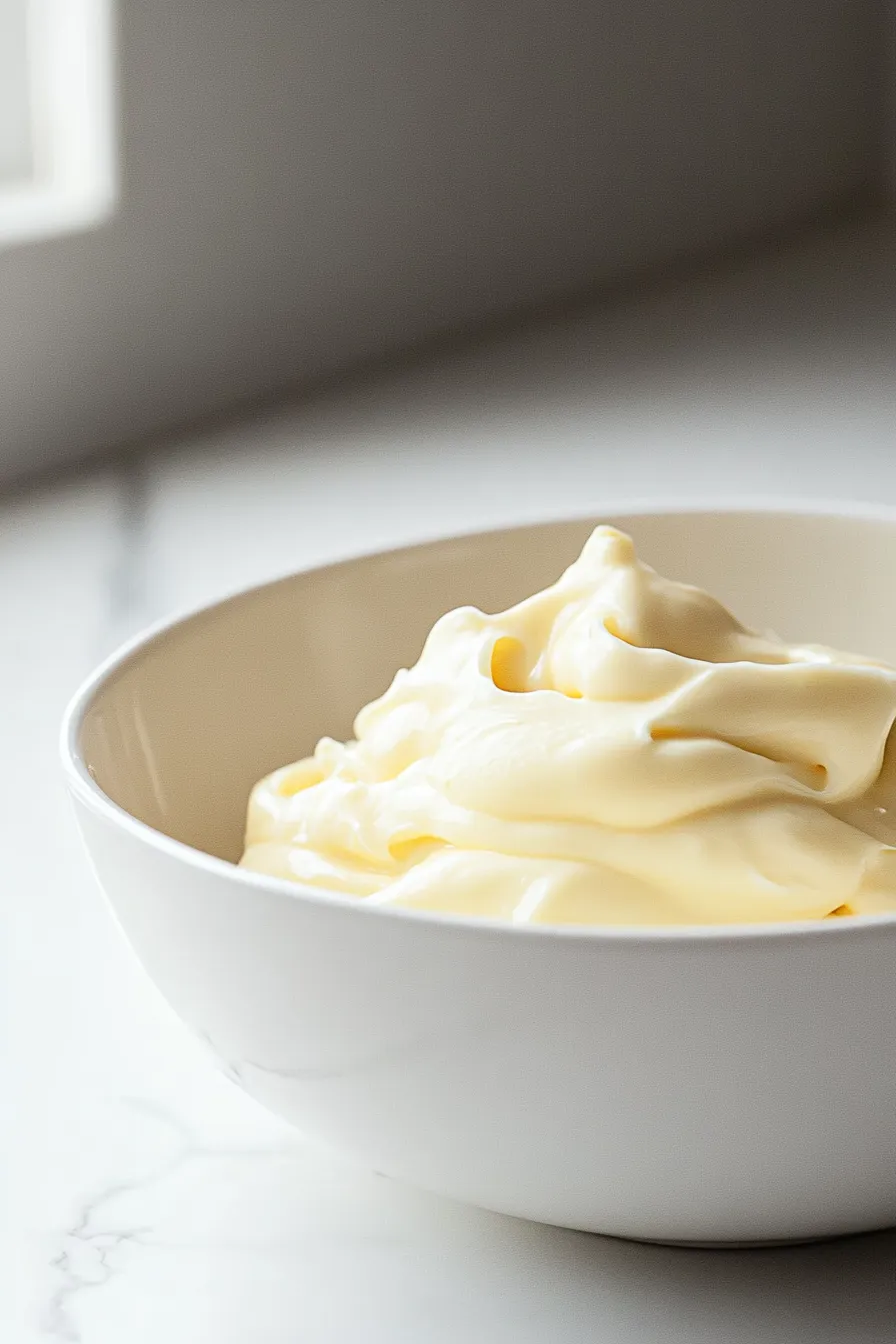
Fresh homemade mayo is a total game-changer for sandwiches and can take your lunch from basic to really good in seconds. You can spread it on BLTs, turkey clubs, or tuna salad sandwiches for that extra bit of creamy goodness. It’s also perfect as a dip for crispy french fries or as a base for quick potato salad – just mix in some chopped herbs and a splash of vinegar. For a lighter option, use it as a dip for fresh veggie sticks like carrots, celery, and bell peppers, or spread it on lettuce wraps instead of regular sandwiches.
Storage Instructions
Keep Fresh: Your homemade mayo will stay good in an airtight container in the refrigerator for up to 1 week. Make sure to use a clean spoon each time you scoop some out to prevent any contamination. The mayo might separate a bit during storage, but that’s totally normal!
Container Tips: Glass jars work best for storing your mayo – I like using a mason jar with a tight-fitting lid. Try to fill the container as full as possible to minimize air exposure, which helps keep your mayo fresh longer.
Safety Note: Since this mayo contains raw egg yolk, never leave it at room temperature for more than 2 hours. If your mayo has been sitting out longer than that, or if it starts to smell funny or develop any odd colors, it’s best to toss it and make a fresh batch.
| Preparation Time | 5-10 minutes |
| Cooking Time | 1-2 minutes |
| Total Time | 6-12 minutes |
| Level of Difficulty | Easy |
Estimated Nutrition
Estimated nutrition for the whole recipe (without optional ingredients):
- Calories: 1100-1200
- Protein: 3-5 g
- Fat: 120-130 g
- Carbohydrates: 1-3 g
Ingredients
- 1 tbsp red or white wine vinegar
- 1 cup safflower or vegetable oil (or any neutral-flavored oil)
- 1 large egg (yolk only, separated from the white)
- 1 tsp fresh lemon juice (for best flavor)
- 1 tbsp dijon mustard (I like Grey Poupon Country Dijon)
- 1/4 tsp fine sea salt
Step 1: Prepare Your Equipment
If using a large food processor, take advantage of the smaller bowl attachment to ensure better emulsification.
If this smaller bowl isn’t available, consider using an immersion blender for optimal results.
Alternatively, make a larger batch by doubling the recipe to use the standard bowl.
Note that a high-speed blender can work, but challenges might arise based on user feedback.
Step 2: Begin the Emulsification Process
Start by adding an egg to the small bowl of a food processor and process for 20 seconds.
Follow by adding mustard, vinegar, and salt, then process for another 20 seconds.
Scrape the sides and bottom of the bowl to make sure everything is well combined.
Step 3: Slowly Add the Oil
Turn on the food processor and slowly add the oil in tiny drops until approximately a quarter of the oil has been incorporated.
This cautious approach is crucial for proper emulsification.
Once the mixture begins to thicken, continue adding the oil in a very thin stream instead of drops.
Step 4: Final Processing and Seasoning
After all the oil has been added, scrape the bottom and sides of the bowl and process for an additional 10 seconds.
Taste the mayonnaise and adjust the seasoning by adding more salt, lemon juice, or vinegar as desired.
If the mayo appears too thin, gradually add more oil with the processor running until it thickens.
Conversely, if too thick, dilute with a teaspoon or two of cold water.
Step 5: Alternate Method with an Immersion Blender
If opting for an immersion blender, add all mayonnaise ingredients, including the oil, into a tall jar.
Turn on the immersion blender and slowly move it up and around until the mixture thickens into mayo.
Remove the blender, taste, and adjust the seasoning by adding additional salt or lemon juice to suit your preference.