Risotto used to scare me. All that stirring and the fancy wine everyone said I had to use made it feel way too complicated for a weeknight dinner. But then I discovered you don’t actually need wine to make a great risotto. Who knew?
Now mushroom risotto is one of my go-to comfort meals when I want something that feels special but doesn’t require a trip to the liquor store. The mushrooms give it such a rich, earthy flavor that you won’t even miss the wine. Plus, my kids actually eat it without complaining, which is always a win in my book.
The best part? You probably have most of the ingredients sitting in your kitchen right now. Good mushrooms, some broth, and a little patience are really all you need. No fancy wine, no stress, just creamy, satisfying risotto that tastes like you spent hours in the kitchen.
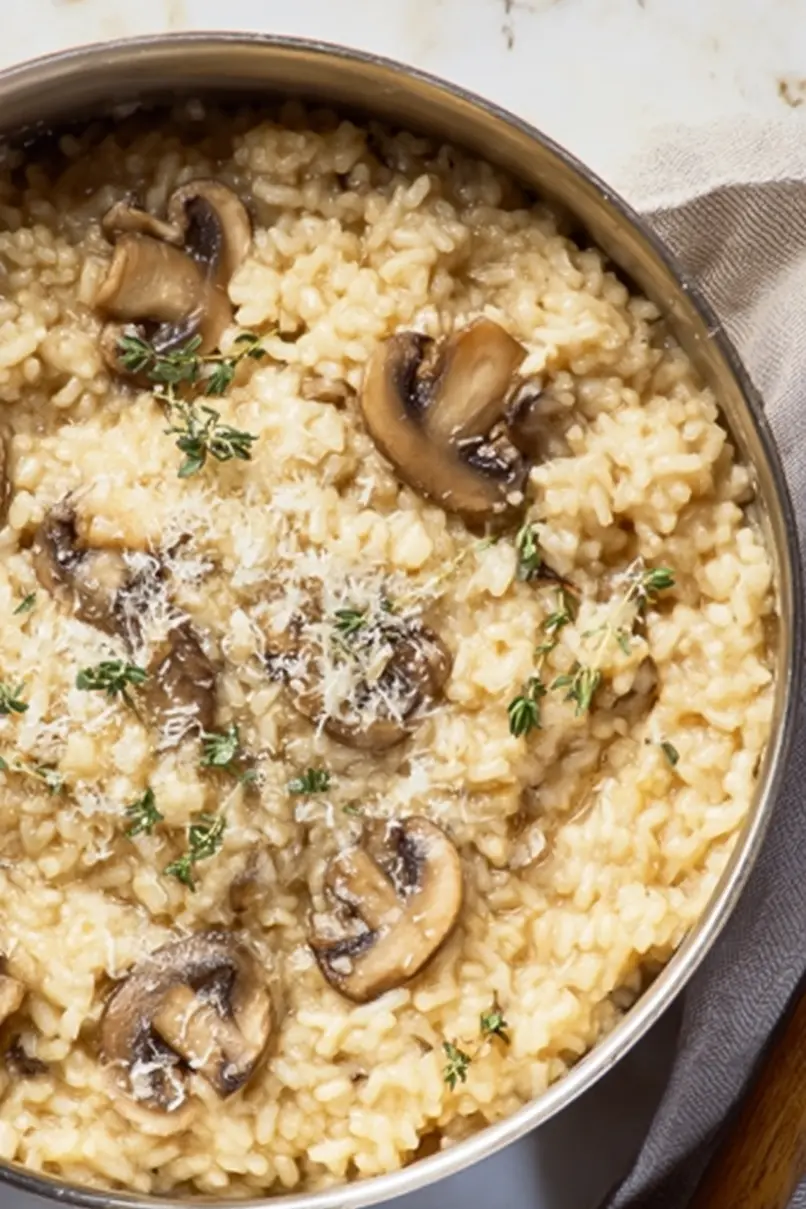
Why You’ll Love This Mushroom Risotto
- Wine-free recipe – Perfect for those who don’t cook with alcohol or don’t have wine on hand – the white wine vinegar gives you that tangy depth without needing to open a bottle.
- Creamy comfort food – This risotto delivers all that rich, velvety texture you crave from stirring the Arborio rice slowly with warm broth.
- Simple ingredients – Made with pantry staples and common grocery store finds like baby bella mushrooms, shallots, and Parmesan cheese.
- One-pot meal – Everything cooks in one pan, which means less cleanup and more time to enjoy your homemade restaurant-quality dinner.
- Vegetarian-friendly option – Just swap the chicken broth for vegetable broth and you’ve got a satisfying meatless meal that’s still packed with flavor.
What Kind of Mushrooms Should I Use?
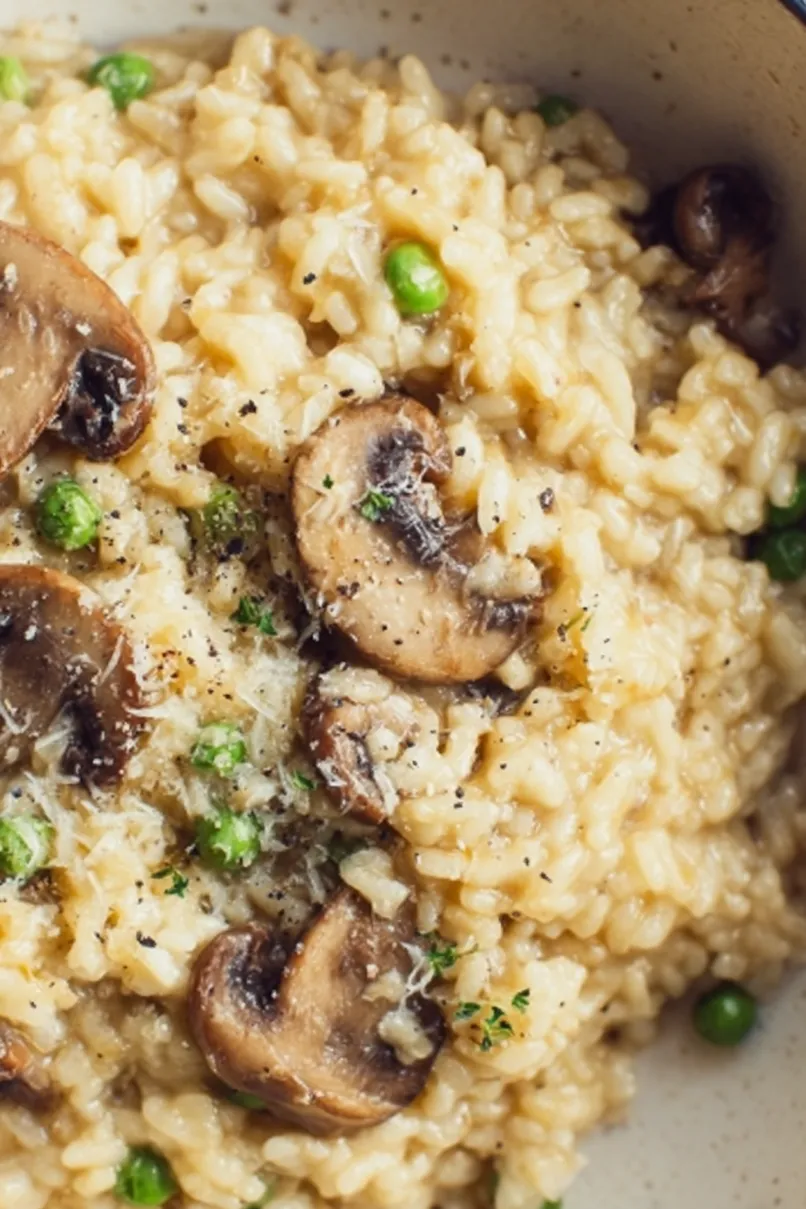
Baby bella mushrooms are perfect for this risotto because they have a nice earthy flavor and hold their shape well during cooking. You can also use regular white button mushrooms if that’s what you have on hand – they’ll work just fine and are usually more budget-friendly. If you’re feeling fancy, try mixing in some shiitake or cremini mushrooms for extra depth of flavor. Just make sure to slice them evenly so they cook at the same rate, and don’t worry about removing the stems from baby bellas since they’re tender enough to eat.
Options for Substitutions
This creamy risotto is quite adaptable, though there are a few key ingredients you’ll want to keep:
- Arborio rice: This is one ingredient I wouldn’t swap out – Arborio rice’s high starch content is what gives risotto its signature creamy texture. Other short-grain rices like Carnaroli or Vialone Nano work too, but avoid long-grain rice as it won’t create the same consistency.
- Baby bella mushrooms: Feel free to use any mushrooms you like – cremini, shiitake, or even a mix of wild mushrooms. Button mushrooms work in a pinch, though they’re a bit milder in flavor.
- Shallots: Yellow or white onions are perfect substitutes if you don’t have shallots. Use about ¾ cup since onions have a stronger flavor.
- Chicken or vegetable broth: Either broth works great, or you can use mushroom broth for extra earthy flavor. Just make sure it’s warm when you add it to the rice.
- Parmesan cheese: Pecorino Romano or Grana Padano make good swaps, though they’re a bit saltier so taste as you go. For a dairy-free version, try nutritional yeast.
- Frozen peas: Asparagus tips, spinach, or even roasted butternut squash cubes work nicely here. Add leafy greens in the last minute of cooking.
Watch Out for These Mistakes While Cooking
The biggest mistake people make with risotto is adding cold broth, which stops the cooking process and creates uneven texture – always keep your broth warm in a separate pot on low heat throughout cooking.
Another common error is stirring too aggressively or not enough, so aim for gentle, consistent stirring to release the rice’s natural starches without breaking the grains, and add broth one ladle at a time, waiting until it’s mostly absorbed before adding more.
Don’t rush the process by cranking up the heat, as risotto needs medium-low heat and patience to develop that creamy consistency, and resist the urge to add all the liquid at once since this will turn your risotto into rice soup.
Finally, timing is everything with the peas – add them in the last 2-3 minutes of cooking so they stay bright green and don’t turn mushy, and remember that risotto should have a slight bite to the rice when done.
What to Serve With Mushroom Risotto?
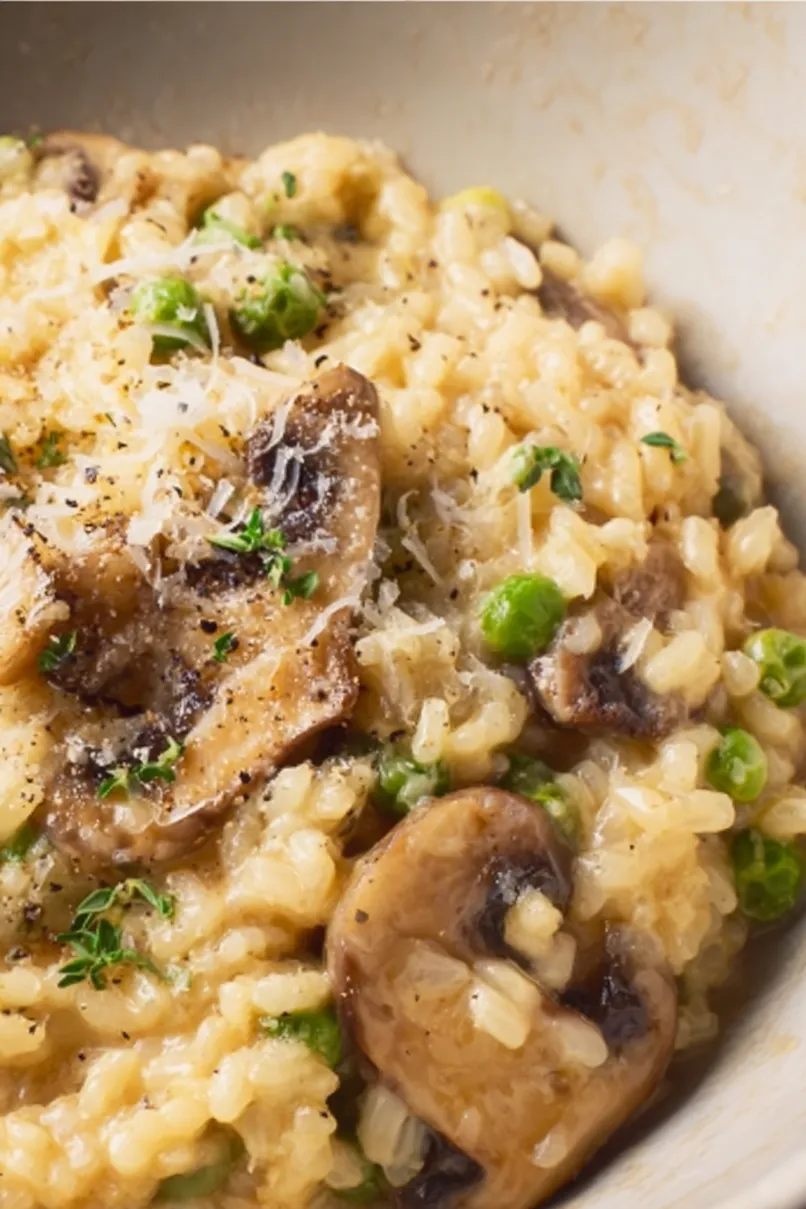
Mushroom risotto is pretty rich and creamy on its own, so I like to pair it with something fresh and light to balance things out. A simple arugula salad with lemon vinaigrette works perfectly, or you could go with roasted asparagus or green beans on the side. If you want to make it more of a complete meal, grilled chicken or pan-seared salmon are great protein options that won’t compete with the earthy mushroom flavors. A crusty piece of garlic bread is also nice for scooping up every last bit of that creamy goodness!
Storage Instructions
Refrigerate: Leftover mushroom risotto keeps well in the fridge for up to 4 days in an airtight container. The rice will absorb more liquid as it sits, so it’ll be thicker than when you first made it. I actually think it tastes even better the next day once all those flavors have had time to meld together!
Freeze: You can freeze portions of this risotto for up to 3 months in freezer-safe containers. Just know that the texture will change a bit after freezing – it won’t be quite as creamy as fresh risotto, but it’s still delicious and perfect for busy weeknight dinners.
Warm Up: To bring your risotto back to life, add a splash of broth or water and heat it gently on the stove over medium-low heat, stirring frequently. You can also microwave it in 30-second intervals, adding liquid as needed. It might take a few minutes of stirring to get that creamy texture back, but it’s totally worth it!
| Preparation Time | 10-15 minutes |
| Cooking Time | 35-45 minutes |
| Total Time | 45-60 minutes |
| Level of Difficulty | Medium |
Estimated Nutrition
Estimated nutrition for the whole recipe (without optional ingredients):
- Calories: 1500-1700
- Protein: 38-45 g
- Fat: 45-55 g
- Carbohydrates: 230-250 g
Ingredients
For the risotto base:
- 2 tbsp extra-virgin olive oil
- 1/2 tsp dried thyme or 1/2 tbsp chopped fresh thyme
- 3 garlic cloves, minced
- 4 cups low-sodium chicken or vegetable broth
- 1-2 cups water
- 1 cup minced shallots or onions
- 1 tbsp white wine vinegar or apple cider vinegar
- 1 1/2 cups arborio or other short-grain white rice
- 8 oz sliced cremini mushrooms
- 2 tbsp unsalted butter (or substitute with more oil)
For seasoning and finishing:
- 1 cup frozen green peas
- 1 1/4 tsp salt, divided
- Black pepper, to your taste
- 1/2 cup freshly grated parmesan cheese
Step 1: Cook the Mushrooms
- 2 tbsp extra-virgin olive oil
- 2 tbsp unsalted butter (or substitute with more oil)
- 8 oz sliced cremini mushrooms
- 1/4 tsp salt
Heat the extra-virgin olive oil and unsalted butter in a Dutch oven or heavy-bottomed saucepan over medium heat.
Once the mixture is hot, add the sliced cremini mushrooms and sprinkle with 1/4 teaspoon of salt.
Cook, stirring occasionally, until the mushrooms start to brown, which should take about 7 minutes.
Step 2: Add Aromatics and Toast the Rice
- 1 cup minced shallots or onions
- 3 garlic cloves, minced
- 1 1/2 cups Arborio or other short-grain white rice
Next, stir in the minced shallots or onions and minced garlic.
Cook for 1 minute, just until aromatic.
Add the Arborio rice and stir frequently for another minute to gently toast the rice.
Toasting the rice helps it absorb liquid evenly and gives the risotto a nice nutty flavor.
Step 3: Deglaze and Begin Simmering the Risotto
- 1 tbsp white wine vinegar or apple cider vinegar
- 4 cups low-sodium chicken or vegetable broth
- 1/2 tsp dried thyme or 1/2 tbsp chopped fresh thyme
- 1 tsp salt
Pour in the white wine vinegar (or apple cider vinegar) and a splash of the chicken or vegetable broth, using a wooden spoon to scrape up any browned bits from the bottom of the pot.
Stir in 2 cups of broth, thyme, and about 1 teaspoon of salt.
Increase the heat to bring the mixture to a simmer.
Stir every few minutes until most of the liquid is absorbed, making sure nothing sticks or burns on the bottom.
Then repeat this process with the remaining 2 cups of broth, always maintaining a simmer and stirring frequently.
This step should take about 20-25 minutes in total.
I recommend tasting the broth along the way and adjusting the heat as needed to keep a gentle simmer going.
Step 4: Finish Cooking the Rice
- 1-2 cups water
Once the broth has mostly absorbed, stir in 1 cup of water and let the risotto cook for about 5 more minutes, letting the rice absorb even more liquid.
Taste a few grains; if the center of the rice is still very hard, stir in the additional 1 cup of water and cook for about 5 more minutes, or until the risotto is creamy and the rice is just tender.
You want the consistency to be loose and creamy, not dry or stiff.
Step 5: Finish and Serve the Risotto
- 1 cup frozen green peas
- 1/2 cup freshly grated Parmesan cheese
- black pepper, to your taste
- salt (as needed, to taste)
Remove the pan from the heat.
Stir in the frozen green peas and freshly grated Parmesan cheese, letting the peas heat through in the hot risotto and the cheese melt into the rice and mushrooms.
Season to taste with salt and plenty of black pepper.
I like to add a touch more Parmesan and a twist of pepper just before serving to really bring out the flavors.