If you ask me, halibut with risotto is a match made in dinner heaven.
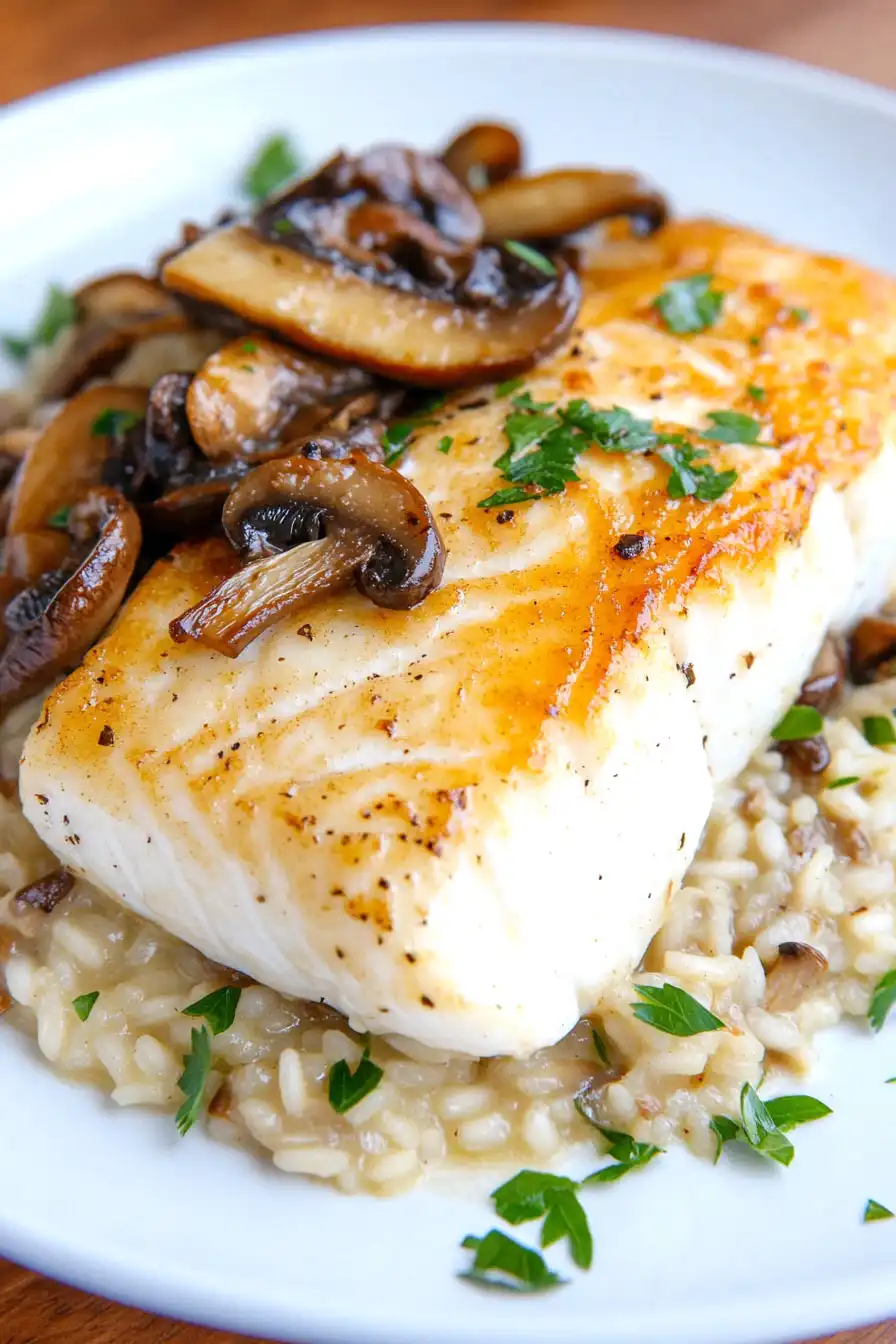
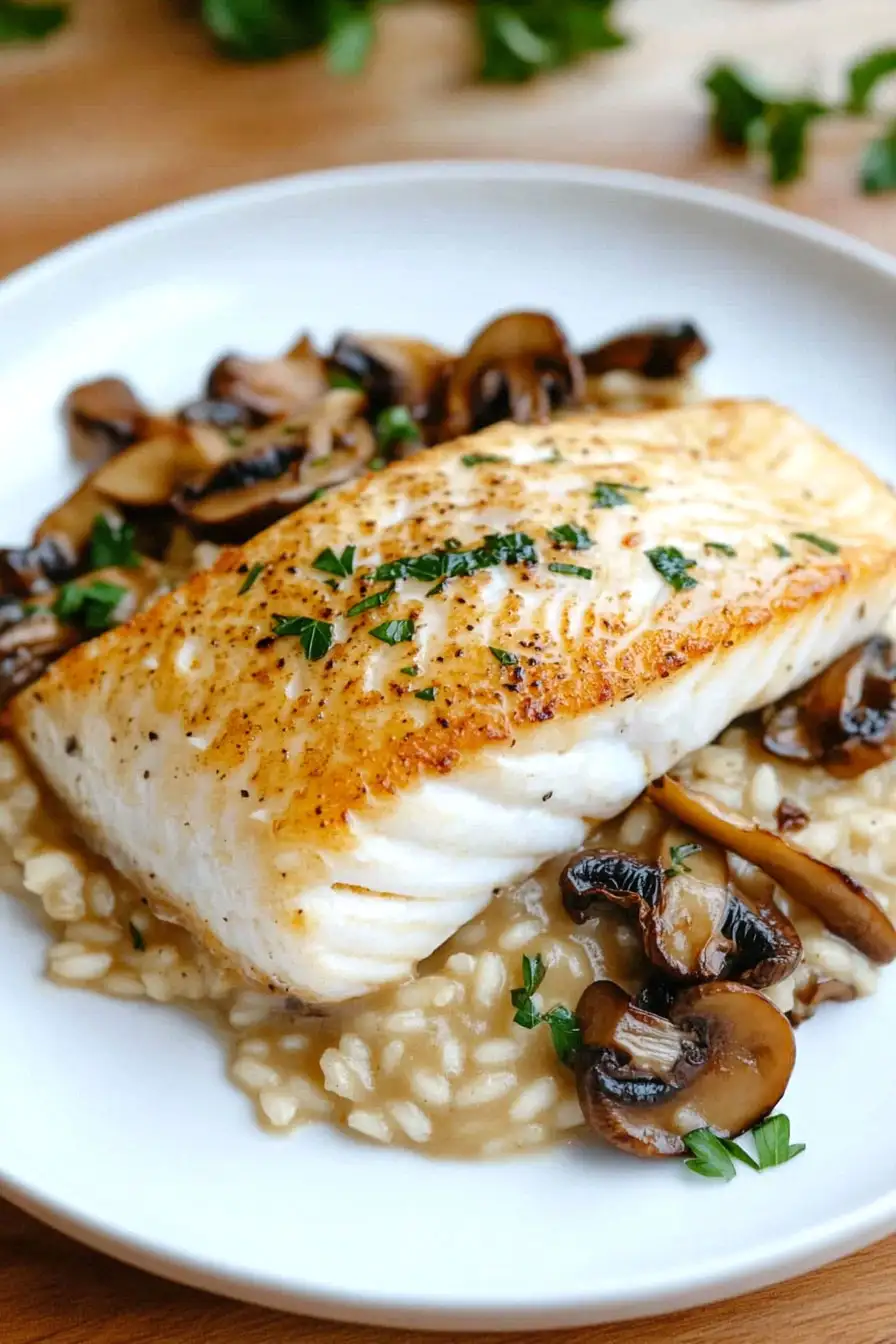
This restaurant-worthy dish brings together flaky fish and creamy Italian rice in a way that feels fancy but isn’t fussy. The halibut turns out perfectly cooked with a golden crust, while the risotto slowly simmers to just the right texture.
I love how the mild, buttery fish sits on top of the warm, comforting risotto – it’s like they were meant to be together. A squeeze of lemon and a sprinkle of fresh herbs are all you need to finish it off.
It’s the kind of meal that works for both special occasions and weeknight dinners when you want something a little extra nice.
Why You’ll Love This Halibut with Risotto
- Restaurant-quality meal – This combination of perfectly cooked halibut and creamy mushroom risotto brings fine dining right to your kitchen, making it perfect for special occasions or date nights at home.
- Rich flavors – The blend of wild mushrooms, deer stock, and brandy creates deep, complex flavors that make this dish truly memorable.
- Customizable – You can easily swap different mushroom varieties or even use regular chicken stock if deer stock isn’t available – the recipe is forgiving and adaptable.
- One-dish complete meal – With protein from the halibut and a filling risotto base, you don’t need to worry about extra side dishes – this recipe delivers a complete, satisfying meal.
What Kind of Mushrooms Should I Use?
Wild mushrooms bring an earthy, complex flavor to this risotto that you just can’t get from regular button mushrooms. The recipe calls for varieties like chanterelles, oysters, and morels – each adding their own unique taste and texture to the dish. If you can’t find these exact varieties, don’t worry – you can mix and match based on what’s available at your local market or grocery store. When selecting mushrooms, look for firm, dry specimens without any soft spots or sliminess, and clean them gently with a brush or paper towel rather than washing them (mushrooms are like little sponges and will soak up water, which can make your risotto watery). Just remember that if you’re foraging for wild mushrooms, always have an expert verify they’re safe to eat – it’s better to be safe than sorry!
Options for Substitutions
Let’s talk about what you can swap in this recipe while still keeping its character:
- Arborio rice: This is one ingredient you shouldn’t substitute – it’s essential for creating that creamy risotto texture. Other rice types won’t release enough starch to give you true risotto.
- Deer stock and venison broth: No deer stock? No worries! You can use chicken, beef, or mushroom stock instead. Just know that the flavor will be a bit different but still tasty.
- Wild mushrooms: If wild mushrooms are hard to find or too pricey, regular button mushrooms or cremini work fine. You can also use dried mushrooms – just soak them in hot water for 20 minutes first.
- Brandy: You can swap brandy with cognac, or if you prefer non-alcoholic options, use additional stock plus a splash of balsamic vinegar for depth.
- Parmesan: While Parmesan is traditional, Pecorino Romano or Grana Padano make good substitutes. Just avoid pre-grated cheese – it won’t melt as nicely.
- Shallots: If you’re out of shallots, use finely diced sweet onion or a mix of onion and garlic instead.
Watch Out for These Mistakes While Cooking
The biggest challenge when making risotto is rushing the process – adding too much stock at once will give you a gummy texture instead of the creamy consistency you’re looking for, so add it gradually, about 1/2 cup at a time, stirring until each addition is absorbed. When it comes to the halibut, overcooking is your enemy – the fish should be cooked just until it flakes easily with a fork, usually 4-5 minutes per side, as overcooking will make it tough and dry. Another common mistake is not getting your pan hot enough before searing the halibut – you want to hear a sizzle when the fish hits the pan to achieve that perfect golden crust. For the mushrooms, avoid washing them under running water as they’ll become waterlogged; instead, clean them gently with a damp paper towel to maintain their rich flavor and texture.

What to Serve With Halibut and Risotto?
This elegant combination of halibut and mushroom risotto calls for simple, complementary side dishes that won’t overshadow the main event. A bright lemon-dressed arugula salad makes a perfect partner, cutting through the richness of the risotto while adding a peppery fresh element to the plate. You could also add some roasted asparagus or sautéed green beans on the side – they’re simple enough to let the fish and risotto shine but still add color and nutrients to the meal. For a special touch, serve some crusty bread alongside to soak up any extra risotto (though trust me, you probably won’t have any leftovers!).
Storage Instructions
Keep Fresh: Place any leftover halibut and risotto in separate airtight containers in the fridge. The risotto will stay good for up to 4 days, while the fish is best enjoyed within 2 days. The flavors actually develop nicely overnight, making this a great meal to pack for lunch the next day!
Make Ahead: You can prepare the mushroom mixture a day ahead and store it in the fridge. When you’re ready to cook, just pick up from the risotto-making step. The halibut should be cooked fresh for the best texture and taste.
Warm Up: To bring your risotto back to life, warm it in a pan over medium-low heat, adding a splash of broth or water to restore its creamy texture. For the halibut, gently warm it in a covered pan with a tiny bit of butter, being careful not to overcook it. The microwave works too, but use medium power to keep the fish tender.
| Preparation Time | 15-25 minutes |
| Cooking Time | 30-40 minutes |
| Total Time | 45-65 minutes |
| Level of Difficulty | Medium |
Estimated Nutrition
Estimated nutrition for the whole recipe (without optional ingredients):
- Calories: 1600-1800
- Protein: 50-60 g
- Fat: 80-90 g
- Carbohydrates: 180-200 g
Ingredients
For the risotto:
- 2 tbsp butter
- 1 3/4 cups Arborio rice
- 2 minced shallots
- 2 to 3 cups wild mushrooms (I use morels or chanterelles)
- 6 cups deer stock
- 2 tbsp chopped parsley
- 2/3 cup brandy (like E&J VSOP)
- 1/3 cup grated Parmesan
For the halibut:
- 1 tsp lemon juice
- 1/2 cup white wine
- 1 cup wild mushrooms
- 1 tbsp minced garlic (freshly minced for best flavor)
- 1/3 cup venison broth
- 3 tbsp olive oil (I like Colavita extra virgin)
Step 1: Prepare the Venison Stock and Mushrooms
Begin by bringing the venison stock to a simmer in a saucepan over medium heat.
Meanwhile, in another saucepan, dry sauté the wild mushrooms for 1-2 minutes, allowing them to cook in their own juices.
This will enhance their natural flavors.
Step 2: Sauté the Shallots and Rice
Add 2 tablespoons of butter to the sautéed mushrooms, then add the minced shallots.
Cook the mixture for about 5 minutes until the shallots are soft and fragrant.
Stir in the Arborio rice and the brandy.
Bring to a boil and let the mixture reduce by half, infusing the rice with flavor.
Step 3: Cook the Risotto
Add the venison stock to the rice, ½ cup at a time, stirring almost constantly.
Allow each addition of the stock to be absorbed before adding the next ½ cup.
Continue this process until all the stock is incorporated into the risotto.
Finish by stirring in fresh Parmesan cheese and seasoning with salt and pepper to taste.
Cover the risotto and set it aside, allowing the flavors to meld.
Step 4: Prepare the Halibut
Preheat your oven to 420°F (215°C).
Use paper towels to gently remove any excess moisture from the halibut fillets.
Season both sides of the fish with salt and pepper to enhance its natural taste.
Step 5: Sear the Halibut and Finish Cooking
Heat 1 tablespoon of olive oil in a cast iron skillet over medium-high heat.
Add the wild mushrooms to the skillet and cook for about 4 minutes, then move them to the edges of the skillet to make room for the halibut.
Add 2 more tablespoons of olive oil to the pan and place the halibut presentation side down.
Cook until the fish is nicely seared on one side, then transfer the skillet to the preheated oven to finish cooking.
The halibut should be cooked to an internal temperature of 145°F (63°C) for optimal doneness.
Step 6: Assemble and Serve
Once the halibut is cooked, gently remove it from the skillet and serve it atop the wild mushroom risotto.
Garnish the dish with the sautéed mushrooms from the skillet for added texture and flavor.
Enjoy your gourmet meal with the delightful blend of wild and creamy elements!