Spring dinners hold a special place in my heart. There’s something about the combination of pasta and fresh vegetables that makes weeknight meals feel a bit more special. Now that asparagus is in season again, I find myself picking up a bunch every time I’m at the store. But I don’t always want to spend hours in the kitchen after a long day.
That’s why this orzo with asparagus has become my go-to recipe these days. It comes together in just one pan, which means less cleanup (always a win in my book). I usually prep the asparagus while the orzo is cooking, and before I know it, dinner’s on the table. My family actually gets excited when they smell this cooking – even my kids, who used to turn their noses up at anything green.
Simple ingredients, quick cooking time, and happy faces around the dinner table? That’s exactly what I’m looking for in a weeknight meal. Plus, any leftovers make a perfect lunch the next day – though honestly, we rarely have any!
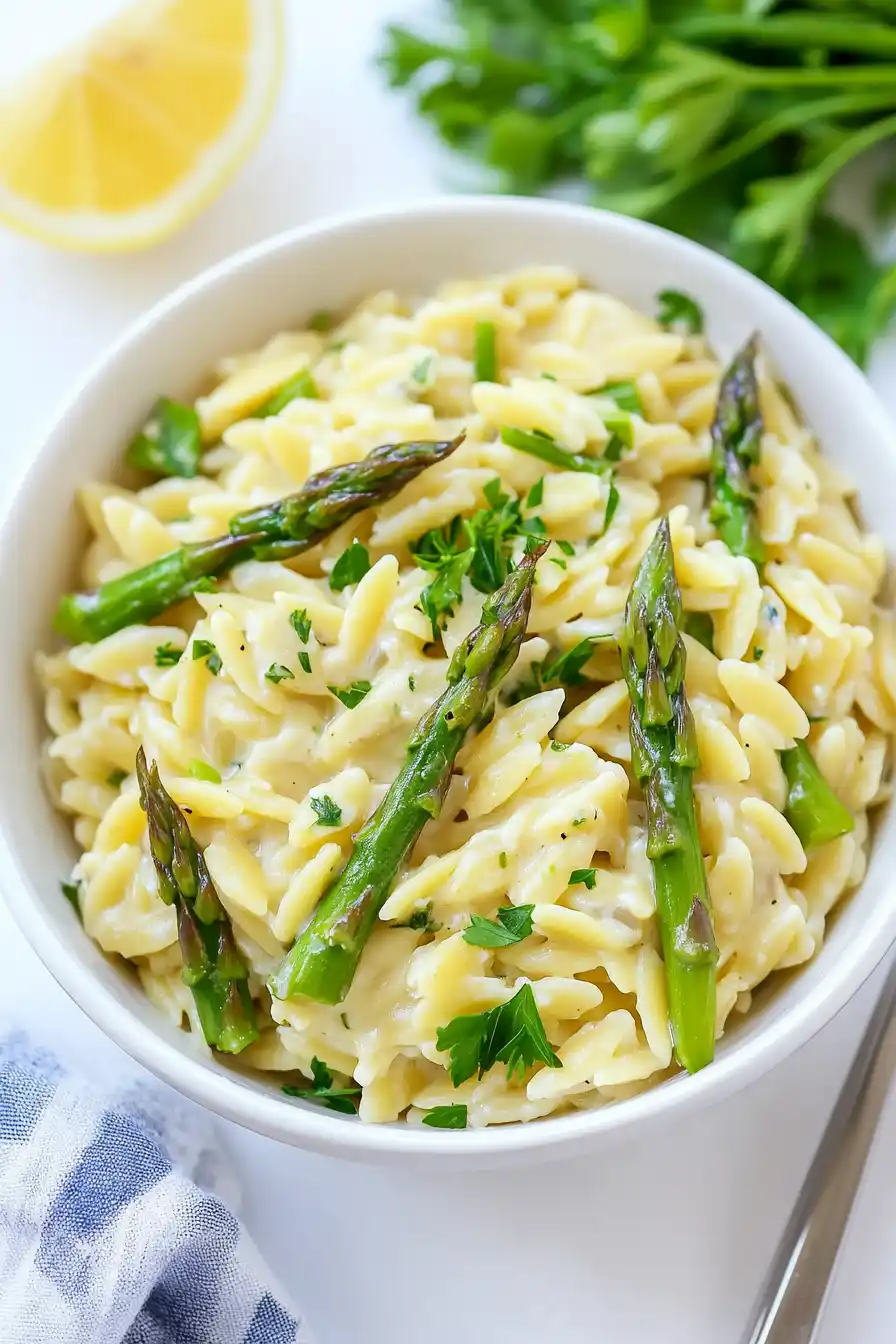
Why You’ll Love This Orzo with Asparagus
- Quick dinner option – Ready in just 30 minutes, this orzo dish is perfect for those busy weeknights when you want something tasty but don’t have hours to spend in the kitchen.
- One-pot meal – Everything cooks in a single pot, which means less cleanup and more time to enjoy your evening.
- Simple ingredients – With just a handful of basic ingredients, you can create a restaurant-worthy dish that tastes like it took much more effort than it actually did.
- Creamy and fresh – The combination of goat cheese and white wine creates a light, creamy sauce, while the fresh asparagus adds a perfect spring-like touch to this pasta dish.
What Kind of Asparagus Should I Use?
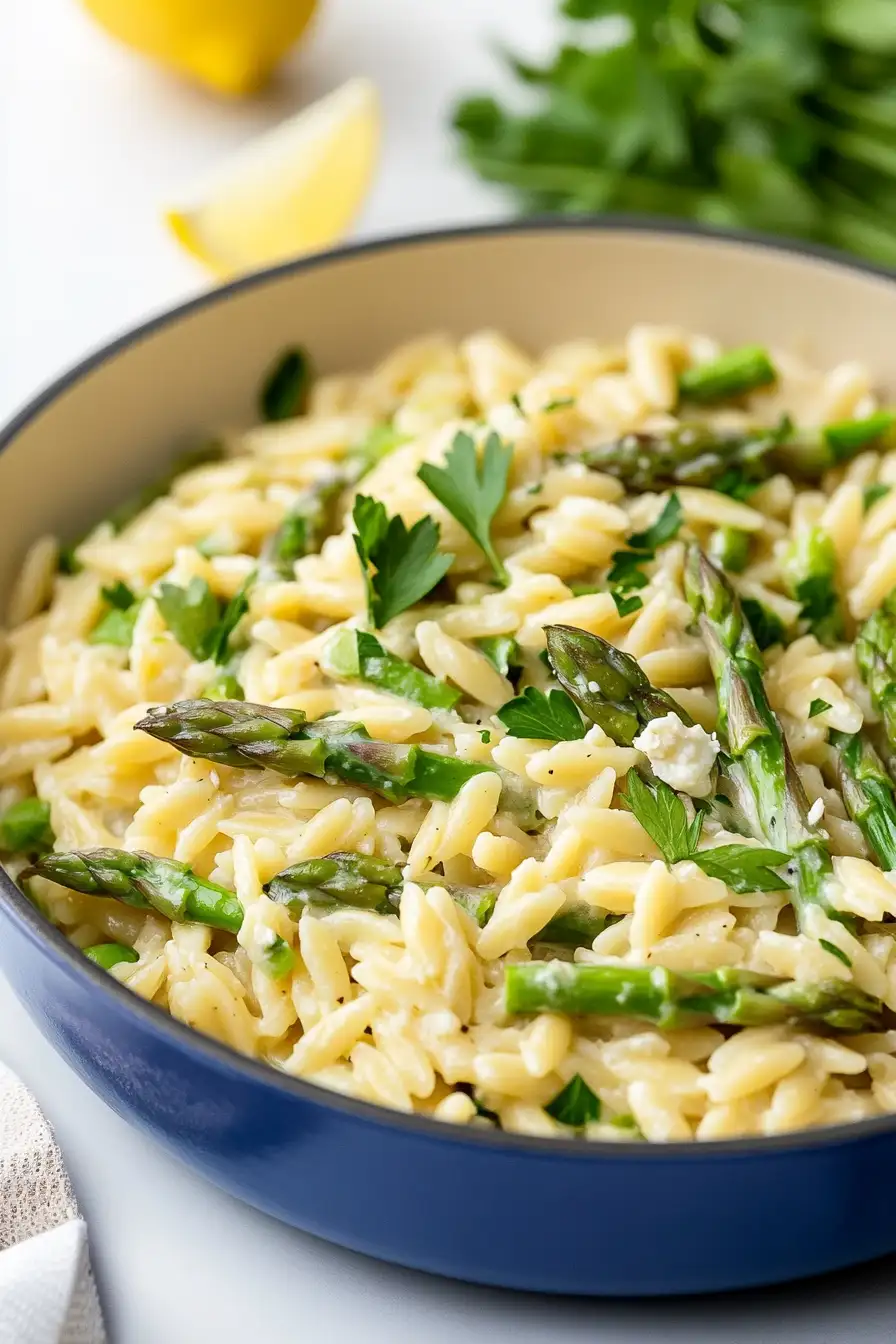
When shopping for asparagus, look for stalks that are bright green and have tight, compact tips – these are signs of freshness. Thinner stalks are generally more tender and cook more quickly, making them perfect for this orzo dish, though medium-sized stalks work well too. If you find really thick asparagus stalks, you might want to peel the bottom portion to ensure even cooking. Before using your asparagus, just snap off the woody ends at their natural breaking point – they’ll snap right where the tender part begins. Fresh is definitely best for this recipe, but if you’re in a pinch, you can use frozen asparagus (just be aware it might be a bit softer in texture).
Options for Substitutions
This recipe is pretty adaptable and here’s how you can switch things up:
- Orzo: While orzo gives this dish its signature texture, you can use small pasta shapes like ditalini or small shells. Just keep in mind the cooking time might need adjusting.
- White wine: No wine? No problem! Replace it with the same amount of chicken broth plus a splash of lemon juice for that bright flavor.
- Goat cheese: If you’re not a fan of goat cheese, try cream cheese, mascarpone, or even grated parmesan. Each will give a different but equally good creamy finish.
- Shallot: A small yellow onion or 2-3 green onions work great as replacements for the shallot.
- Asparagus: You can swap asparagus with green beans, broccoli florets, or even frozen peas. Just adjust cooking time – broccoli needs less time, while green beans might need a bit more.
- Fresh parsley: Feel free to use other fresh herbs like basil, chives, or dill. If using dried herbs, remember to use just 1/3 of the amount called for fresh.
Watch Out for These Mistakes While Cooking
The biggest challenge when cooking orzo is treating it like regular pasta – instead, think of it more like risotto, as it needs constant attention and gradual addition of liquid to achieve that perfect creamy texture. A common mistake is not toasting the orzo in butter before adding liquid, which helps prevent the tiny pasta from clumping together and adds a wonderful nutty flavor. When it comes to the asparagus, overcooking is your enemy – add it during the last few minutes of cooking to keep it crisp-tender and bright green, and remember to trim off the woody ends before chopping. For the best results, don’t skip the wine-cooking step (the alcohol cooks off but leaves behind amazing flavor), and make sure to stir frequently while the orzo cooks to prevent it from sticking to the bottom of the pan.
What to Serve With Orzo and Asparagus?
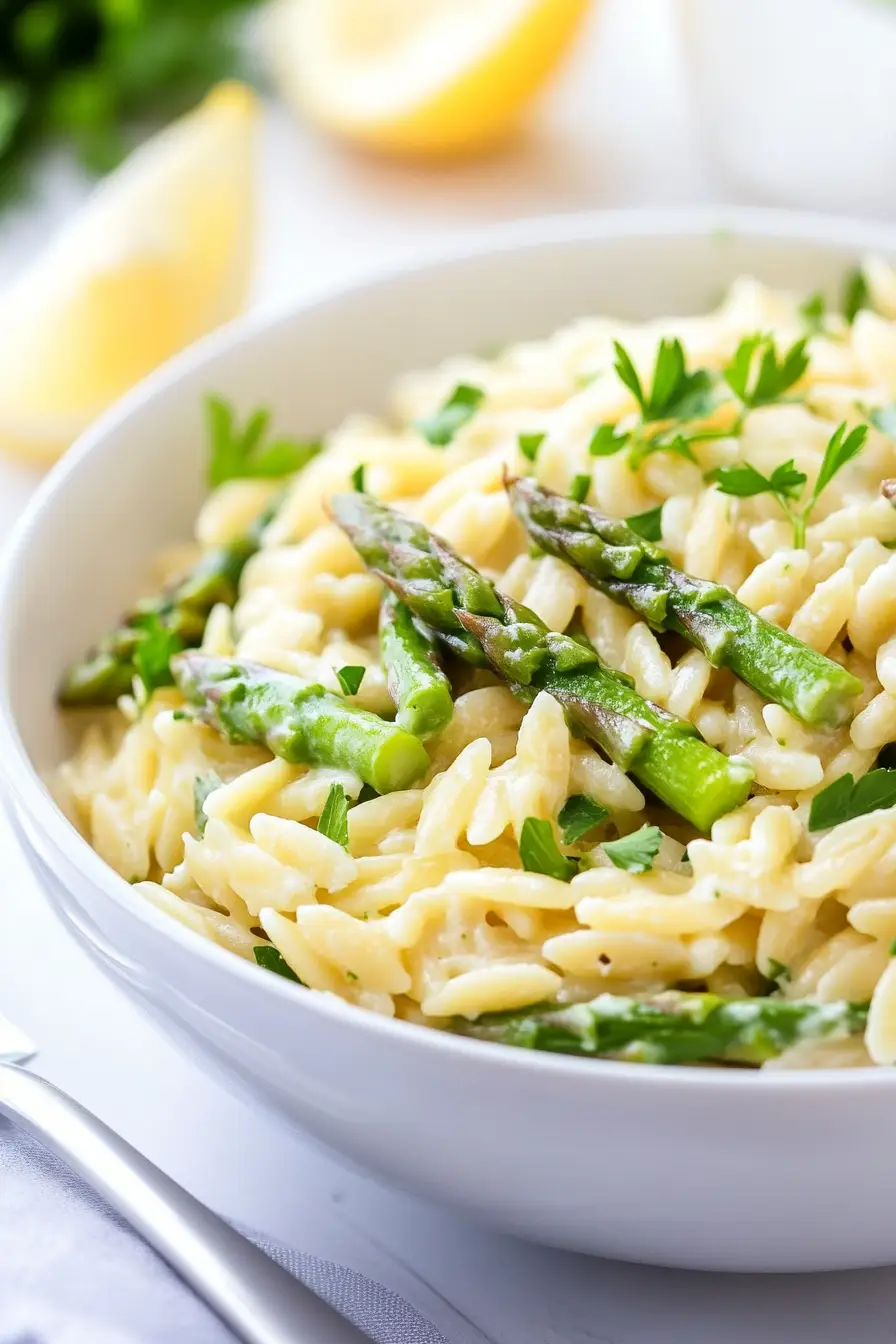
This creamy orzo dish works really well as a side for simple grilled chicken or fish – I especially love it with salmon or lemon herb chicken breast. If you want to keep things vegetarian, try serving it with grilled portobello mushrooms or roasted cherry tomatoes on top. For a complete meal, I like to add a simple mixed green salad dressed with a light vinaigrette on the side. You could also pair it with some crusty bread to soak up any extra sauce from the orzo.
Storage Instructions
Keep Fresh: This orzo dish stays good in the fridge for up to 4 days when kept in an airtight container. The pasta might absorb more liquid as it sits, but that’s totally normal! You can always add a splash of broth when reheating to bring back the creamy consistency.
Make Ahead: If you’re planning to make this ahead for a party or meal prep, I’d suggest cooking the asparagus slightly less than usual. This way, it won’t get too soft when you reheat it later. The orzo can be made a day in advance – just store it separately from any fresh herbs you plan to add.
Warm Up: To bring this dish back to life, warm it gently on the stovetop over medium-low heat, stirring occasionally. Add a splash of broth or water if needed. You can also microwave it in 30-second intervals, stirring between each one. Top with fresh parsley just before serving to keep that pop of green color!
| Preparation Time | 10-15 minutes |
| Cooking Time | 15-20 minutes |
| Total Time | 25-35 minutes |
| Level of Difficulty | Easy |
Estimated Nutrition
Estimated nutrition for the whole recipe (without optional ingredients):
- Calories: 600-700
- Protein: 18-22 g
- Fat: 25-30 g
- Carbohydrates: 80-90 g
Ingredients
- 1/4 cup dry white wine
- 2 garlic cloves (minced for best flavor)
- 2 tbsp goat cheese (crumbled)
- 1 bunch asparagus (trimmed and cut into 1-inch pieces)
- 2 tbsp butter (I like Kerrygold unsalted butter for this)
- pepper, as needed
- 4 cups chicken broth (or vegetable broth for a vegetarian option)
- 1 shallot
- 1.5 cups orzo
- salt, as needed
- fresh parsley (chopped, for garnish)
Step 1: Sauté Shallots and Garlic
Start by heating a large skillet over medium heat and adding a tablespoon of butter (or oil if you prefer).
Once the butter has melted and is beginning to bubble, add chopped shallots and minced garlic to the skillet.
Sauté them for 1-2 minutes until they become fragrant, making sure not to let them burn.
Step 2: Toast the Orzo
Add 1.5 cups of orzo to the skillet, tossing it with the shallots and garlic to coat the pasta grains with the buttery, aromatic mixture.
This step adds flavor and helps in achieving the desired texture for the orzo.
Step 3: Add Wine and Broth
If using, pour in about 1/4 cup of white wine and stir well.
Allow the orzo to cook for 1-2 minutes so the alcohol evaporates.
Then, add enough chicken broth (or vegetable broth for a vegetarian option) to cover the orzo.
Bring the mixture to a simmer.
Step 4: Cook the Orzo and Asparagus
Reduce the heat to medium and cook the orzo for 7-8 minutes, or until almost all the liquid is absorbed.
When there’s a little liquid left, add asparagus that’s been cut into thirds.
Cook for an additional 2-3 minutes, stirring frequently to prevent sticking and to cook the asparagus until tender.
Step 5: Finish with Cheese and Seasoning
Stir in 2 tablespoons of goat cheese until it melts and creates a creamy texture.
If you prefer, you can use parmesan or cream cheese instead.
Season the dish with salt and pepper to taste.
Finish by adding fresh parsley and stirring to combine everything evenly.
Step 6: Serve and Enjoy
Serve the creamy orzo with asparagus immediately, either as a satisfying main dish, or as a delightful side to accompany proteins like salmon, chicken, or shrimp.
Enjoy your delicious and flavorful meal!

