Finding a fun Easter treat that looks festive without requiring advanced decorating skills can feel pretty overwhelming. After all, most Easter cookies involve complex piping techniques or hours of detailed work, and things get even more stressful when you’re trying to bake with kids who just want to eat the frosting.
Luckily, these Easter egg cookies with buttercream frosting check all the boxes: they’re simple enough for beginners, easy to customize with whatever food coloring you have in your pantry, and fun for the whole family to decorate together.
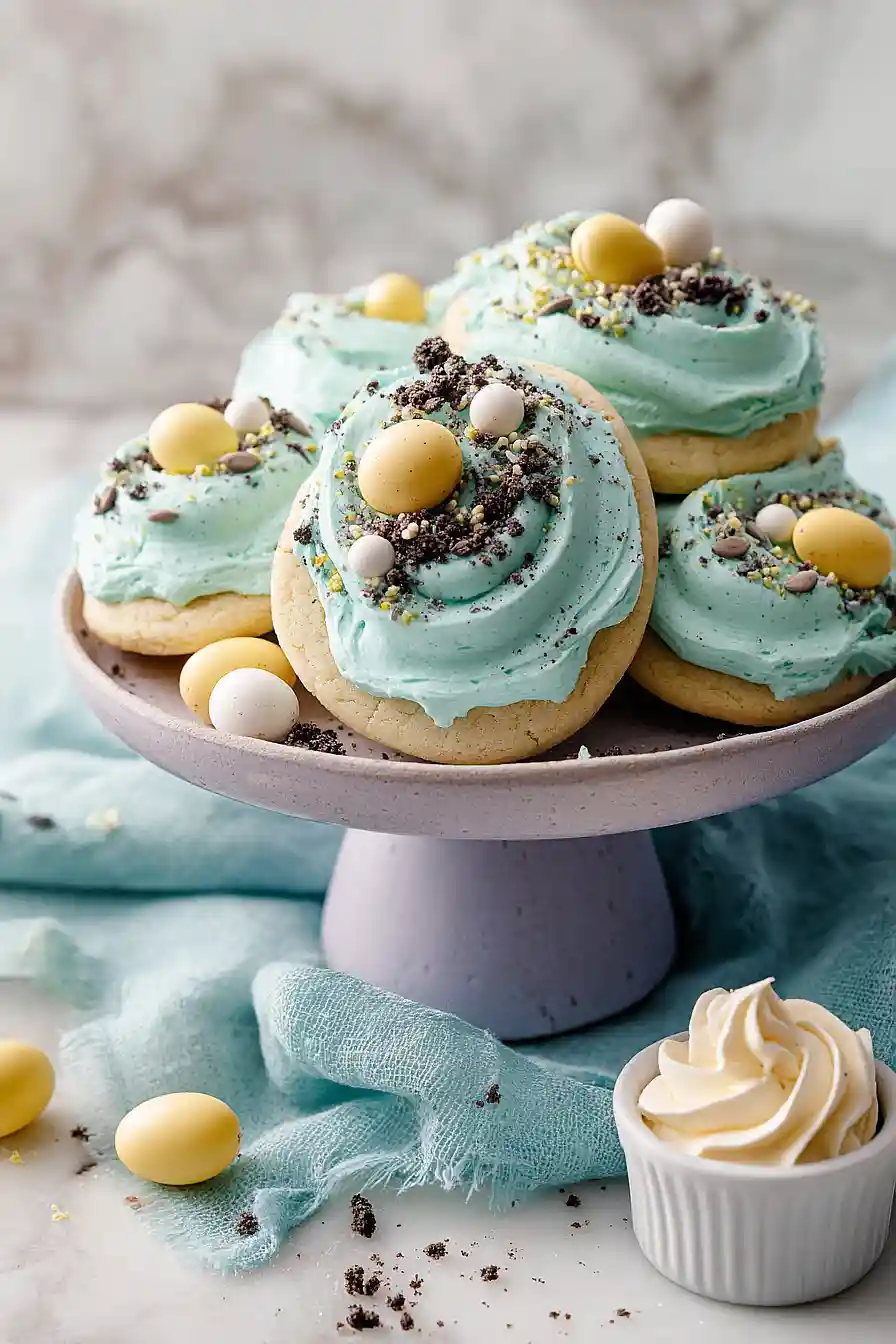
Why You’ll Love These Easter Egg Cookies
- Fun for the whole family – Decorating these cookies with colorful buttercream and mini eggs is a great activity to do with kids during the Easter season.
- Customizable colors – You can use food coloring to create any pastel shade you want, making each cookie unique and festive.
- Perfect for celebrations – These cookies are ideal for Easter gatherings, spring parties, or as homemade gifts that friends and family will love.
- Classic combination – The soft cookie base paired with creamy buttercream frosting is a tried-and-true combo that never disappoints.
What Kind of Cookies Should I Use?
For this recipe, you’ll want to use a sturdy sugar cookie or shortbread that can hold up to frosting without getting soggy. Homemade cookies work great, but if you’re short on time, store-bought sugar cookies from the bakery section are a solid option too. Just make sure whatever cookies you choose have a flat surface so the buttercream can spread nicely and your decorations will sit properly. If you’re making cookies from scratch, aim for ones that are about 1/4-inch thick after baking – they’ll be sturdy enough to handle but still have that nice tender bite.
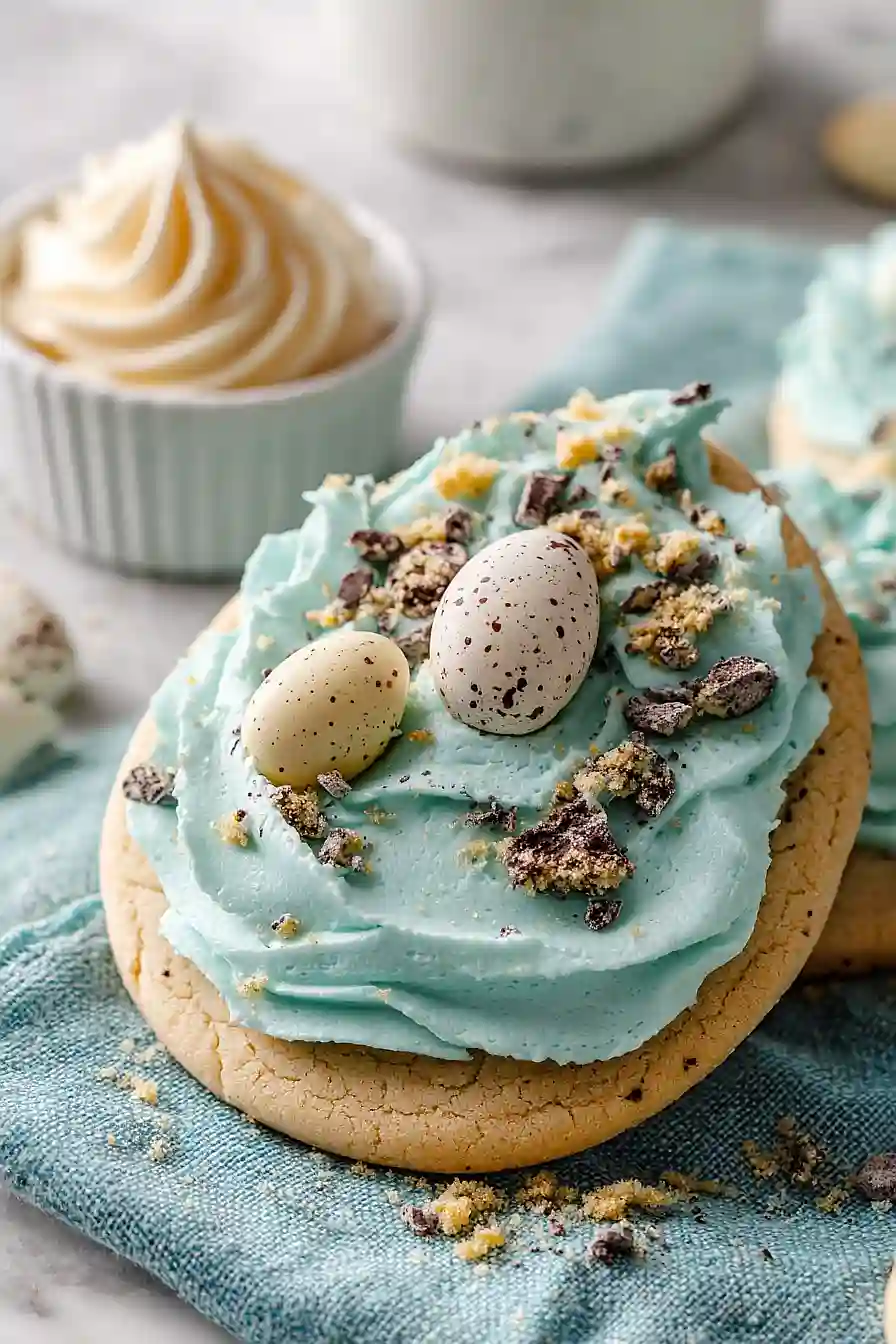
Options for Substitutions
These cookies are pretty forgiving when it comes to swapping ingredients:
- Buttercream frosting: If you’re not a fan of buttercream, cream cheese frosting works great on these cookies. You can also use store-bought frosting to save time – just whip it with a mixer for a minute to make it fluffier.
- Food coloring: Gel food coloring gives the brightest colors, but liquid food coloring from the grocery store works fine too. You’ll just need to use a bit more. Natural food coloring is another option if you prefer to avoid artificial dyes.
- Vanilla essence: Vanilla extract and vanilla essence can be used interchangeably here. You can also try almond extract for a different flavor – just use half the amount since it’s stronger.
- Cocoa powder: Regular unsweetened cocoa powder is what you need here. Dutch-processed cocoa will work too and gives a slightly richer color.
- Mini eggs: Any small Easter candy works for decorating – jelly beans, chocolate eggs, or even pastel M&Ms. You can skip the candy altogether and just use sprinkles if you prefer.
Watch Out for These Mistakes While Baking
The biggest mistake when making sugar cookies is skipping the chilling steps, which causes the dough to spread too much in the oven and lose those clean egg shapes – make sure to chill both before and after cutting for the best results.
Another common error is baking multiple pans at once, which leads to uneven baking and some cookies getting too brown while others stay pale, so stick to one pan at a time even though it takes longer.
When adding the speckled effect, go easy on the cocoa mixture at first since you can always add more but can’t take it away – practice your flicking technique on parchment paper before going straight to your frosted cookies.
Finally, let your buttercream come to room temperature before spreading it, as cold frosting will tear the cookies and won’t give you that smooth, bakery-style finish you’re looking for.
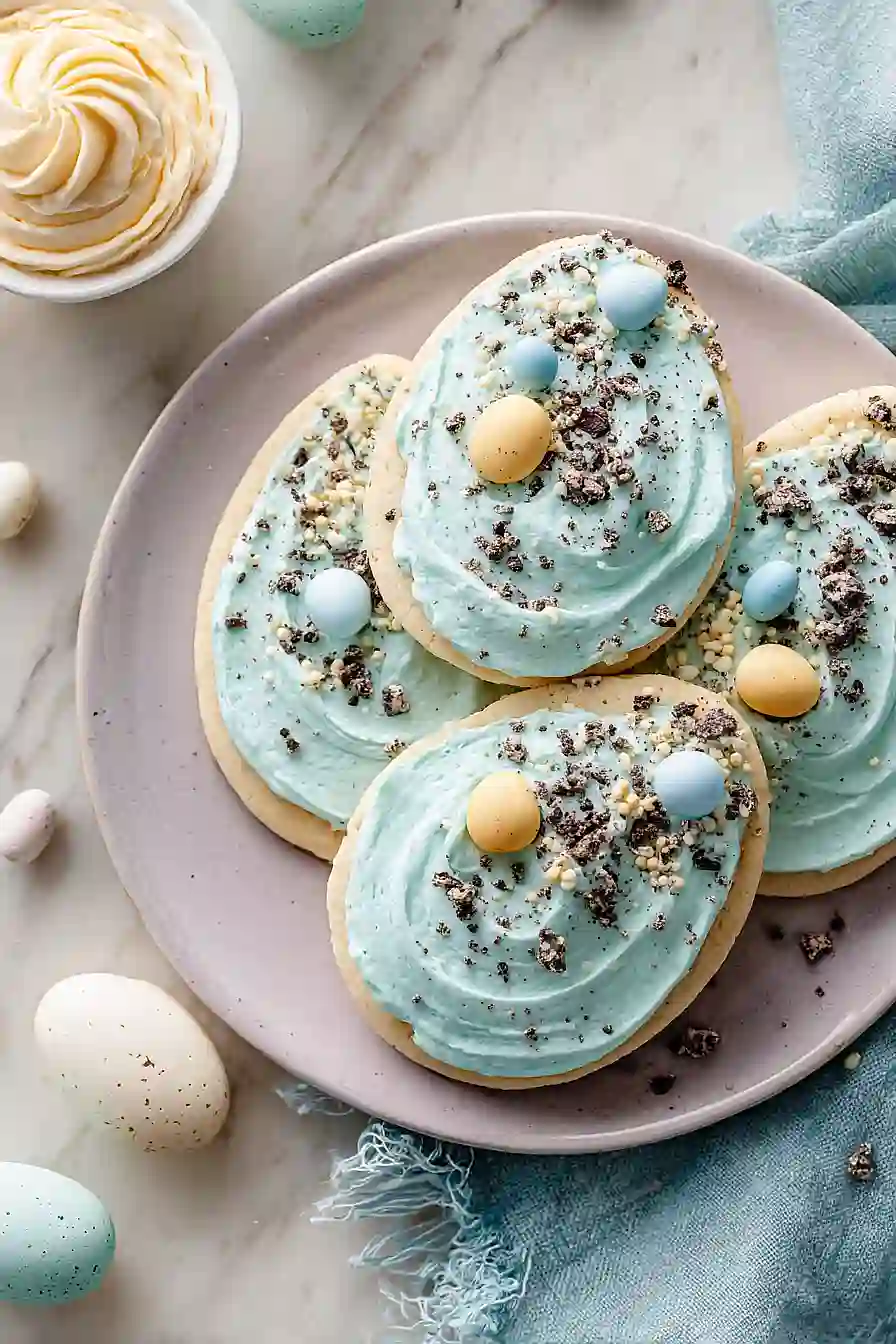
What to Serve With Easter Egg Cookies?
These cookies are perfect for an Easter brunch spread alongside fresh fruit like strawberries, grapes, and melon chunks that kids can easily grab. I love setting them out with a big pitcher of cold milk or lemonade, which helps balance out the sweetness of the buttercream frosting. If you’re hosting a bigger gathering, consider pairing them with other spring treats like carrot cake, hot cross buns, or a simple fruit salad. They also work great as an afternoon snack with coffee or tea for the adults while the kids hunt for eggs in the backyard.
Storage Instructions
Store: Once your frosting is completely set, stack these cookies in an airtight container with wax paper between the layers. They’ll stay fresh at room temperature for about 3 days, or you can keep them in the fridge for up to a week if your kitchen is warm.
Freeze: You can freeze the unfrosted cookies for up to 3 months in a freezer-safe container. I don’t recommend freezing them once they’re decorated though, since the mini eggs and buttercream don’t thaw as nicely and can get a bit weepy.
Make Ahead: These are perfect for making ahead! Bake the cookies a day or two before you need them and store them in an airtight container. Then just whip up the buttercream and decorate them the day you plan to serve. The cookies actually taste even better after sitting for a day.
| Preparation Time | 90-120 minutes |
| Cooking Time | 10-15 minutes |
| Total Time | 100-135 minutes |
| Level of Difficulty | Medium |
| Servings | 24 cookies |
Estimated Nutrition
Estimated nutrition for the whole recipe (without optional ingredients):
- Calories: 2500-3200
- Protein: 15-25 g
- Fat: 120-170 g
- Carbohydrates: 330-410 g
Ingredients
For the cookies:
- 1 sugar cookie dough (I recommend King Arthur flour for a consistent bake)
For the frosting:
- 1 buttercream (I prefer Kerrygold unsalted butter for a richer flavor)
- 1/4 teaspoon salt
- food coloring
For the finish and garnish:
- 2 1/2 tsp vanilla (gives the cocoa paint a smooth, specialty extract aroma)
- 3/4 tsp cocoa
- 1 cup mini eggs (I use Cadbury for the most authentic Easter look)
Step 1: Prepare and Chill the Cookie Dough
- 1 sugar cookie dough
Start with your prepared sugar cookie dough and chill it for 20 minutes to make it easier to work with and roll out.
This resting period helps the gluten relax and prevents the dough from shrinking too much during baking.
While the dough chills, preheat your oven to 350°F so it will be ready when you need it.
Step 2: Cut and Shape the Easter Egg Cookies
- 1 sugar cookie dough
On a floured work surface, roll out the chilled dough to 1/8 to 1/4 inch thickness—thinner cookies will be crispier, while thicker ones will be softer, so choose based on your preference.
Using an egg-shaped cookie cutter, cut out shapes and place them about 1 inch apart on parchment-lined baking sheets.
Once shaped, chill the cookie cutouts for 30 minutes in the refrigerator to prevent them from spreading too much during baking.
Step 3: Bake the Cookies
- egg-shaped cookies from Step 2
Bake the chilled cookies one baking sheet at a time for about 12 minutes at 350°F, until the edges are just barely golden but the centers are still soft.
I always rotate the pan halfway through to ensure even browning, especially if your oven has hot spots.
Once baked, transfer the cookies to a wire rack and let them cool completely—this is important because warm cookies are too delicate to frost.
Step 4: Prepare the Buttercream and Cocoa Paint
- 1 buttercream
- food coloring
- 2 1/2 tsp vanilla
- 3/4 tsp cocoa
While the cookies cool, prepare your buttercream frosting and tint it with food coloring if desired to match your Easter theme.
In a small bowl, whisk together the vanilla extract and cocoa powder until smooth and well combined—this creates a paint-like consistency that will stick to the frosting without dripping.
I find that mixing these together beforehand prevents lumpy cocoa specks from appearing on the finished cookies.
Step 5: Frost and Decorate the Cookies
- cooled cookies from Step 3
- buttercream and food coloring from Step 4
- cocoa paint mixture from Step 4
- 1 cup mini eggs
- 1/4 teaspoon salt
Once the cookies are completely cool, spread a thin to medium layer of buttercream frosting on each egg-shaped cookie using an offset spatula or butter knife.
Using a small brush or flick technique, apply the cocoa-vanilla mixture across the frosted surface to create speckled detail that mimics real Easter eggs.
Immediately top each cookie with a few crushed mini candy eggs, pressing them gently into the frosting so they adhere.
The frosting sets slightly as it sits, so work efficiently but don’t rush—taking your time creates a more polished presentation.
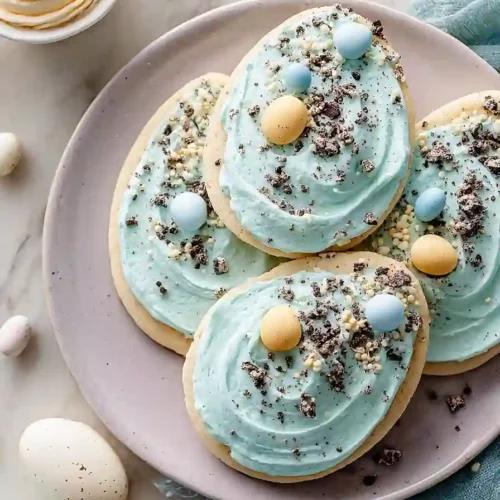
Simple Easter Egg Cookies with Buttercream Frosting
Ingredients
For the cookies
- 1 sugar cookie dough (I recommend King Arthur flour for a consistent bake)
For the frosting
- 1 buttercream (I prefer Kerrygold unsalted butter for a richer flavor)
- 1/4 teaspoon salt
- food coloring
For the finish and garnish
- 2 1/2 tsp vanilla (gives the cocoa paint a smooth, specialty extract aroma)
- 3/4 tsp cocoa
- 1 cup mini eggs (I use Cadbury for the most authentic Easter look)
Instructions
- Start with your prepared sugar cookie dough and chill it for 20 minutes to make it easier to work with and roll out. This resting period helps the gluten relax and prevents the dough from shrinking too much during baking. While the dough chills, preheat your oven to 350°F so it will be ready when you need it.
- On a floured work surface, roll out the chilled dough to 1/8 to 1/4 inch thickness—thinner cookies will be crispier, while thicker ones will be softer, so choose based on your preference. Using an egg-shaped cookie cutter, cut out shapes and place them about 1 inch apart on parchment-lined baking sheets. Once shaped, chill the cookie cutouts for 30 minutes in the refrigerator to prevent them from spreading too much during baking.
- Bake the chilled cookies one baking sheet at a time for about 12 minutes at 350°F, until the edges are just barely golden but the centers are still soft. I always rotate the pan halfway through to ensure even browning, especially if your oven has hot spots. Once baked, transfer the cookies to a wire rack and let them cool completely—this is important because warm cookies are too delicate to frost.
- While the cookies cool, prepare your buttercream frosting and tint it with food coloring if desired to match your Easter theme. In a small bowl, whisk together the vanilla extract and cocoa powder until smooth and well combined—this creates a paint-like consistency that will stick to the frosting without dripping. I find that mixing these together beforehand prevents lumpy cocoa specks from appearing on the finished cookies.
- Once the cookies are completely cool, spread a thin to medium layer of buttercream frosting on each egg-shaped cookie using an offset spatula or butter knife. Using a small brush or flick technique, apply the cocoa-vanilla mixture across the frosted surface to create speckled detail that mimics real Easter eggs. Immediately top each cookie with a few crushed mini candy eggs, pressing them gently into the frosting so they adhere. The frosting sets slightly as it sits, so work efficiently but don't rush—taking your time creates a more polished presentation.