I didn’t try egg udon noodles until I was in my thirties, and I’m still kicking myself for waiting so long. Growing up, we stuck to spaghetti and mac and cheese. Asian noodles seemed too complicated.
Turns out, egg udon is actually one of the easiest noodle dishes you can make. The thick, chewy noodles cook up in just a few minutes, and you probably already have everything you need in your fridge. It’s basically the comfort food equivalent of a warm hug in a bowl.
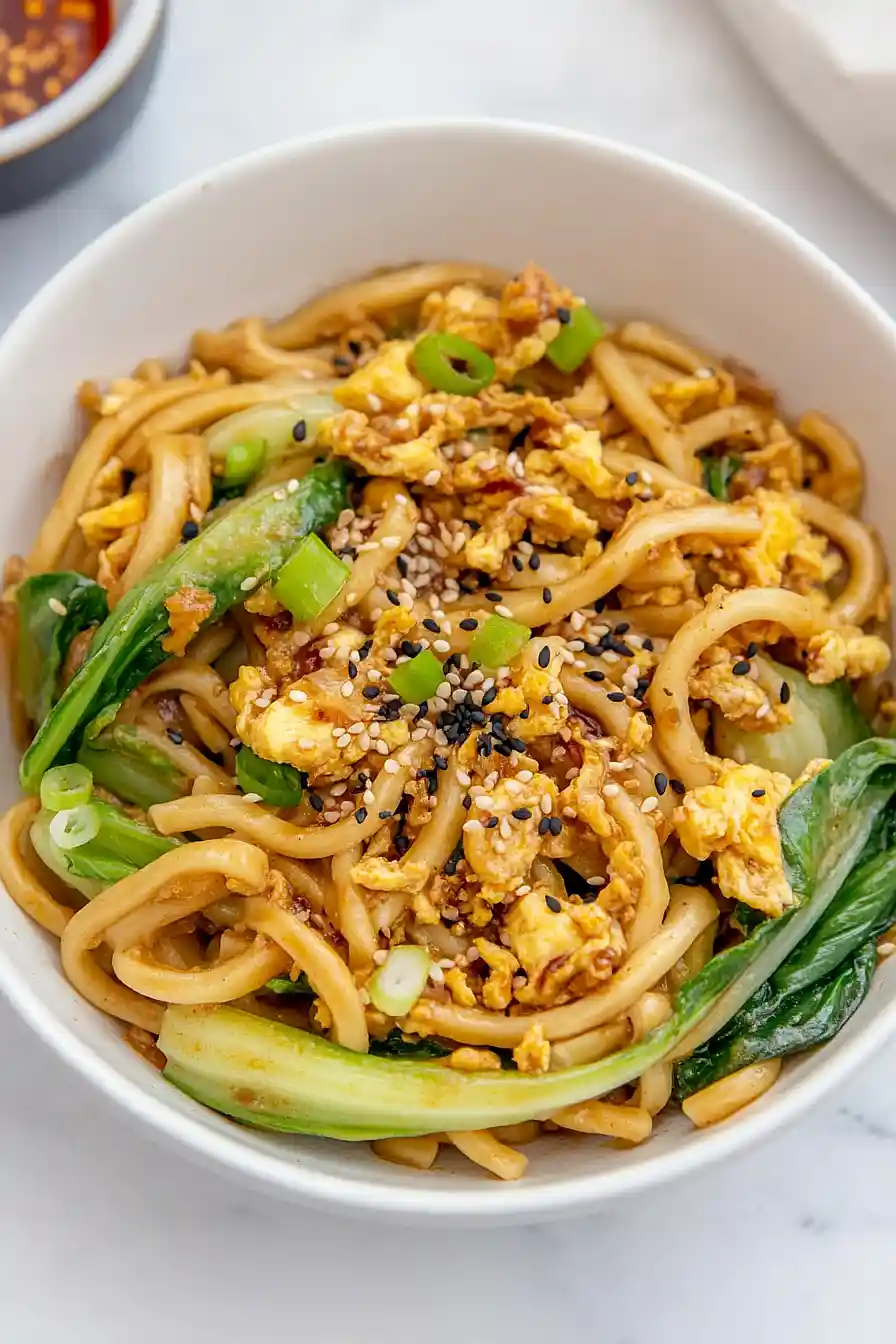
Why You’ll Love This Egg Udon Noodles
- Quick weeknight dinner – Ready in just 25-35 minutes, this dish is perfect when you need something satisfying but don’t have hours to spend in the kitchen.
- Simple pantry ingredients – Most of these ingredients are probably already sitting in your fridge and pantry, making it an easy go-to meal without a special grocery trip.
- Protein-packed and filling – With five whole eggs mixed into chewy udon noodles, this dish will keep you satisfied and energized for hours.
- Restaurant-style flavors at home – The combination of soy sauces, sesame oil, and brown sugar creates that savory-sweet taste you’d expect from your favorite noodle shop.
- One-pan cooking – Everything comes together in one pan, which means less cleanup and more time to enjoy your delicious homemade noodles.
What Kind of Udon Noodles Should I Use?
Fresh udon noodles are definitely the way to go for this recipe since they have that perfect chewy texture that makes udon so satisfying. You can usually find them in the refrigerated section of Asian grocery stores or even some regular supermarkets. If you can’t get your hands on fresh ones, frozen udon noodles are your next best bet – just thaw them according to the package directions before cooking. Dried udon noodles will work in a pinch, but they won’t have quite the same bouncy texture that makes this dish special. Whatever type you choose, make sure to cook them just until tender since they’ll get a bit more cooking time when you toss them with the eggs and sauce.
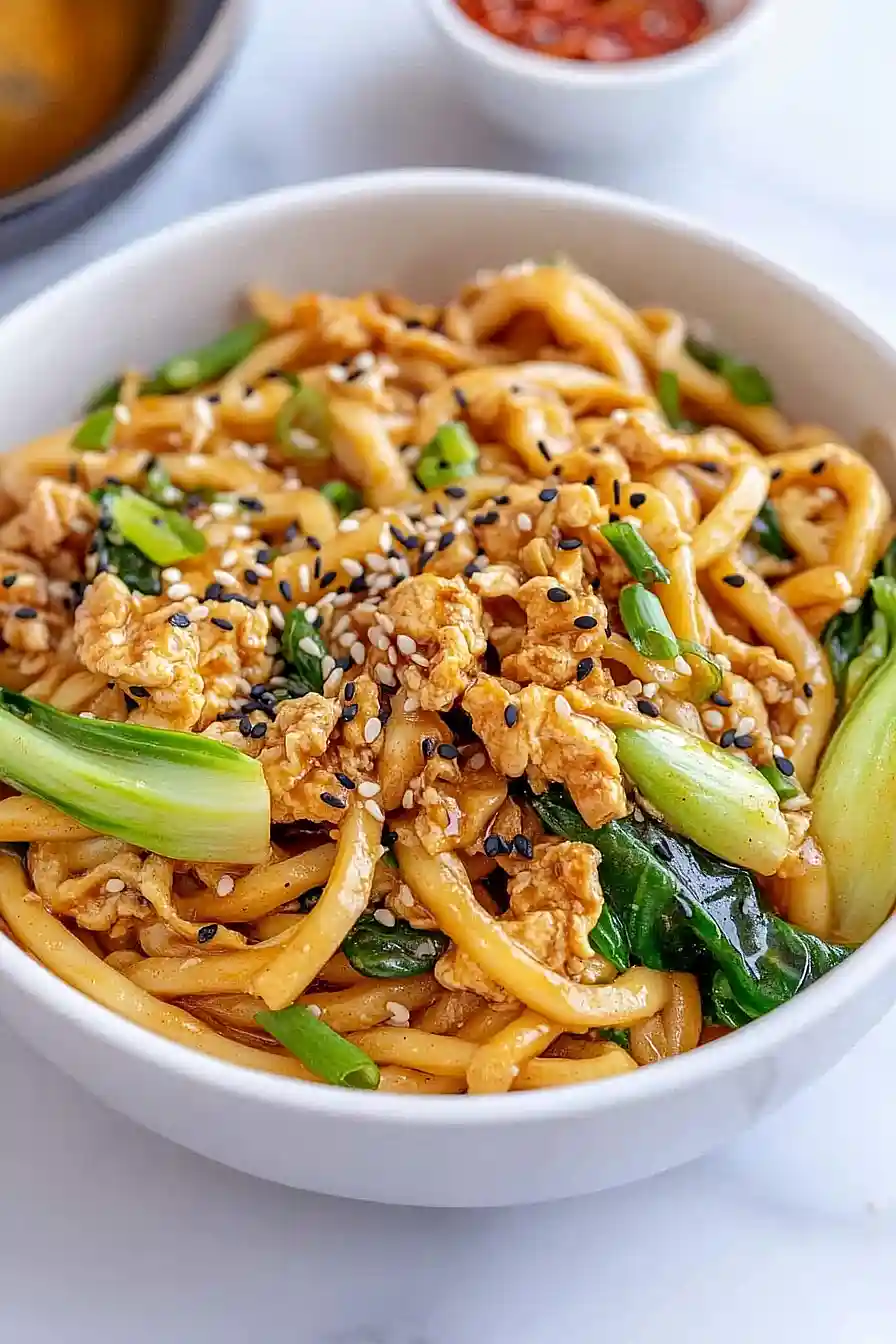
Options for Substitutions
This simple udon dish is pretty forgiving when it comes to swaps:
- Fresh udon noodles: If you can’t find fresh udon, frozen or dried udon work great too. You can even substitute with thick ramen noodles or lo mein noodles in a pinch, though the texture will be slightly different.
- Pak choy: No pak choy? Try baby spinach, regular bok choy, or even broccoli florets. Just adjust the cooking time – spinach wilts quickly while broccoli needs a bit longer to get tender.
- Dark soy sauce: If you only have regular soy sauce, use 3 tablespoons total of light soy sauce and add a pinch of brown sugar for that deeper color and slightly sweet flavor.
- Rice vinegar: White vinegar or apple cider vinegar work as substitutes, but use a bit less since they’re more acidic than rice vinegar.
- Sesame oil: This ingredient really makes the dish, so try not to skip it. But if you must, a tiny bit of toasted sesame seeds mixed with neutral oil can give you some of that nutty flavor.
- Brown sugar: White sugar or honey work fine here – just start with a little less honey since it’s sweeter than brown sugar.
Watch Out for These Mistakes While Cooking
The biggest mistake when making egg udon is overcooking the eggs, which can turn them rubbery and tough – scramble them gently over medium-low heat and remove them from the pan while they’re still slightly wet since they’ll continue cooking when mixed with the hot noodles.
Another common error is not cooking the garlic properly; burnt garlic will make your entire dish taste bitter, so keep the heat at medium and stir constantly until it’s just fragrant and golden.
Don’t add the pak choy too early either, as it only needs about 2-3 minutes to wilt and stay crisp-tender – throwing it in at the same time as the noodles will leave you with mushy greens.
Finally, make sure to have all your sauce ingredients mixed together beforehand because this dish cooks quickly, and you won’t have time to measure while everything is sizzling in the pan.
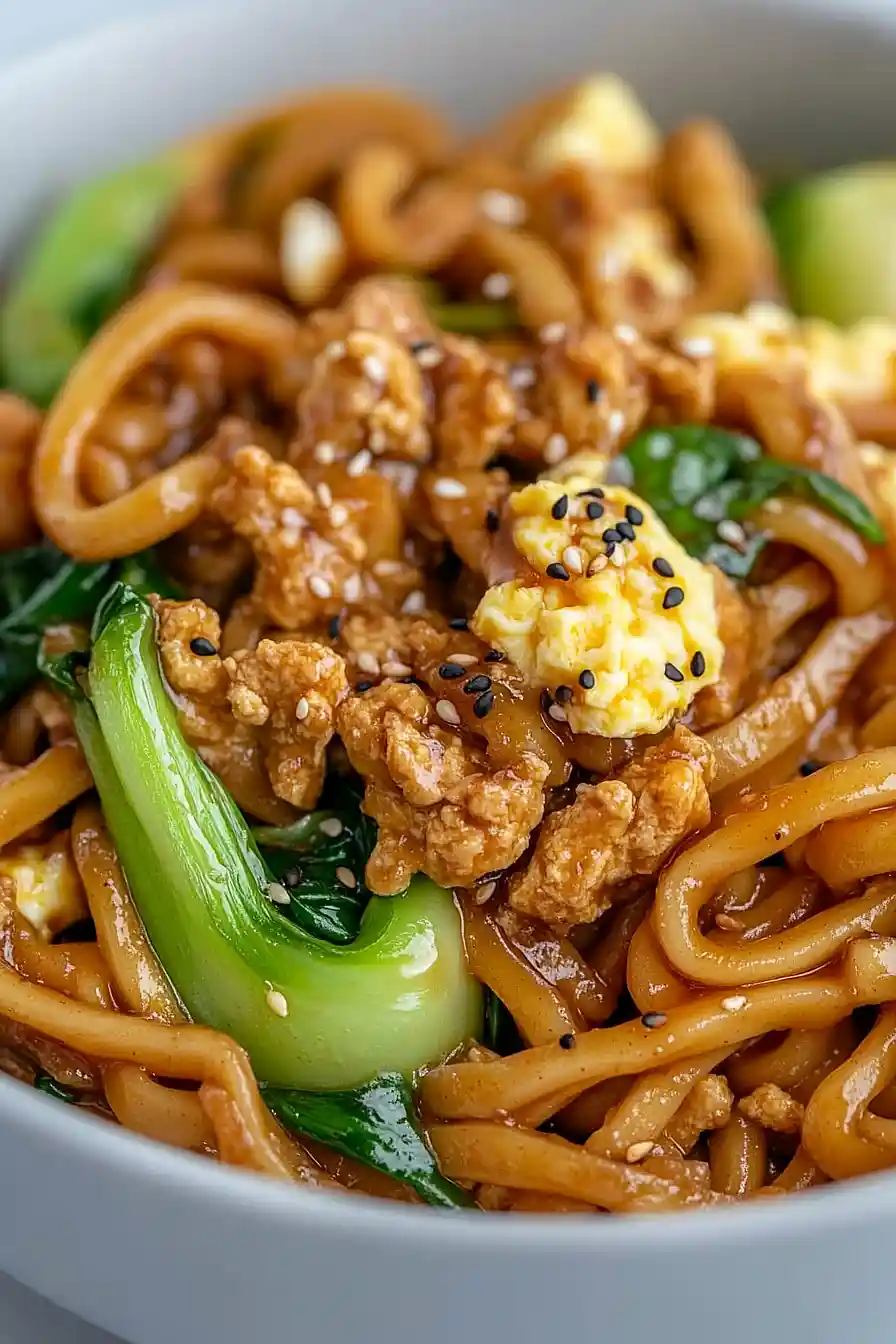
What to Serve With Egg Udon Noodles?
This hearty noodle dish is pretty satisfying on its own, but I love adding some crispy vegetables on the side like steamed broccoli or snap peas for extra crunch. A simple cucumber salad with rice vinegar dressing makes a refreshing contrast to the rich, savory noodles. If you want to make it more filling, try serving it alongside some pan-fried dumplings or spring rolls for a complete Asian-inspired meal. You can also top the noodles with some sliced green onions, chili flakes, or extra sesame seeds to add more flavor and texture.
Storage Instructions
Refrigerate: Your egg udon noodles are best enjoyed fresh, but leftovers will keep in the fridge for up to 3 days in an airtight container. The noodles might absorb some of the sauce and get a bit softer, but they’ll still taste great. I like to add a splash of soy sauce when reheating to bring back some of that saucy goodness.
Make Ahead: You can prep the sauce mixture ahead of time and store it in the fridge for up to a week. Just whisk together the soy sauces, sesame oil, brown sugar, and rice vinegar in a jar. When you’re ready to cook, everything comes together super quickly – perfect for busy weeknight dinners.
Reheat: Warm up your leftover udon in a large pan over medium heat with a splash of water or broth to loosen things up. Stir gently to avoid breaking up the eggs too much. You can also microwave it in 30-second intervals, stirring between each round until heated through.
| Preparation Time | 10-15 minutes |
| Cooking Time | 15-20 minutes |
| Total Time | 25-35 minutes |
| Level of Difficulty | Easy |
Estimated Nutrition
Estimated nutrition for the whole recipe (without optional ingredients):
- Calories: 1100-1300
- Protein: 45-55 g
- Fat: 35-45 g
- Carbohydrates: 160-180 g
Ingredients
For the stir-fry:
- 5 eggs (large, beaten well)
- 1 pak choy (chopped into 1-inch pieces)
- 3 garlic cloves (minced for best flavor)
- Fresh udon noodles
- Sesame seeds (for garnish, toasted)
For the sauce:
- 1 1/2 tbsp light soy sauce (I use Kikkoman)
- 2 tbsp dark soy sauce
- 1 tbsp toasted sesame oil
- 1 tbsp rice vinegar
- 1 tbsp brown sugar
Step 1: Prepare the Ingredients
- 1 pak choy, chopped
- 3 garlic cloves, minced
- 5 eggs
Start by washing the pak choy thoroughly and chopping it into chunks.
Mince the garlic cloves finely.
Crack the eggs into a small bowl, season lightly with salt and pepper, and beat them well with a fork or whisk.
Set all prepared ingredients aside for easy access during cooking.
Step 2: Cook the Udon Noodles
- Fresh udon noodles
Bring a large pot of water to a boil and cook the fresh udon noodles according to the package instructions.
Once cooked, drain the noodles thoroughly and set them aside.
I like to toss the noodles with just a touch of sesame oil to keep them from sticking together while you prepare the rest of the stir-fry.
Step 3: Stir-Fry the Aromatics and Vegetables
- 3 garlic cloves, minced (from Step 1)
- 1 pak choy, chopped (from Step 1)
In a wok or large pan, heat 1 tablespoon of vegetable oil over medium heat.
Add the minced garlic and stir-fry for about 1 minute until fragrant, being careful not to burn it.
Add the chopped pak choy and a small splash of water to help it steam and soften slightly.
Stir-fry until the pak choy is just starting to wilt.
Step 4: Scramble the Eggs in the Pan
- 5 beaten eggs (from Step 1)
Push the cooked garlic and pak choy to one side of the pan.
Add another tablespoon of vegetable oil to the empty side.
Pour in the beaten eggs and allow them to set slightly before gently scrambling.
Break up any large clumps and stir until the eggs are just cooked through.
Step 5: Combine and Season the Stir-Fry
- Fresh udon noodles (from Step 2)
- 1 1/2 tbsp light soy sauce
- 2 tbsp dark soy sauce
- 1 tbsp toasted sesame oil
- 1 tbsp brown sugar
- 1 tbsp rice vinegar
Add the cooked udon noodles to the pan, followed by the light soy sauce, dark soy sauce, rice vinegar, toasted sesame oil, and brown sugar.
Toss everything together vigorously over medium-high heat, making sure the noodles and vegetables are evenly coated with the savory sauce.
If the noodles seem dry, you can add a splash of water.
I like to make sure the sauce is well emulsified for extra flavor.
Step 6: Serve and Garnish
- Sesame seeds, for garnish
Dish the udon noodle stir-fry onto plates or into bowls.
Sprinkle generously with sesame seeds for a nutty crunch and an appealing finish.
Serve immediately and enjoy!