Let’s face it – cooking a whole turkey can feel like an overwhelming task, especially when you’re trying to get all the parts cooked perfectly at the same time. Between managing oven space, preventing the breast from drying out, and making sure the dark meat is fully done, it’s enough to make even experienced cooks feel stressed out during holiday meal prep.
That’s why this roast turkey in parts method has become my go-to approach. By breaking down the turkey before cooking, you get even cooking throughout, better control over each section, and the flexibility to cook just the pieces your family enjoys most.
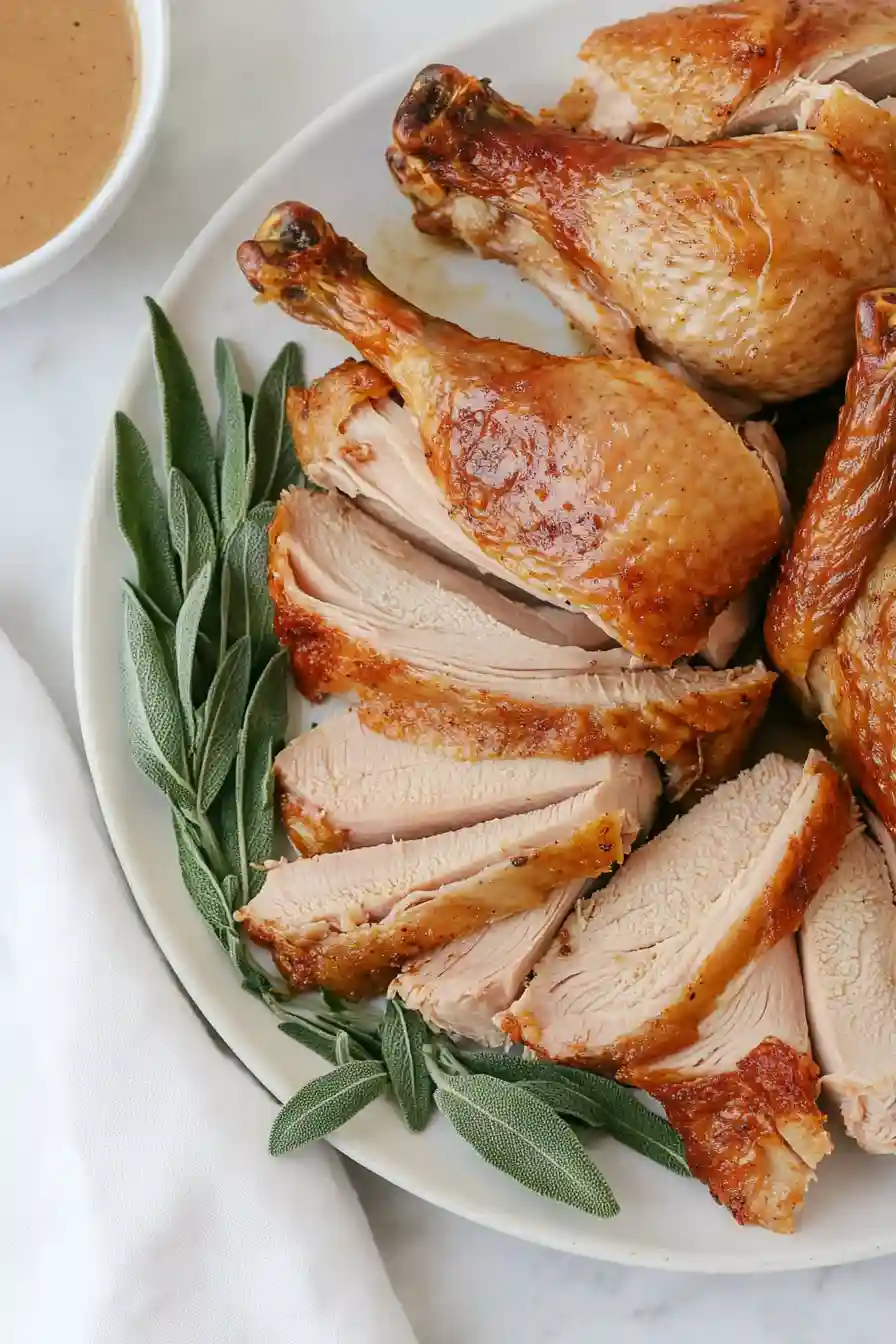
Why You’ll Love This Turkey Roast
- Foolproof cooking method – By breaking down the turkey into parts before roasting, you’ll get perfectly cooked white and dark meat every time – no more dry breast meat or undercooked thighs.
- Rich, flavorful gravy – The combination of turkey drippings, homemade stock, and umami boosters like Marmite and soy sauce creates a deeply savory gravy that’ll have everyone asking for seconds.
- More control over cooking – Roasting turkey parts separately gives you the freedom to remove pieces as they finish cooking, ensuring each part is cooked to perfection.
- Less intimidating – If you’ve been nervous about cooking a whole turkey, this method is much more manageable and gives you better results than traditional whole-bird roasting.
What Kind of Turkey Should I Use?
For this recipe, you’ll want to look for a turkey in the 10-15 pound range, which is perfect for cutting into parts. Fresh turkeys typically give you the best results, but a thawed frozen turkey will work just fine – just make sure it’s completely defrosted before you start (plan for about 24 hours of thawing time in the fridge for every 4-5 pounds). When shopping, try to choose a turkey that hasn’t been pre-basted or injected with a salt solution, as this gives you better control over the seasoning. If you’re feeding a smaller group, you could even ask your butcher to cut a whole turkey into parts for you, or just buy separate turkey pieces instead of a whole bird.
Options for Substitutions
Let’s talk about what you can swap in this recipe while still getting great results:
- Turkey: While this recipe is designed for turkey, you can apply the same method to a large chicken – just adjust cooking times down by about 30%. The parts-based approach works great for either bird.
- Vegetables for aromatics: The onion, carrot, and celery base (also known as mirepoix) is pretty flexible. If you’re missing celery, try using fennel. No carrots? Add parsnips instead. The key is keeping similar proportions for the aromatics.
- Marmite: If you can’t find Marmite, you can use Vegemite, additional soy sauce, or even a splash of Worcestershire sauce. These all add that nice savory depth to the gravy.
- Chicken broth: Turkey or vegetable broth work just fine here. If using store-bought, try to get low-sodium so you can control the salt level better.
- Cooking oil: Any neutral oil like canola, vegetable, or grapeseed will work. Avoid olive oil as it might smoke at high roasting temperatures.
- Flour for gravy: For a gluten-free option, use cornstarch (1.5 tablespoons) or arrowroot powder (2 tablespoons) mixed with cold water before adding to the gravy.
Watch Out for These Mistakes While Roasting
The biggest challenge when roasting turkey parts is uneven cooking – avoid this by arranging similar-sized pieces together and using a meat thermometer to check each part individually, as breasts will cook faster than legs and thighs. A common error is not letting the turkey parts come to room temperature before roasting, which can lead to inconsistent cooking – take them out of the fridge 30-45 minutes before they go in the oven. To prevent dry meat, resist the urge to constantly open the oven door to check on the turkey, as this lets heat escape and extends cooking time – instead, rely on your meat thermometer and remove each piece as it reaches 165°F. For extra-crispy skin, pat the turkey parts completely dry with paper towels before seasoning, and consider placing them on a wire rack inside your roasting pan so heat can circulate underneath.
What to Serve With Roast Turkey?
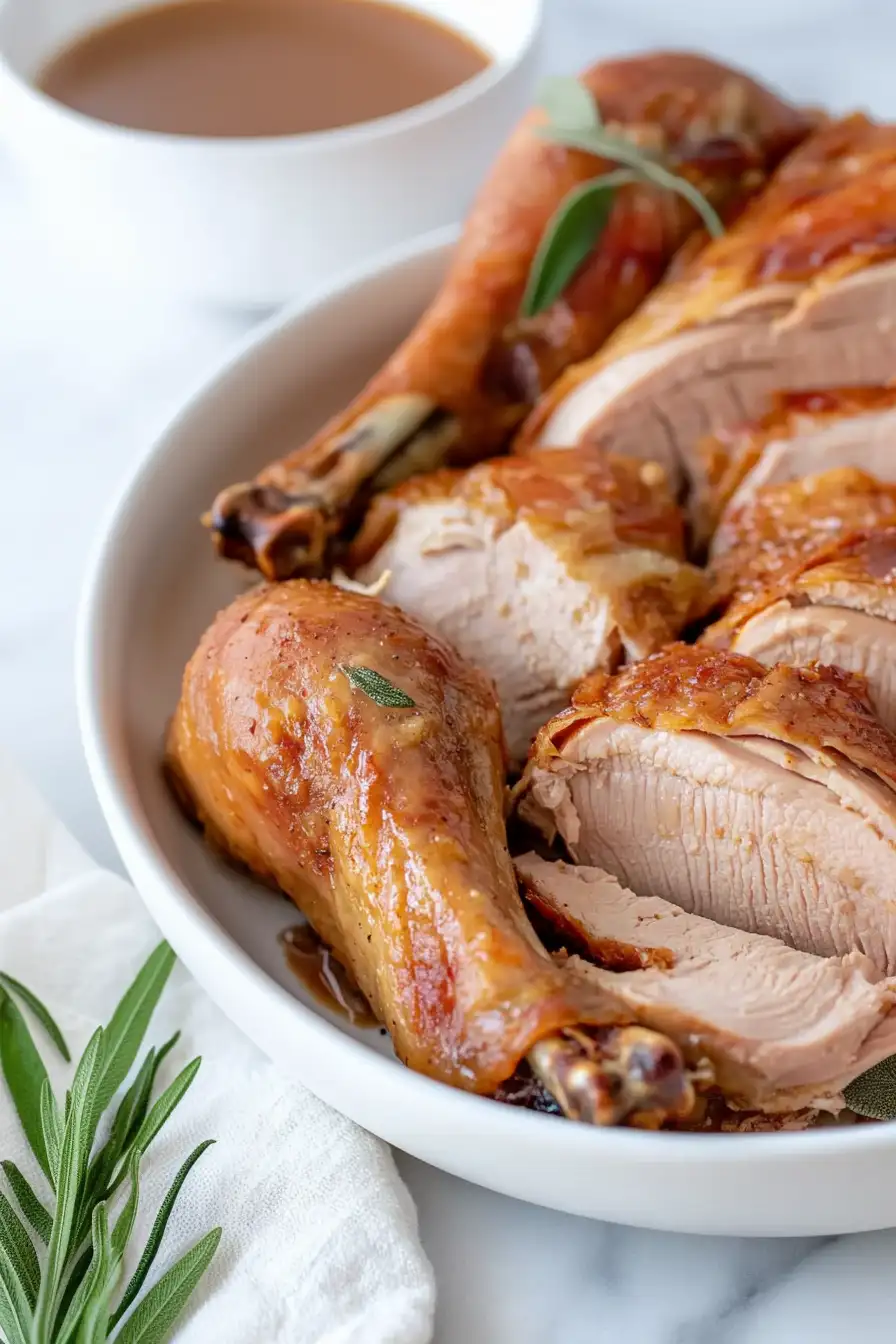
When it comes to serving roast turkey, you can’t go wrong with the traditional holiday sides that everyone loves. Creamy mashed potatoes make the perfect base for that rich gravy, while classic stuffing (whether cooked inside or outside the bird) adds that wonderful savory element. I always include at least two veggie sides – roasted Brussels sprouts, green bean casserole, or honey-glazed carrots are all great choices. For a touch of sweetness, cranberry sauce (homemade or store-bought) cuts through the richness of the turkey and brings the whole meal together.
Storage Instructions
Keep Fresh: After your turkey has cooled, place the meat in airtight containers and pop them in the fridge. It’ll stay good for 3-4 days, perfect for those post-holiday sandwiches and leftover meals. Keep the gravy separate in its own container – it’ll last about the same time in the fridge.
Freeze: Turkey freezes really well! Remove the meat from the bones, wrap it tightly in foil or freezer bags, and it’ll keep for up to 3 months. The gravy can be frozen too – just pour it into freezer-safe containers or ice cube trays for easy portioning. When you’re ready to use it, thaw everything overnight in the fridge.
Reheat: To keep your turkey moist when reheating, place it in a baking dish with a splash of broth or gravy, cover with foil, and warm in a 325°F oven until heated through. The gravy can be warmed separately on the stovetop over low heat, stirring occasionally. If it’s too thick, thin it out with a bit of broth or water.
| Preparation Time | 60-120 minutes |
| Cooking Time | 150-180 minutes |
| Total Time | 210-300 minutes |
| Level of Difficulty | Medium |
Estimated Nutrition
Estimated nutrition for the whole recipe (without optional ingredients):
- Calories: 4000-4500
- Protein: 300-350 g
- Fat: 230-250 g
- Carbohydrates: 100-120 g
Ingredients
- 1 whole turkey, ranging from 10 to 15 pounds (4.5 to 6.8 kg)
- Salt and freshly ground black pepper to taste
- 1 big onion, peeled and roughly chopped (approximately 2 cups)
- 1 large carrot, peeled and cut into large pieces (about 1 cup)
- 2 big celery stalks, cut into chunks (about 1 cup)
- 2 medium cloves of garlic, peeled and crushed
- 2 bay leaves
- 12 whole black peppercorns
- 1 quart (900 ml) of homemade or store-bought low-salt chicken broth, separated
- 2 tablespoons (30 ml) of cooking oil
- 3 tablespoons (45 g) of unsalted butter
- 3 tablespoons of flour
- 1/4 teaspoon of marmite
- 1 teaspoon (5 ml) soy sauce
Step 1: Prepare the Turkey Parts
Using a sharp knife, remove the legs from the turkey and set them aside.
Use a large cleaver or heavy chef’s knife to cut the backbone and carcass away from the turkey breast.
Separate the turkey wings from the breast.
Chop the backbone and carcass into rough pieces with the cleaver.
Season the turkey parts liberally with salt and pepper.
For best results, transfer the turkey parts to a wire rack set in a rimmed baking sheet and let them rest uncovered in the refrigerator overnight.
Step 2: Set Up for Roasting
Adjust the oven rack to the lower-middle position and preheat the oven to 275°F (135°C).
Evenly spread onions, carrots, celery, garlic, bay leaves, and black peppercorns across a rimmed baking sheet.
Pour 1 cup (240ml) of stock onto the baking sheet and reserve the remaining stock.
Place a wire rack on top of the baking sheet, allowing it to rest directly on top of the vegetables.
Place the turkey on top of the rack, trying to leave some space between the pieces.
Step 3: Roast the Turkey
Roast the turkey until an instant-read thermometer inserted into the center of a breast piece registers 150°F (66°C), which should take 2 to 3 hours.
Remove the breast and set aside.
Continue roasting the legs until the thermometer registers 170°F (77°C) when inserted into a leg, about 30 minutes longer.
The turkey pieces will not be browned at this stage.
Set them aside at room temperature for at least 30 minutes and up to 2 hours.
Set a fine-mesh strainer over a large bowl and strain the vegetables from the tray.
Reserve the liquid and discard the vegetables.
Step 4: Prepare the Gravy
While the turkey is roasting, roughly chop the carcass and neck into 1-inch chunks.
Heat vegetable oil in a large saucepan or Dutch oven over high heat until it starts to smoke.
Add the turkey carcass and cook, stirring frequently, until well browned on all surfaces, about 10 minutes.
Add the remaining stock and enough water to barely cover the turkey pieces.
Bring to a boil, then reduce to a simmer.
Allow the mixture to simmer while the turkey roasts.
Step 5: Finish the Gravy
Once the turkey is resting, pour the stock through the same strainer and add it to the reserved stock from the strained vegetables.
Discard the solids.
If desired, cut the giblets into 1/4-inch pieces.
Heat butter in a medium saucepan over medium-high heat until melted.
Add the giblets and cook, stirring frequently, until lightly browned, about 2 minutes.
Add flour and cook, stirring constantly, until the flour is a light blond color.
Slowly whisk in the reserved stock, Marmite, and soy sauce.
Bring to a boil, then reduce to a simmer.
Cook until the desired consistency is reached, about 10 minutes, and then season to taste with salt and pepper.
Step 6: Brown the Turkey and Serve
30 minutes before serving the turkey, preheat the oven to 500°F (260°C).
Place the turkey in the oven and cook until crisp and browned, turning the breast once during cooking to ensure even browning.
Serve the turkey immediately with the prepared gravy.