Here’s my take on vegan unagi, a plant-based version of the classic Japanese eel dish that’s both simple and satisfying. The recipe uses mushrooms as the main ingredient, seasoned with a rich sauce that gives it that familiar sweet and savory flavor we all love.
This dish has become my go-to when I’m craving sushi but want to keep things meat-free. I often make extra sauce to keep in the fridge because my family loves to brush it on other dishes too. And honestly, most people can’t even tell it’s not the real thing!
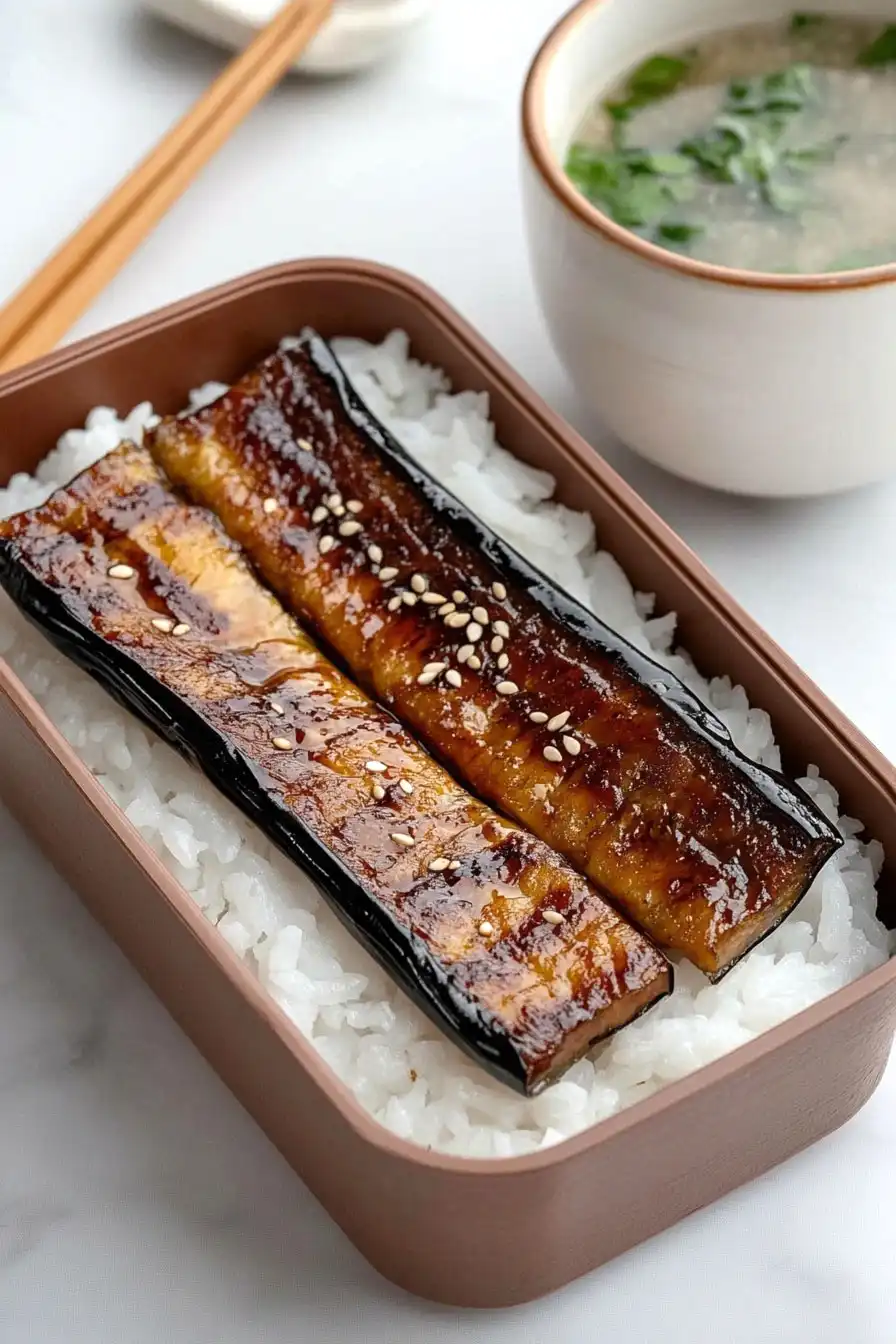
Why You’ll Love This Vegan Unagi
- Plant-based alternative – This clever eggplant-based dish perfectly mimics the texture and flavor of traditional unagi (eel), making it ideal for vegans, vegetarians, or anyone looking to try more plant-based meals.
- Budget-friendly – Using eggplant instead of expensive eel makes this dish much more affordable while still delivering that authentic Japanese taste you’re craving.
- Authentic flavors – The combination of sake, mirin, and soy sauce creates that classic sweet-savory unagi sauce that’s just like what you’d get at a Japanese restaurant.
- Customizable spice level – You can easily adjust the seasonings to match your taste preferences, making it perfect for both Japanese food beginners and seasoned enthusiasts.
What Kind of Eggplant Should I Use?
Japanese or Chinese eggplants are the way to go for this recipe, and there’s a good reason why. These Asian varieties are longer and thinner than regular globe eggplants, with a more tender texture and fewer seeds, making them perfect for soaking up all those savory sauce flavors. Japanese eggplants tend to be a bit smaller and more delicate than Chinese eggplants, but either type will work great here. When shopping, look for eggplants that feel firm and have smooth, shiny skin without any brown spots or blemishes. If you can only find regular globe eggplants at your store, they’ll work in a pinch, but you’ll want to cut them into thinner strips to mimic the size and shape of Asian varieties.
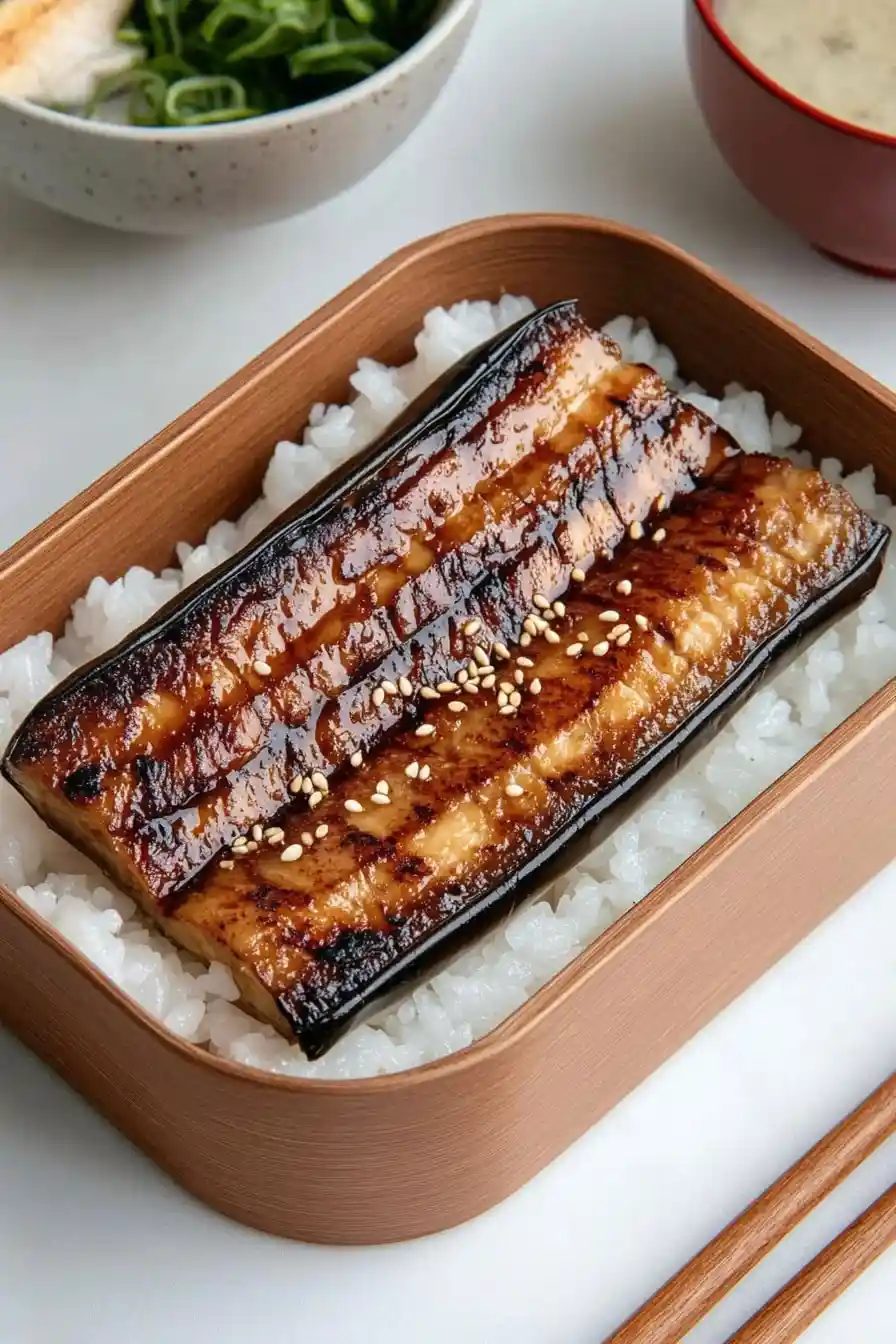
Options for Substitutions
Need to make some swaps? Here’s what you can do with this vegan unagi recipe:
- Japanese/Chinese eggplants: If you can’t find Asian eggplants, regular globe eggplants can work – just cut them into long strips. Keep in mind they may be more watery and bitter, so salt and drain them first.
- Potato starch: Cornstarch makes a perfect 1:1 substitute. You could also use all-purpose flour, though the coating won’t be quite as crispy.
- Sake: Chinese rice wine (Shaoxing) works well here. If you need non-alcoholic options, use rice vinegar mixed with water (1:3 ratio) or just water with a splash of rice vinegar.
- Mirin: Mix 1 tablespoon rice vinegar with 2 tablespoons water and 1 teaspoon sugar for each tablespoon of mirin needed.
- Kombu dashi powder: This is optional, but if you want that sea flavor, you can use a tiny bit of dulse powder or mushroom powder instead.
- Japanese short-grain rice: This is pretty important for the right texture, but medium-grain rice can work in a pinch. Avoid long-grain rice as it won’t give you that sticky texture needed for this dish.
Watch Out for These Mistakes While Cooking
The biggest challenge when making vegan unagi is getting the eggplant’s texture right – cutting the eggplant too thick or thin can ruin the fish-like consistency, so aim for slices about 1/4 inch thick and score them in a diamond pattern to help absorb the sauce. Another common mistake is not properly coating the eggplant in potato starch, which is crucial for creating that slightly crispy exterior that mimics real unagi – make sure each piece is evenly but lightly dusted. The sauce can quickly become too thick or burn due to its high sugar content, so keep a close eye on it while simmering and remove it from heat as soon as it starts to thicken. For the best results, let the eggplant sit in the sauce for at least 5 minutes before serving, allowing it to soak up all those rich umami flavors without becoming too soggy.
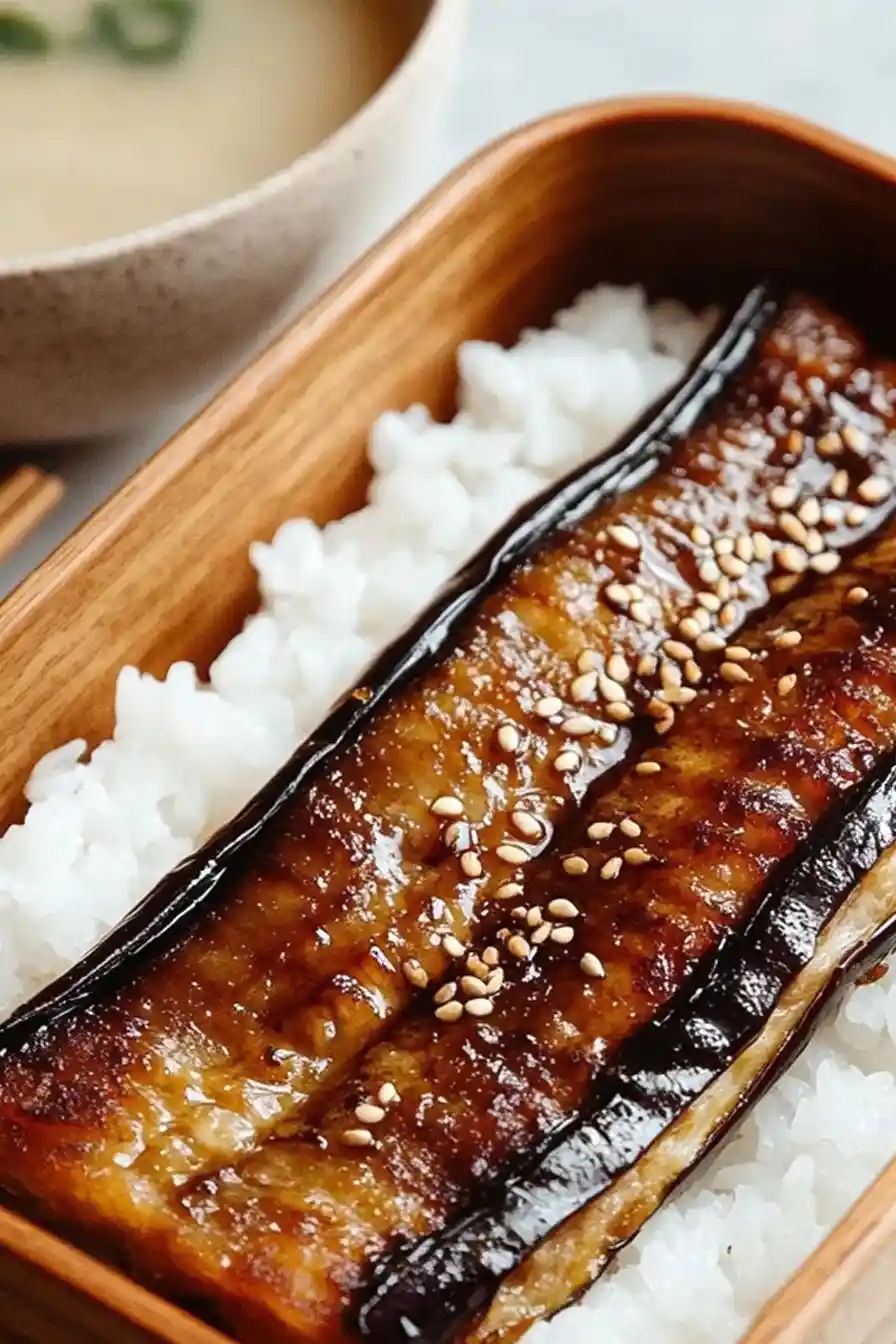
What to Serve With Vegan Unagi?
This plant-based take on Japanese eel goes perfectly with traditional Japanese side dishes that help create a complete meal. A small bowl of miso soup adds a nice warming element and helps balance the sweet-savory flavors of the unagi sauce. You can also add some quick pickled vegetables like cucumber or daikon radish for a refreshing crunch that cuts through the richness of the glazed eggplant. Since this dish already comes with rice, consider adding a simple side of blanched greens like spinach or bok choy dressed with a little sesame oil and soy sauce to round out your plate.
Storage Instructions
Keep Fresh: Once cooked, place your vegan unagi in an airtight container and pop it in the fridge. It’ll stay good for about 3-4 days. The sauce might thicken a bit in the fridge, but that’s totally normal!
Make Ahead: You can prep the unagi sauce up to a week ahead and keep it in the fridge. As for the eggplant, it’s best to cook it fresh when you’re ready to eat, since reheated eggplant can get a bit mushy. If you’re meal prepping, you can slice and salt the eggplant up to 24 hours ahead – just keep it covered in the fridge.
Serve Again: To enjoy leftover vegan unagi, just give it a quick zap in the microwave or warm it gently in a pan. The rice is best made fresh, but if you have leftovers, sprinkle a little water on top before reheating to bring back its fluffy texture.
| Preparation Time | 15-20 minutes |
| Cooking Time | 40-60 minutes |
| Total Time | 55-80 minutes |
| Level of Difficulty | Medium |
Estimated Nutrition
Estimated nutrition for the whole recipe (without optional ingredients):
- Calories: 800-900
- Protein: 15-20 g
- Fat: 15-20 g
- Carbohydrates: 150-180 g
Ingredients
For the vegan unagi:
- 3 Japanese or 2 Chinese eggplants
- potato starch
- nori seaweed (roasted is best)
For the sauce:
- 1/2 tsp kombu dashi powder
- 3 tbsp sake
- 3 tbsp Japanese soy sauce (I use Kikkoman)
- 3 tbsp cane sugar
- 3 tbsp mirin
For serving:
- sesame seeds (toasted, for garnish)
- 2 cups cooked Japanese short-grain rice (sushi rice works well)
Step 1: Prepare and Steam the Eggplant
Cut off the top of the eggplant.
You can choose to either keep the skin on or peel it off.
If leaving the skin on, poke holes into it to prevent it from exploding during cooking.
Place the eggplants into a steamer and let them steam for 4-5 minutes, making sure to rotate them at 2.5 minutes to ensure even cooking.
Step 2: Microwave the Eggplant
Transfer the steamed eggplants to a microwave-safe dish with a lid.
Microwave them at 600W for 1 1/2 minutes on one side.
Turn the eggplants over and microwave for another 1.5 minutes.
If you don’t have a microwave-safe dish large enough, wrap the eggplants with cling wrap and microwave them on a plate for the same amount of time.
Step 3: Bake and Slice the Eggplant
Bake the eggplants at 350°F for 30 minutes, rotating halfway through the cooking time.
Once baked, slice the eggplant vertically down the middle without cutting all the way through.
Gently open the eggplant with your fingers.
If desired, make shallow horizontal cuts on both sides for a decorative, eel-like appearance.
Step 4: Prepare the Sauce
In a saucepan over medium heat, combine sake, mirin, kombu dashi powder, and cane sugar, whisking them together.
Once the mixture comes to a boil, add soy sauce and reduce to low heat.
Allow the sauce to simmer for 5 minutes until it thickens.
This step is optional if you prefer a one-pan method.
Step 5: Fry and Glaze the Eggplant
Lightly dust the eggplant with potato starch.
Heat 2 tablespoons of cooking oil over medium heat in a frying pan and place the eggplant flat in the pan.
Cook each side for 2-3 minutes until nicely charred.
Add sake, mirin, and dashi stock powder.
Swirl the pan, then add the sugar and soy sauce.
Swirl again and let the mixture cook for 30-45 seconds.
Flip the eggplant and cook until the sauce is mostly absorbed.
Once done, brush unagi sauce over the eggplant in layers, flipping the eggplant to coat both sides.
Step 6: Finish and Serve
For a smoky flavor, torch the eggplant or broil it for 2-3 minutes until ‘smoky.’ Sprinkle with Japanese pepper and sesame seeds if desired.
Layer nori on the bottom of a donburi or bowl, followed by a portion of cooked rice (about 1 1/2 cups).
Drizzle the remaining sauce over the rice and add a generous layer of seaweed.
Place the eggplant directly over the seaweed, allowing it to stick and mimic a ‘skin’ look and texture.
Serve and enjoy your delicious dish!