If you ask me, poke bowls are one of the best food trends to come around in years.
This Hawaiian-style mahi mahi bowl brings the fresh flavors of the islands right to your kitchen table. Cool chunks of mahi mahi mix with crisp cucumber and creamy avocado, all sitting on a bed of fluffy rice.
It’s dressed with a simple soy-based sauce that adds just the right amount of saltiness, while sesame seeds and green onions give it that authentic poke shop taste. The fish stays nice and fresh-tasting, and the whole dish comes together in minutes.
It’s a light but filling meal that’s perfect for hot days when you don’t feel like turning on the stove.
Why You’ll Love This Poke Bowl
- Customizable meal – You can easily adjust the toppings and ingredients to match your preferences, making it perfect for feeding different tastes in one meal.
- Fresh and healthy – Packed with lean protein from mahi mahi, healthy fats from avocado, and fresh vegetables, this bowl delivers a nutritious meal that doesn’t sacrifice flavor.
- Make-ahead friendly – You can prep all the components in advance and assemble them when you’re ready to eat, making it perfect for busy weekday meals.
- Restaurant-quality at home – This recipe helps you create those fancy poke bowls you love from restaurants right in your own kitchen, at a fraction of the cost.
What Kind of Mahi Mahi Should I Use?
For poke bowls, you’ll want to start with sushi-grade mahi mahi that’s fresh and firm to the touch. While fresh mahi mahi has a pinkish-white color when raw, don’t worry if you can only find frozen – many fish markets flash-freeze their mahi mahi right after catching to preserve freshness. When shopping, look for fillets that are moist but not wet, with no brown spots or dried-out edges. If you’re buying frozen, make sure to thaw it slowly in the refrigerator overnight rather than using quick-thaw methods, as this helps maintain the firm texture that’s perfect for poke bowls.
Options for Substitutions
This poke bowl recipe is super adaptable and you can make several swaps based on what you have available:
- Mahi Mahi: If you can’t find Mahi Mahi, try using other firm white fish like halibut, cod, or sea bass. Tuna also works great in poke bowls. Just make sure any fish you use is fresh and sushi-grade if you’re planning to serve it raw.
- Rice: White rice is traditional, but feel free to use brown rice, quinoa, or cauliflower rice for a low-carb option. Just remember that cooking times will vary for each.
- Citrus: No limes or lemons? You can use all limes or all lemons instead. In a pinch, orange juice mixed with a splash of vinegar can work too.
- Chili lime seasoning: If you don’t have chili lime seasoning, mix some chili powder with lime zest, or use tajin seasoning instead.
- Bell peppers: Any color bell pepper will work just fine. You can also swap them out for cucumber, mango, or edamame.
- Cilantro: If you’re not a fan of cilantro or don’t have any, try using fresh parsley or Thai basil instead.
- Avocado: While avocado adds nice creaminess, you can skip it or replace it with cucumber or mango for a different texture.
Watch Out for These Mistakes While Cooking
The biggest mistake when preparing Mahi Mahi poke bowls is overcooking the fish, which can turn it tough and rubbery – instead, cook it just until it flakes easily with a fork and is slightly opaque in the center, usually about 3-4 minutes per side. A common error is not patting the fish dry before cooking, which prevents that nice golden sear from forming, so take a moment to use paper towels to remove excess moisture. When marinating the Mahi Mahi, avoid leaving it in the citrus mixture for more than 30 minutes, as the acid can start “cooking” the fish and affect its texture – 15-20 minutes is the sweet spot for maximum flavor absorption. For the best results, make sure your pan is properly heated before adding the fish, and resist the urge to move it around too much while cooking – let it develop a nice crust before flipping just once.
What to Serve With Poke Bowls?
Since poke bowls are pretty much a complete meal on their own, you don’t need much on the side – but there are some fun ways to round out your spread! A simple miso soup makes a great starter and adds a warming element to the meal. For snacking while you eat, put out some crispy seaweed snacks or wasabi peas, which bring extra crunch and that perfect Asian-inspired flavor profile. If you’re hosting friends, consider setting up a DIY poke bowl bar with extra toppings like pickled ginger, different types of seaweed, sesame seeds, and various sauces so everyone can customize their bowl just how they like it.
Storage Instructions
Keep Fresh: For the best poke bowl experience, keep your cooked Mahi Mahi separate from the fresh ingredients. Store the fish in an airtight container in the fridge for up to 2 days. Keep your prepped veggies in separate containers – this way, everything stays crisp and fresh, and you can assemble your bowl when you’re ready to eat.
Prep Ahead: Want to meal prep these bowls? Cook your rice and Mahi Mahi ahead of time and store them separately. Slice your bell peppers and store them in their own container. Wait to cut the avocado until you’re ready to eat – nobody likes brown avocado! Having everything ready to go makes lunch assembly super quick.
Serve: When you’re ready to enjoy your poke bowl, just grab your containers from the fridge and build your bowl. If you’re taking it to work, pack the components separately and assemble just before eating. A squeeze of fresh lime juice right before serving really makes all the flavors pop!
| Preparation Time | 15-20 minutes |
| Cooking Time | 10-15 minutes |
| Total Time | 3 hours 25 minutes to 3 hours 35 minutes |
| Level of Difficulty | Medium |
Estimated Nutrition
Estimated nutrition for the whole recipe (without optional ingredients):
- Calories: 600-700
- Protein: 80-90 g
- Fat: 35-45 g
- Carbohydrates: 20-30 g
Ingredients
For the marinade:
- 2 tsp chili lime seasoning
- 1/2 tsp pepper
- juice of 2 limes
- 1/2 tsp salt
- juice of 1 lemon
- 1/2 cup chopped cilantro
- 3 tbsp olive oil (I like California Olive Ranch extra virgin)
- 1 tsp minced garlic (freshly minced for best flavor)
- zest of 2 limes (freshly zested for best aroma)
- zest of 1 lemon
For the fish:
- 1 1/2 lb mahi mahi (sushi-grade, cut into 1/2-inch cubes)
For serving:
- cheese (cotija or crumbled feta recommended)
- cooked rice (warm, preferably short-grain white rice)
- bell pepper (orange or yellow, thinly sliced)
- cilantro (fresh sprigs for garnish)
- lime (cut into wedges)
- avocado (ripe, sliced or diced)
Step 1: Prepare the Marinade
In a small bowl, whisk together the lime zest, lime juice, lemon zest, lemon juice, olive oil, minced garlic, chili lime seasoning, most of the chopped cilantro, salt, and pepper.
Mix until well combined, creating a flavorful marinade.
Step 2: Marinate the Fish
Place the Mahi Mahi in a shallow dish and pour the marinade over it, ensuring the fish is fully coated.
Cover the dish and marinate in the refrigerator for at least 3 hours to allow the flavors to infuse.
Step 3: Prepare the Grill and Vegetables
Preheat your grill to a medium-high heat.
While the grill is preheating, chop the peppers, avocados, and limes for the rice bowls.
This will save time once the fish is cooked.
Step 4: Grill the Fish
Place the marinated Mahi Mahi along with the marinade onto a piece of tin foil.
Sprinkle the remaining cilantro on top, wrap it securely, and place the package on the grill.
Grill the fish for 5 minutes, then carefully flip it and grill for another 5 minutes.
Adjust the cooking time as needed based on the thickness of the fish to ensure it is cooked through.
Step 5: Rest the Fish and Assemble the Rice Bowls
Once grilled, remove the fish from the grill and let it rest for a few minutes to lock in the juices.
Meanwhile, divide cooked rice into the bottom of four bowls.
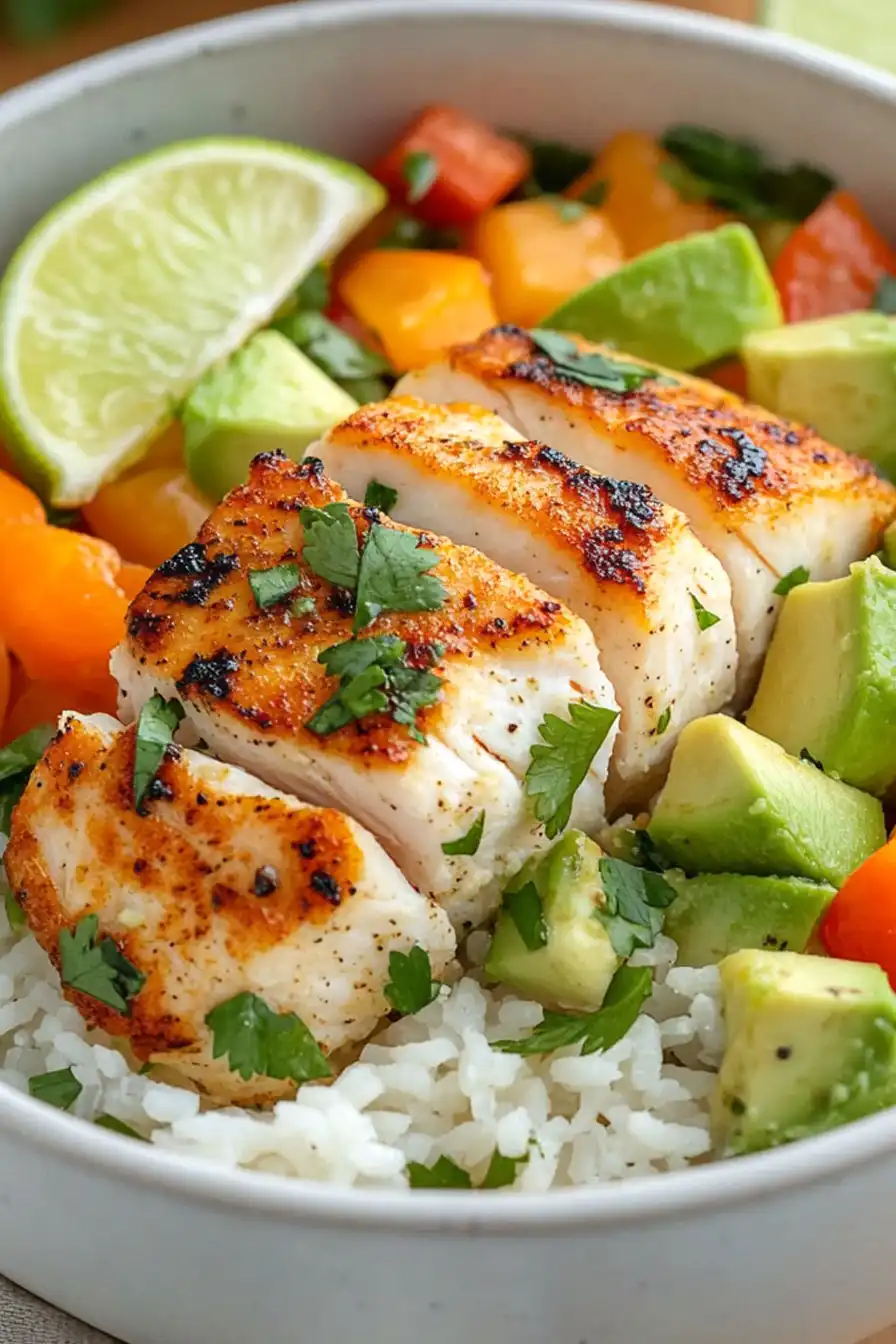
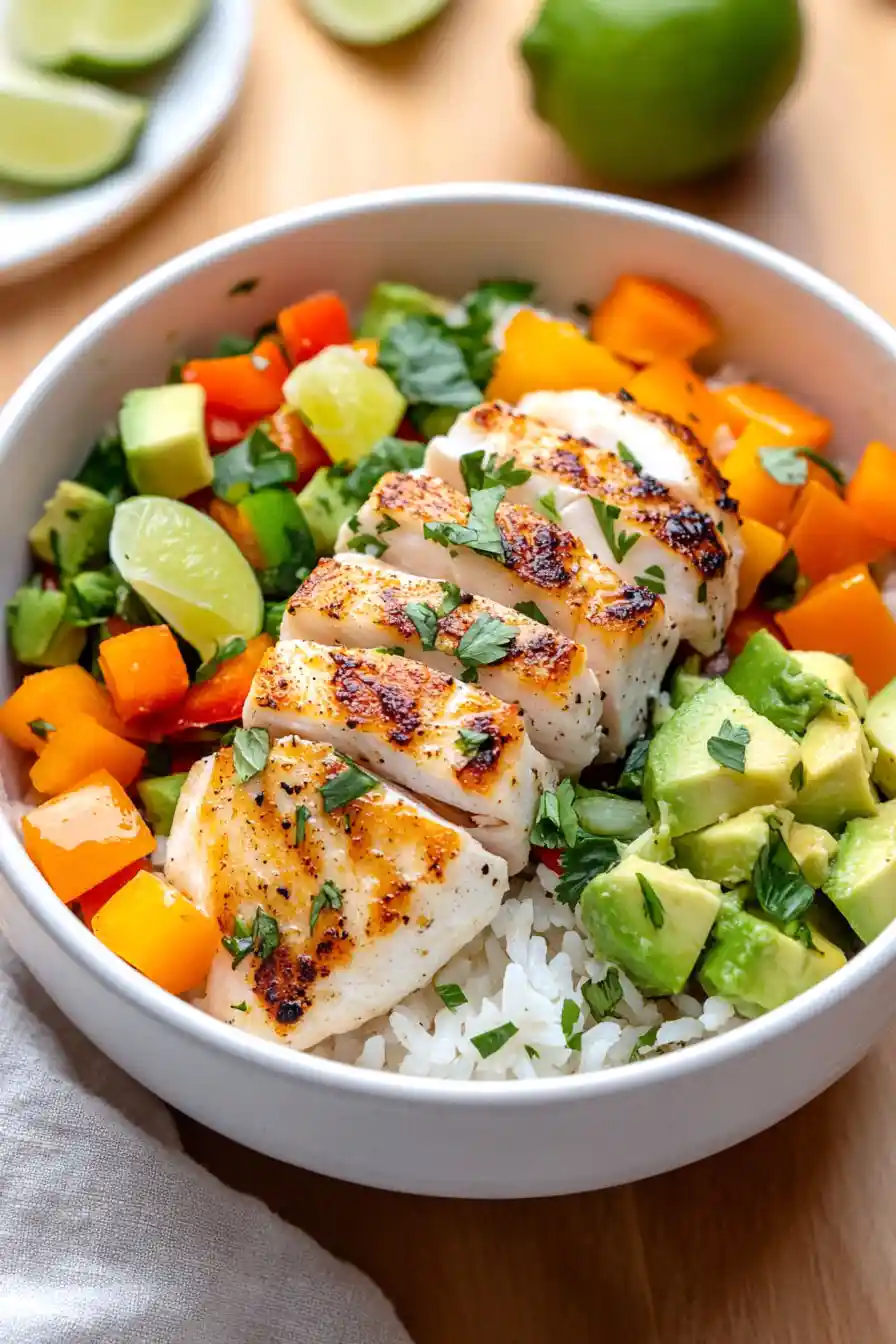
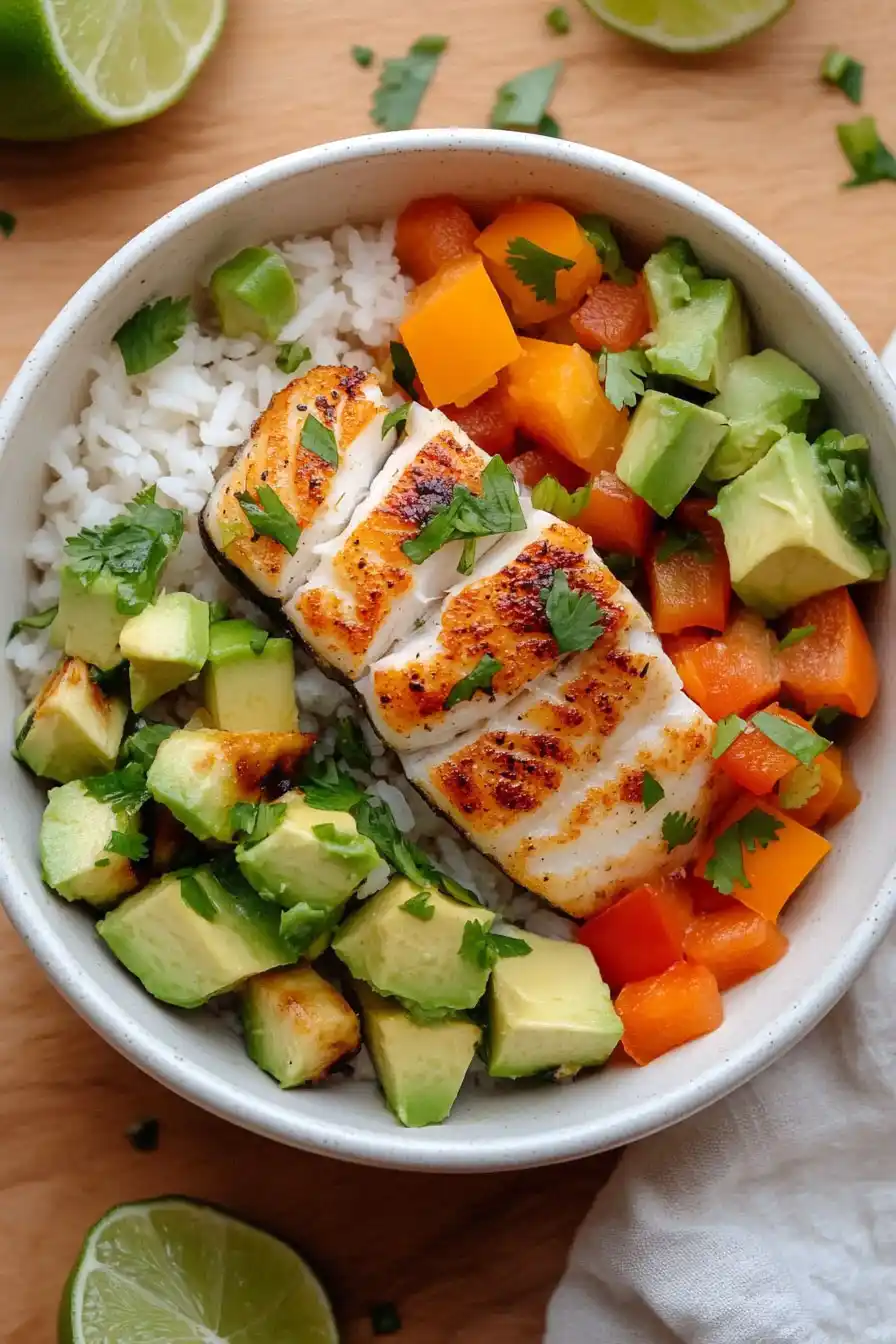
Top each bowl with chopped yellow/orange peppers, avocado, cilantro, and a slice of lime.
Finally, slice the grilled fish and place it on top of the rice and vegetables in each bowl.
Step 6: Serve and Enjoy
Your Mahi Mahi rice bowls are now ready to serve.
Enjoy this delightful dish with its fresh and vibrant flavors, perfect for a healthy meal.