Who says lasagna has to be all about meat and regular noodles? I stumbled onto this sweet potato version a few years ago when I was trying to use up some leftover sweet potatoes from Thanksgiving. My family was skeptical at first, but now it’s become one of our most requested comfort food dinners.
I love how this recipe puts a new spin on the classic Italian dish we all grew up with. The sweet potatoes add a natural sweetness that pairs so nicely with the cheese and sauce. Plus, it’s a great way to sneak in some extra vegetables without anyone making a fuss. Trust me, even my kids, who usually turn their noses up at anything too “different,” ask for seconds of this one.
If you’re looking for something a little different for dinner tonight but still want that cozy, familiar lasagna feeling, give this version a try. It’s just as filling as regular lasagna but with its own special twist.
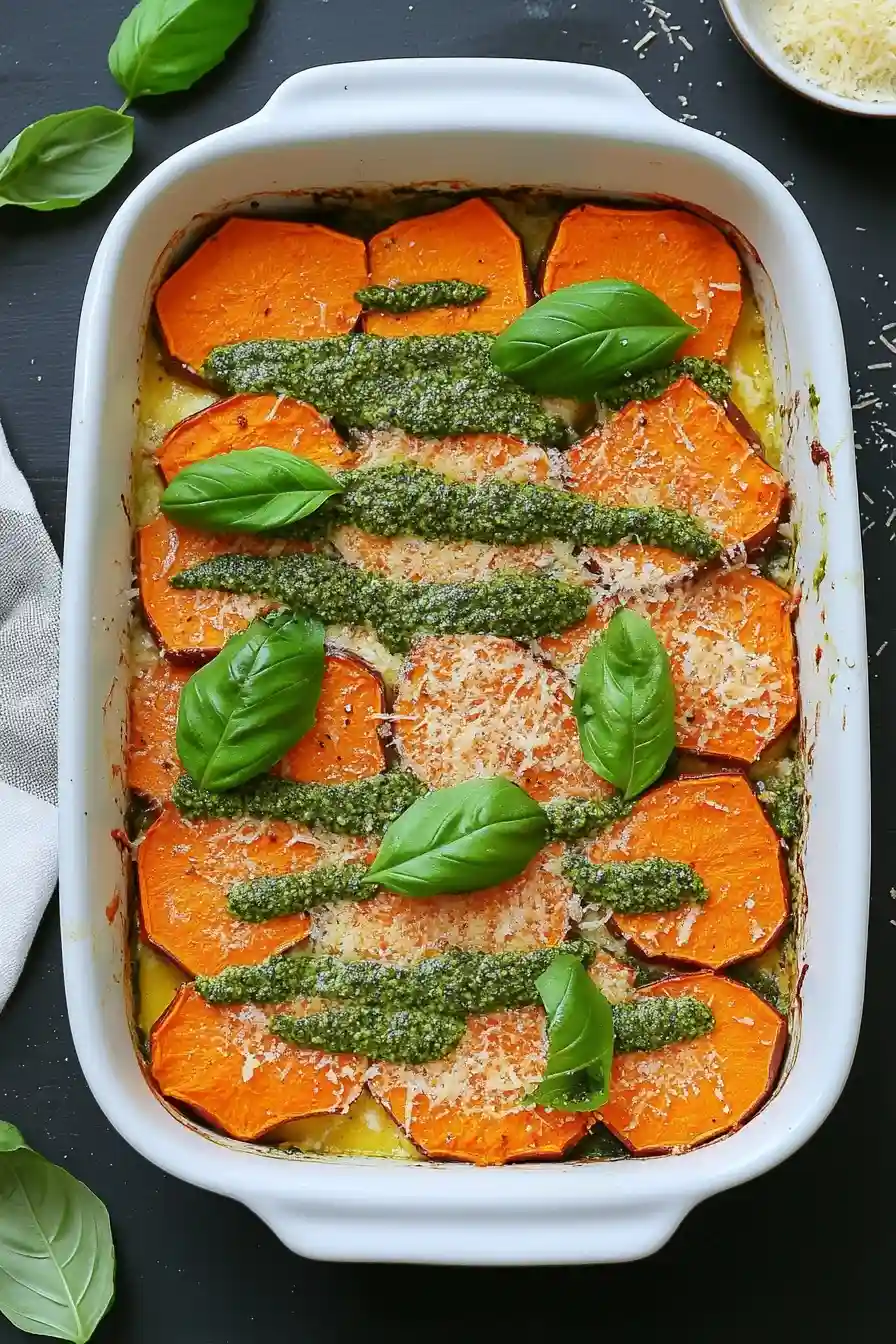
Why You’ll Love This Sweet Potato Lasagna
- Plant-based twist – This dairy-free and meat-free version of lasagna uses sweet potatoes instead of pasta, making it perfect for anyone following a vegan, gluten-free, or low-carb diet.
- Nutrient-rich ingredients – Sweet potatoes provide beta-carotene and fiber, while tofu adds protein, making this a well-balanced meal that’s good for you.
- Make-ahead friendly – You can prep this lasagna in advance and reheat it when needed, perfect for busy weeknight dinners or meal prep.
- Crowd-pleasing flavors – The combination of sweet potatoes, fresh herbs, and savory vegan cheese creates a satisfying dish that even non-vegans will enjoy.
What Kind of Sweet Potatoes Should I Use?
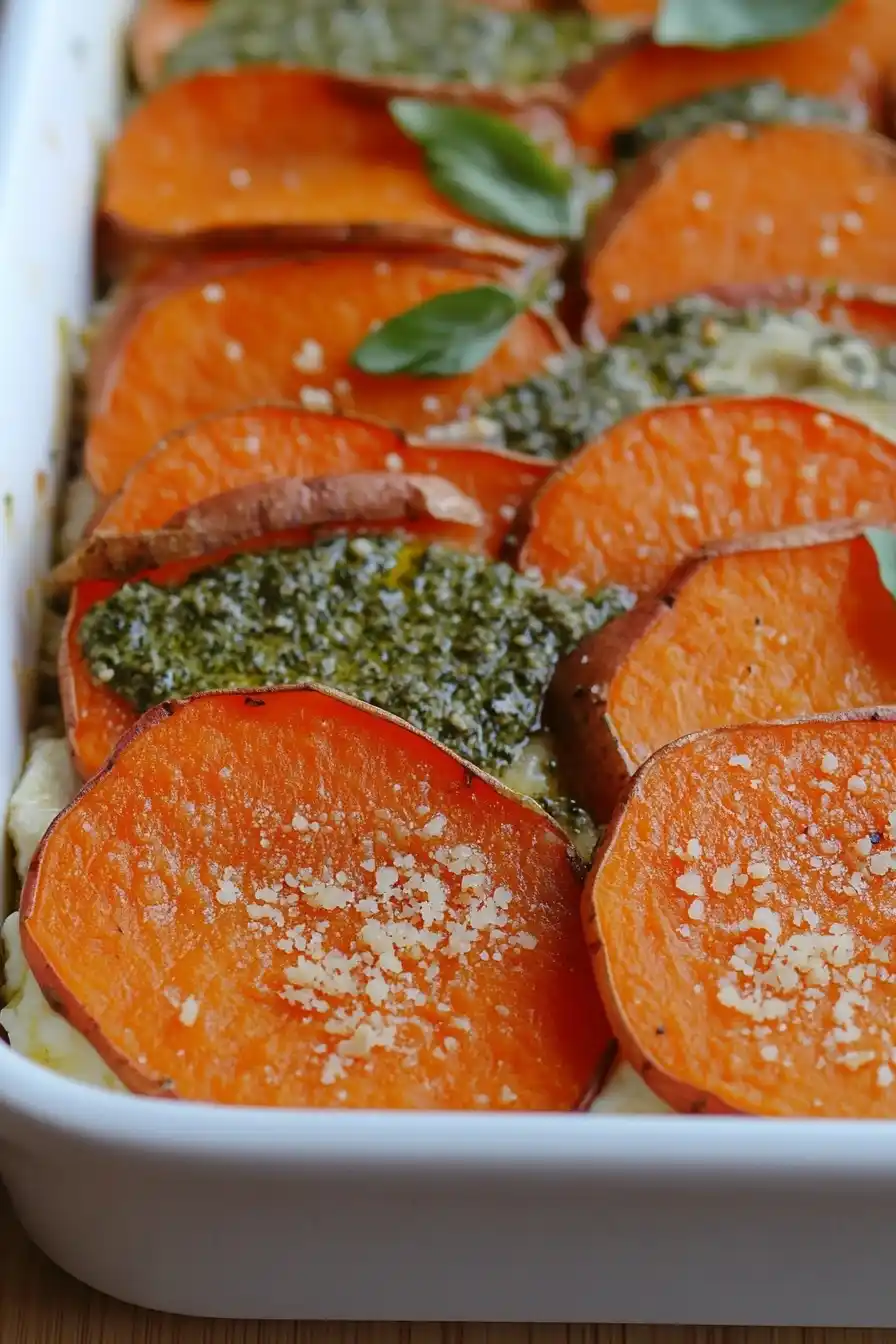
For lasagna, you’ll want to look for sweet potatoes that are long and cylindrical in shape, as these will give you the most consistent slices to replace traditional pasta sheets. The orange-fleshed Jewel or Beauregard varieties are great choices since they hold their shape well when cooked and offer a nice natural sweetness. When shopping, pick sweet potatoes that feel firm and heavy for their size, with smooth, unblemished skin. Try to choose ones that are similar in width throughout their length – this will make it much easier to get even slices that’ll cook uniformly in your lasagna layers.
Options for Substitutions
This vegan lasagna recipe can be adapted with several substitutions if needed:
- Sweet potatoes: You can use butternut squash or regular potatoes instead of sweet potatoes. Just make sure to slice them very thin, about 1/8 inch thick, as they’ll need to cook through completely.
- Extra-firm tofu: If tofu isn’t your thing, try using mashed white beans or cashew cream (blend 1.5 cups soaked cashews with 1/2 cup water until smooth). Keep in mind the texture will be different.
- Nutritional yeast: This gives a cheesy flavor, but you can skip it and add an extra 2 tablespoons of vegan parmesan instead. The taste won’t be exactly the same, but it’ll still work.
- Fresh basil: If fresh basil isn’t available, use 1 tablespoon dried basil for every 1/4 cup fresh. You can also try fresh spinach for a different green element.
- Vegan parmesan: Make your own by blending equal parts nutritional yeast and raw cashews with a pinch of salt, or use any other vegan cheese alternative you like.
- Olive oil: Feel free to use avocado oil or grapeseed oil instead. Each will work fine for both cooking and in the sauce.
Watch Out for These Mistakes While Cooking
The biggest challenge when making sweet potato lasagna is getting the sweet potato slices just right – if they’re cut too thick, they’ll stay hard and won’t cook evenly, so aim for consistent, thin slices (about 1/8 inch thick) using a mandoline or sharp knife. A common mistake is skipping the step of patting the tofu dry, which can make your filling watery and cause the lasagna to become soggy, so take those extra 10 minutes to press out excess moisture. When layering your lasagna, avoid the temptation to pile on thick layers of filling – thinner, even layers will cook more uniformly and help the flavors blend better. For the best texture, let the lasagna rest for 15-20 minutes after baking before cutting into it, which allows the layers to set and makes for cleaner, more presentable servings.
What to Serve With Sweet Potato Lasagna?
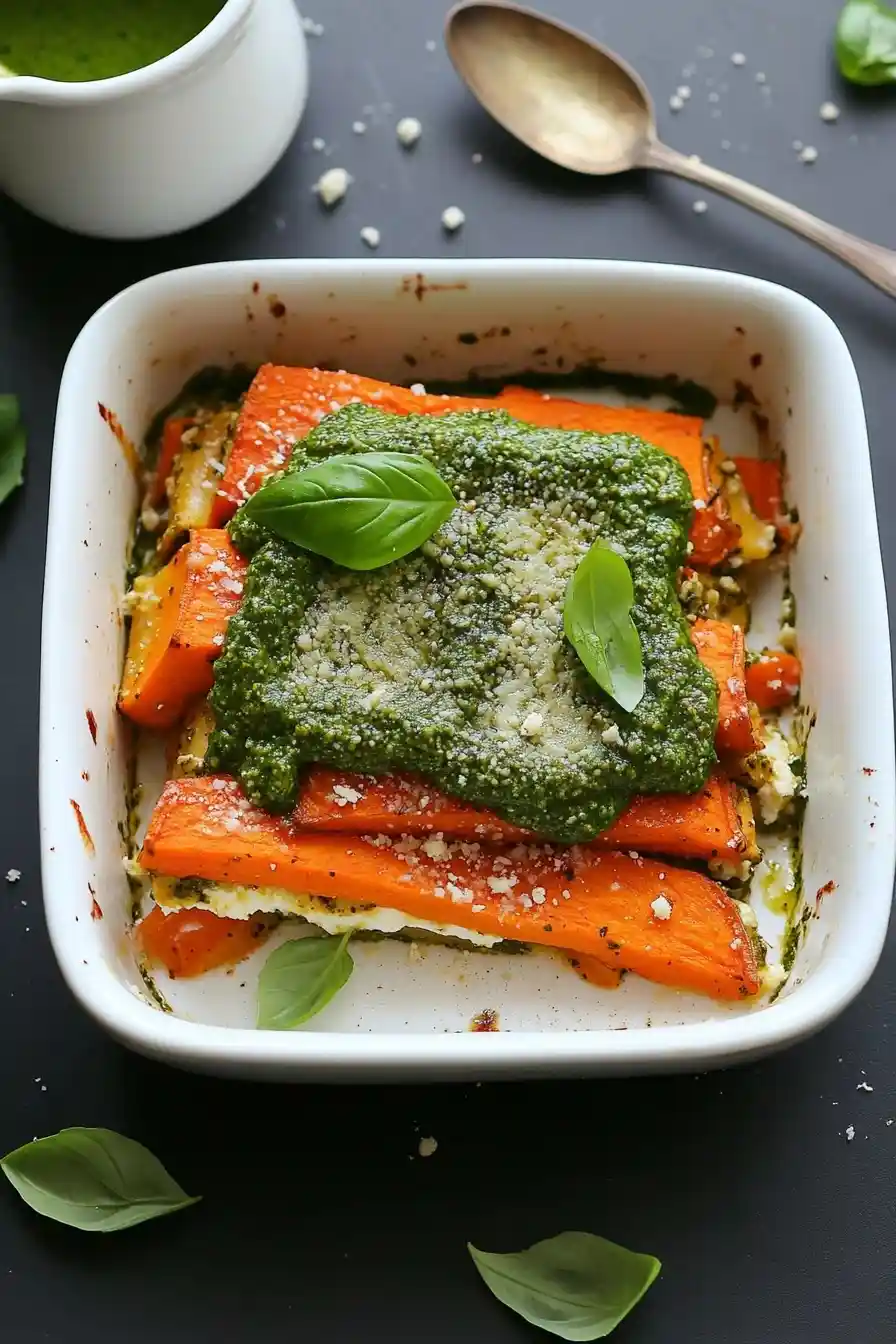
This plant-based lasagna is filling on its own, but a few simple sides can really round out your meal. A crisp arugula salad with lemon dressing makes a nice contrast to the rich, creamy layers of the lasagna. If you’re feeding a crowd, some crusty whole grain bread or garlic bread on the side helps soak up any extra sauce. For a complete Italian-inspired dinner, you might want to start with a light vegetable soup, like a simple minestrone, before serving the main course. Keep in mind that since this lasagna is already pretty hearty with sweet potatoes and tofu, you’ll want to stick to lighter side dishes that won’t overwhelm the plate.
Storage Instructions
Keep Fresh: This sweet potato lasagna stays good in the fridge for up to 5 days when kept in an airtight container. The flavors actually get better after a day or two as everything melds together nicely. It’s perfect for making on Sunday and enjoying throughout the week!
Freeze: You can freeze this lasagna for up to 3 months! Just wrap it well in foil and place in a freezer-safe container. I like to cut it into individual portions before freezing – it makes it super easy to grab a piece whenever you need a quick meal.
Make Ahead: Want to prep this in advance? You can assemble the entire lasagna up to 24 hours before baking – just cover it well and keep it in the fridge. When you’re ready, let it sit at room temperature for about 30 minutes before popping it in the oven.
Warm Up: To reheat, cover with foil and pop it in the oven at 350°F for about 20-25 minutes, or until heated through. For single servings, the microwave works well too – just heat in 1-minute intervals until it’s nice and hot.
| Preparation Time | 20-30 minutes |
| Cooking Time | 55-70 minutes |
| Total Time | 75-100 minutes |
| Level of Difficulty | Medium |
Estimated Nutrition
Estimated nutrition for the whole recipe (without optional ingredients):
- Calories: 1900-2100
- Protein: 60-70 g
- Fat: 150-160 g
- Carbohydrates: 180-200 g
Ingredients
For the sweet potatoes:
- 3 large sweet potatoes (about 450g each, peeled and thinly sliced lengthwise)
- 1/2 tsp sea salt
- 1/2 tsp black pepper
- generous amount extra virgin olive oil
For the tofu ricotta:
- 2 medium lemons, juiced
- 1/2 cup fresh basil (lightly packed, roughly chopped)
- 1 tbsp dried oregano
- 3 tbsp nutritional yeast (I use Bragg Nutritional Yeast)
- 12 oz extra-firm tofu (pressed to remove excess water)
- 1/4 cup plant-based parmesan cheese (store-bought or homemade)
For the basil pesto:
- 1 cup fresh basil (roughly chopped, stems removed)
- dash salt
- 1/2 cup olive oil
- water (optional, to reach desired consistency)
- 1/4 cup vegan Parmesan cheese
- dash pepper
- 2 garlic cloves (freshly minced for best flavor)
Step 1: Prepare the Tofu Ricotta
Start by preheating your oven to 375 degrees F (190 C).
Gather all the tofu filling ingredients and add them to a food processor or blender.
Pulse the ingredients together until you achieve a semi-pureed mixture with bits of basil still visible.
Give the mixture a taste and adjust the seasonings as needed to reach your desired flavor profile.
Step 2: Slice the Sweet Potatoes
Peel the sweet potatoes and slice them thinly using a very sharp knife or mandolin.
Each slice should be about 1/8th inch thick—enough to be semi-thick and bendable without breaking.
Step 3: Assemble the Lasagna
In a 9×13-inch (or similar size) baking dish, start layering the sweet potatoes in a single layer while slightly overlapping each piece.
Spread one-third of the tofu ricotta mixture over the sweet potatoes using a spoon or spatula.
Continue layering until you have three total layers of tofu ricotta and four layers of sweet potatoes, ensuring the top layer consists of sweet potatoes.
Step 4: Bake the Lasagna
Cover the assembled lasagna with foil and bake it in your preheated oven for 50 minutes.
Afterward, remove the foil, increase the oven temperature to 400 degrees F (204 C), and bake uncovered for an additional 5-10 minutes to achieve a slight browning on the top layer.
Step 5: Optional Pesto Preparation
While the lasagna is baking, you can prepare an optional pesto sauce.
Add olive oil, basil, and garlic to a blender or food processor and mix on medium-low speed.
Add vegan parmesan cheese, a pinch of salt and pepper, and pulse to combine.
Introduce water until the pesto sauce achieves a pourable consistency, blending on high until only small bits of basil and garlic remain.
Taste and adjust the seasonings, perhaps adding more vegan parmesan cheese and basil according to your liking.
Step 6: Serve the Lasagna
Once the lasagna is done baking, let it cool slightly before serving.
You can top the entire lasagna with your desired amount of pesto or reserve it for individual servings.
The lasagna is best enjoyed fresh, though leftovers can be stored covered in the refrigerator for up to 3 days or frozen for long-term storage.
Taste and adjust the seasonings of the lasagna as needed, adding more salt and pepper for flavor, nutritional yeast for cheesiness, and lemon juice for a bright touch.