I’ve always been curious about tamales from different countries. Growing up, I only knew the Mexican version my neighbors would make during Christmas. But when I tried tamales salvadoreños for the first time at a local restaurant, I knew I had to learn how to make them at home.
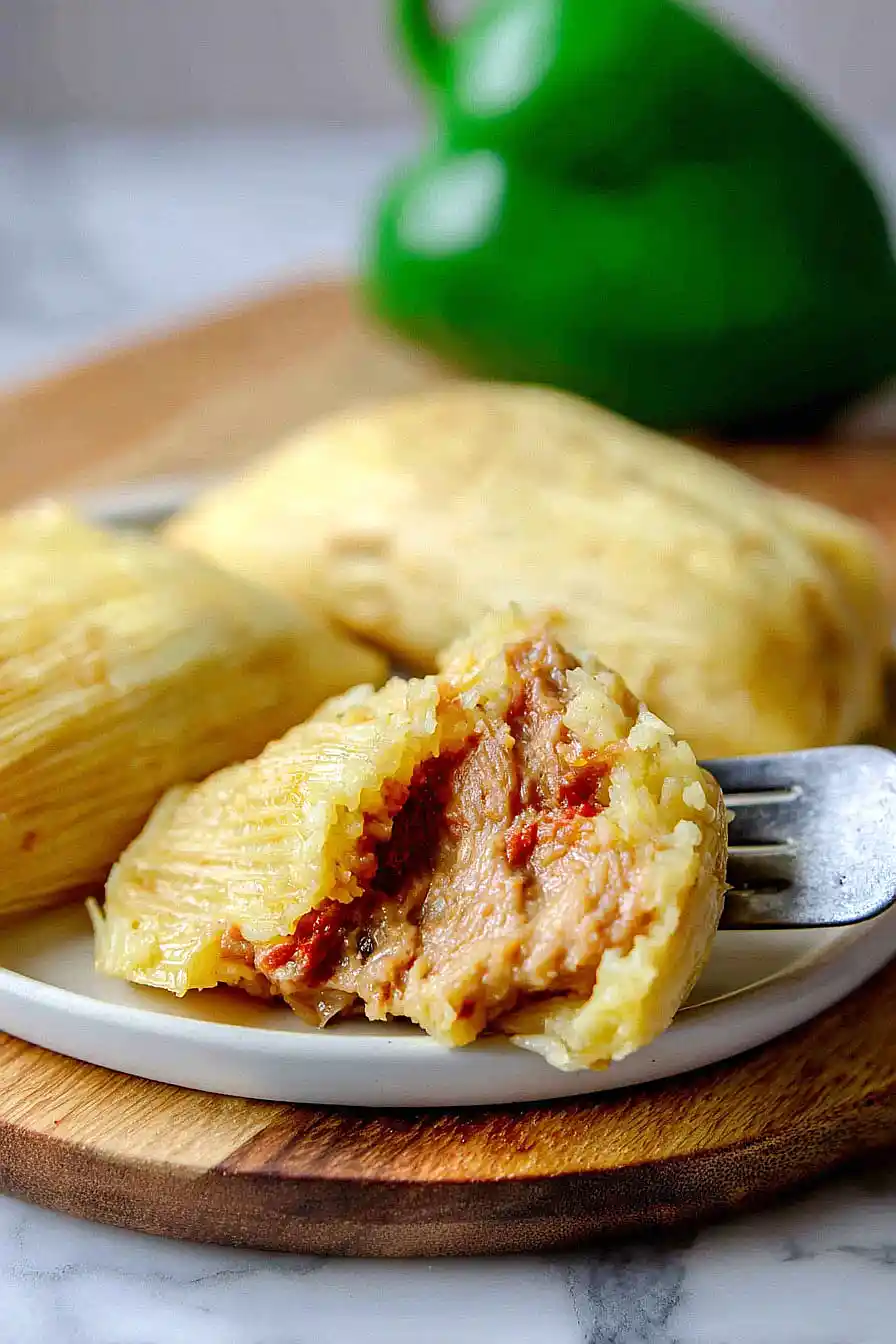
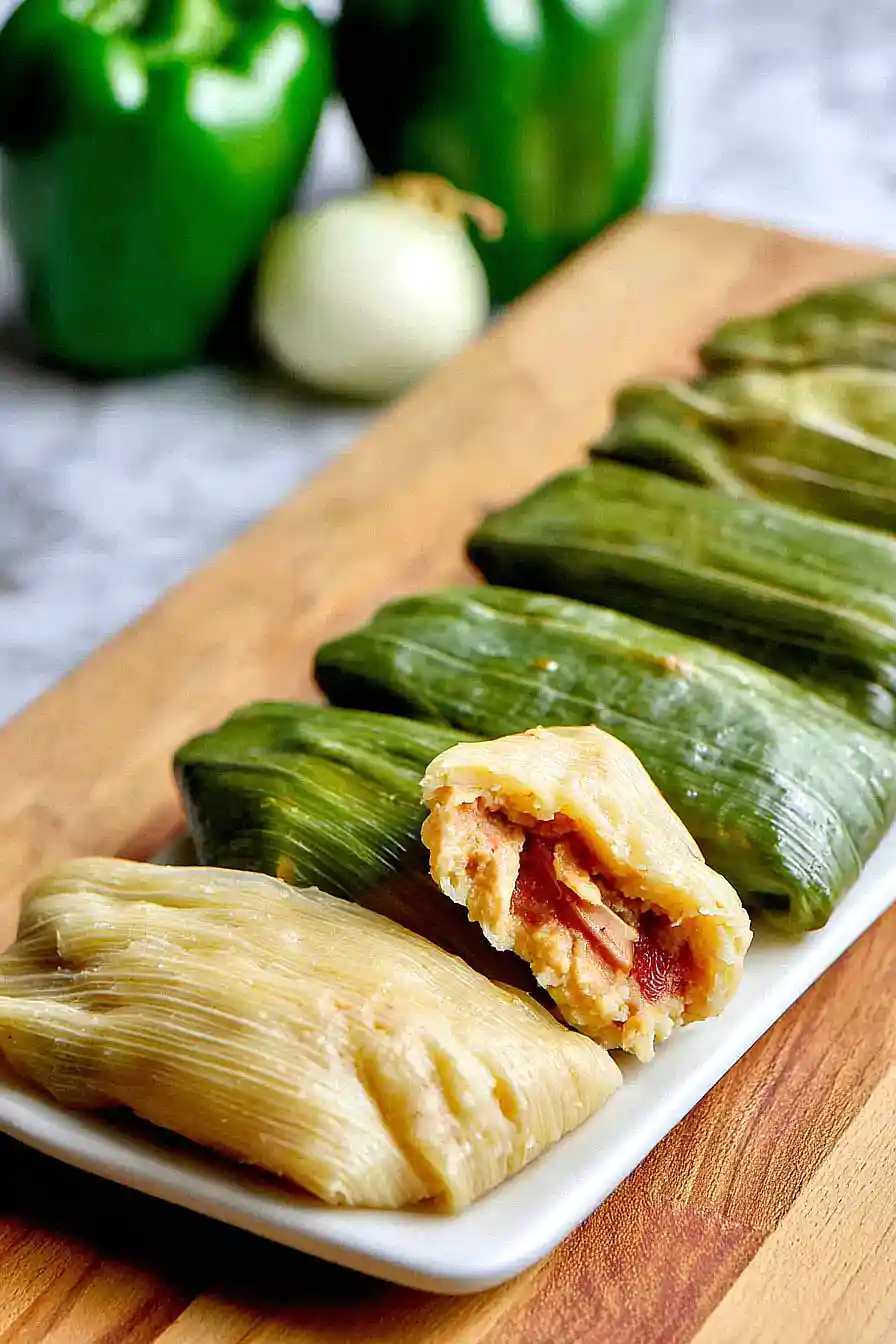
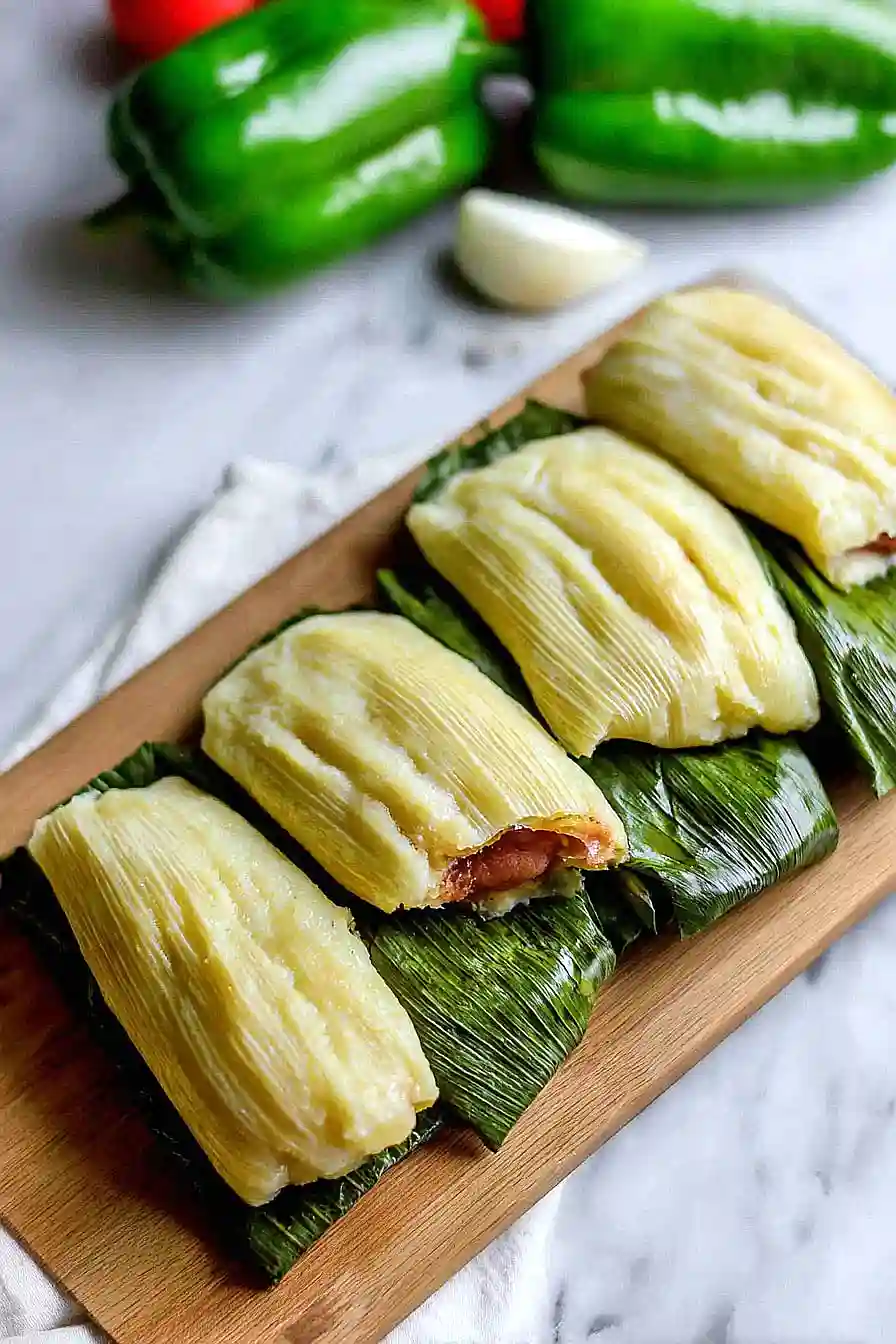
These Salvadoran tamales are different from what most people expect. They’re wrapped in banana leaves instead of corn husks, which gives them this amazing earthy flavor. The masa is softer and the filling is more like a stew with chicken, vegetables, and this rich sauce that soaks into every bite.
I won’t lie – making these takes some time and planning. But the process is actually pretty relaxing once you get the hang of it. Plus, you can make a big batch and freeze some for later. Trust me, having homemade tamales salvadoreños in your freezer is like having a special treat waiting for you.
Why You’ll Love These Tamales Salvadoreños
- Authentic traditional recipe – These Salvadoran tamales bring the real flavors of Central America to your kitchen, made with time-honored techniques that have been passed down through generations.
- Perfect for meal prep – Making 30 tamales at once means you’ll have plenty to freeze for quick meals later, and they reheat beautifully whenever you need a satisfying dinner.
- Great for sharing – This recipe makes enough tamales to feed a crowd or share with neighbors, making it perfect for holidays, parties, or just spreading some homemade love.
- Vegetarian-friendly option – Using red beans as the main filling makes these tamales hearty and protein-packed without any meat, so everyone at the table can enjoy them.
- Fun family activity – Making tamales together is a wonderful way to spend time with loved ones, creating memories while you wrap and tie each one by hand.
What Kind of Masa Harina Should I Use?
For authentic tamales salvadoreños, you’ll want to use masa harina made from nixtamalized corn, which is corn that’s been treated with lime to improve its texture and nutritional value. Look for brands like Maseca or Masienda at your grocery store – they’re usually found in the international or Hispanic foods aisle. The key is making sure it says “masa harina” on the package rather than regular cornmeal, as they’re not the same thing. If you can find masa harina specifically labeled for tamales, that’s even better since it tends to have a finer texture that works perfectly for this recipe.
Options for Substitutions
While tamales salvadoreños have some key ingredients you shouldn’t mess with, there are a few swaps you can make if needed:
- Masa harina: This is one ingredient you really can’t substitute – masa harina is essential for authentic tamales. Regular cornmeal or flour won’t give you the right texture or flavor, so it’s worth seeking out at Latin grocery stores or ordering online.
- Red beans: If you can’t find red beans, pinto beans or black beans work well as substitutes. You can use canned beans too – just drain and rinse them first, then cook them with the seasonings for about 10 minutes to absorb the flavors.
- Banana leaves: Fresh banana leaves are traditional, but frozen ones from the Latin section of grocery stores work great too. If you absolutely can’t find them, you can use corn husks (soak them in warm water for 30 minutes first) or even parchment paper, though you’ll miss that subtle banana leaf flavor.
- Vegetable bouillon powder: Chicken bouillon powder works just as well, or you can use 2 bouillon cubes crumbled up. In a pinch, use 2 teaspoons of salt mixed with 1 teaspoon of garlic powder.
- Green bell peppers: Regular bell peppers are fine if you can’t find bull’s horn peppers. You could also use poblano peppers for a bit more flavor, just remove the seeds and dice them the same way.
Watch Out for These Mistakes While Cooking
The biggest mistake when making tamales salvadoreños is getting the masa consistency wrong – it should be smooth and spreadable but not too wet, so add water gradually until it feels like thick cake batter.
Another common error is not properly preparing the banana leaves, which need to be quickly passed over an open flame or steamed to make them pliable, otherwise they’ll crack when you try to fold them around the masa.
Don’t skip seasoning your bean filling adequately, as under-seasoned beans will make your tamales taste bland, and make sure to let the filling cool completely before assembling to prevent the masa from becoming too soft.
When wrapping, avoid overfilling each tamal – use about 2-3 tablespoons of masa and 1-2 tablespoons of filling, then tie them securely but not too tight since the masa will expand during cooking.
What to Serve With Tamales Salvadoreños?
These hearty tamales are pretty filling on their own, but they’re amazing with a side of curtido (that tangy Salvadoran cabbage slaw) and some spicy salsa roja for dipping. A simple rice and beans combo works great too, especially if you want to make it a real feast. I love serving them with a fresh salad dressed with lime juice and a sprinkle of queso fresco to balance out all those rich, comforting flavors. Don’t forget some warm corn tortillas on the side – they’re perfect for scooping up any extra bean filling that might escape!
Storage Instructions
Keep Fresh: Fresh tamales taste best when kept wrapped in their banana leaves in the refrigerator for up to 4 days. I like to store them in a covered container or wrap them loosely in foil to keep them from drying out. They’re actually pretty forgiving and often taste even better the next day!
Freeze: These freeze wonderfully for up to 3 months – just keep them wrapped in their banana leaves and pop them into freezer bags. I love making big batches during the holidays and freezing extras so I can enjoy homemade tamales whenever I’m craving them.
Steam to Serve: To warm up your tamales, steam them for about 15-20 minutes if they’re from the fridge, or 25-30 minutes if frozen. You can also wrap them in damp paper towels and microwave for 2-3 minutes, but steaming really brings back that perfect texture and keeps the masa nice and moist.
| Preparation Time | 30-45 minutes |
| Cooking Time | 90-120 minutes |
| Total Time | 120-165 minutes |
| Level of Difficulty | Medium |
Estimated Nutrition
Estimated nutrition for the whole recipe (without optional ingredients):
- Calories: 3700-4000
- Protein: 110-130 g
- Fat: 170-190 g
- Carbohydrates: 470-530 g
Ingredients
For the masa dough:
- 1 tbsp chicken bouillon
- 2 tsp salt
- 2 lb masa harina (preferably Maseca brand, for authentic results)
- 1 clove garlic
- 2 cups water
- 1 onion, quartered
- 1/2 cup olive oil
- 2 green bell peppers, seeded and diced
For the bean filling:
- 1/2 cup olive oil
- 2 lb cooked red beans
- 1 tomato, peeled, seeded, quartered
- 1/2 cup boiling water
- Salt
- 1 clove garlic
- 1 onion, quartered
- Pepper
For assembly:
- Water
- Banana leaves (cut into 10-inch squares)
- 30 parchment paper squares (16-inch each)
- Cooking twine
Step 1: Make the Red Bean Purée
- 1/2 cup olive oil
- 1 onion, quartered
- 1 clove garlic
- 1 tomato, peeled, seeded, quartered
- 2 lb cooked red beans
- Salt
- Pepper
- 1/2 cup boiling water
In a large Dutch oven, heat 1/2 cup of olive oil over medium heat.
Sauté 1 quartered onion, 1 clove of garlic, and 1 peeled, seeded, and quartered tomato for 5 minutes, stirring regularly.
Add the cooked red beans, salt, and pepper, and fry over medium-high heat for 10 minutes, stirring often.
Pour the mixture, along with the oil, into a blender.
Add 1/2 cup boiling water and blend until the mixture forms a thick but not too firm consistency, adding a bit more boiling water if needed.
Set aside the red bean purée.
Step 2: Prepare the Vegetable Mixture for Masa
- 1/2 cup olive oil
- 1 onion, quartered
- 1 clove garlic
- 2 green bell peppers, seeded and diced
- 1/2 cup water
Heat 1/2 cup olive oil in a skillet over medium heat.
Sauté 1 quartered onion, 1 clove of garlic, and the diced green bell peppers for 10 minutes, stirring regularly, until the vegetables are soft.
Pour this mixture, including the oil, into a blender.
Add 1/2 cup water and blend until the mixture is smooth and velvety.
Step 3: Prepare the Masa Dough
- 2 lb masa harina (nixtamalized corn flour)
- 2 tsp salt
- 1 tbsp vegetable or chicken bouillon powder
- Vegetable mixture from Step 2
- 2 cups water (use as needed)
In the bowl of a stand mixer, combine the masa harina, 2 teaspoons salt, and 1 tablespoon chicken or vegetable bouillon powder.
Add the vegetable mixture from Step 2, then begin kneading on low speed.
Gradually add just enough water from the remaining cups (reserving some if needed) while kneading until a light, supple dough forms (it should not be too firm or solid).
If needed, adjust the dough with a little more water or masa harina to achieve the desired consistency.
I find that taking the time to feel the dough’s texture really helps for tender tamales.
Step 4: Prepare the Banana Leaves and Assemble the Tamales
- Banana leaves, cut into 30 pieces (10-inch squares)
- 30 parchment paper squares (16-inch each)
- Cooking twine
- Masa dough from Step 3
- Red bean purée from Step 1
Bring a large pot of water to a boil.
Using tongs, briefly immerse each piece of banana leaf into the boiling water for about 5 seconds to soften.
Remove, drain, and dry with a cloth.
Lay a banana leaf square in the center of a parchment paper square.
Spoon about 2 tablespoons of masa dough (from Step 3) into the center and flatten it to form a circle.
Add about 2 teaspoons of red bean purée (from Step 1) in the middle of the dough.
Use the parchment to help fold and enclose the tamale into a rectangular or square shape.
Secure each tamale with cooking twine.
Repeat until all the dough and filling are used.
Step 5: Cook the Tamales
- Water
- Tamales from Step 4
Place the assembled tamales upright or stacked in a large Dutch oven.
Pour enough boiling water to cover them, cover the pot, and cook over low-medium heat for 1 hour and 30 minutes.
Check periodically, adding more boiling water as needed to prevent the pot from drying out.
For extra flavor, I sometimes add a bay leaf or two to the cooking water—it’s optional but gives a nice subtle aroma.