Growing up in an American household, Yorkshire pudding wasn’t something I ate as a kid. I first tried it at a British pub here in Portland, and I couldn’t believe what I’d been missing. Those crispy, golden popovers soaking up rich, savory gravy? I was hooked.
The funny thing is, Yorkshire pudding seems fancy, but it’s actually one of the easiest sides you can make. The batter takes about two minutes to mix together, and your oven does all the real work. I love serving these at Sunday dinner because they make the meal feel special without me spending all afternoon in the kitchen.
Want them extra crispy? I’ve got you covered. Prefer them soft and pillowy in the middle? That too. And let me tell you, homemade gravy is a thousand times better than anything from a jar.
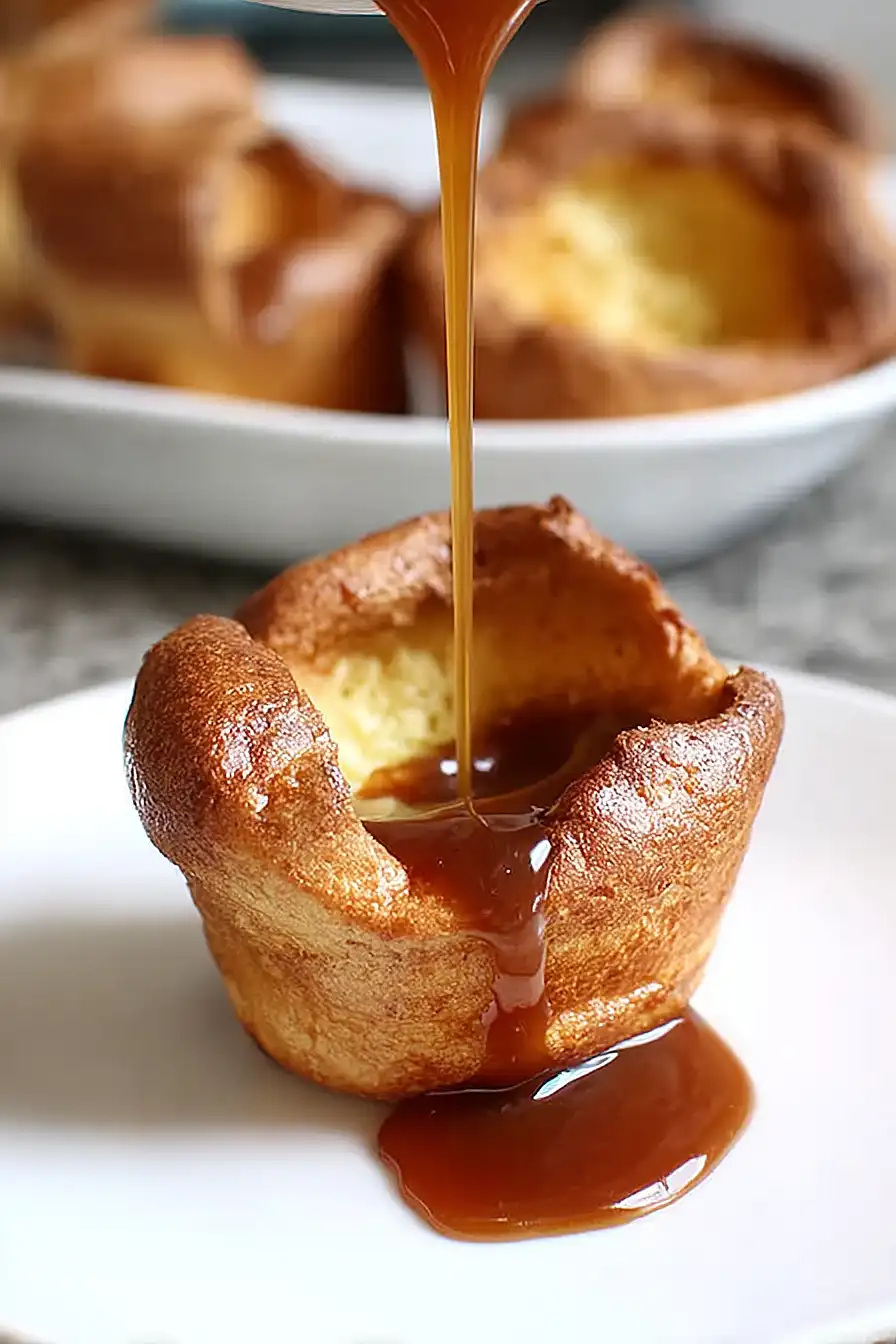
Why You’ll Love This Yorkshire Pudding and Gravy
- Classic British comfort food – This traditional dish brings authentic pub-style flavors right to your kitchen, perfect for Sunday dinners or any time you’re craving something cozy.
- Simple ingredients – You probably already have eggs, flour, and milk in your fridge, plus a few basic pantry staples to make the rich onion gravy.
- Impressive yet approachable – Yorkshire puddings look fancy when they puff up golden and crispy, but they’re actually straightforward to make once you know the technique.
- Rich, flavorful gravy – The caramelized onion gravy with balsamic vinegar adds a sweet and savory depth that takes this dish to the next level.
What Kind of Flour Should I Use?
For Yorkshire pudding, all-purpose flour (or plain flour if you’re in the UK) is really your best bet and what most traditional recipes call for. You want a flour with moderate protein content – around 10-12% – which gives you that perfect balance of structure and tenderness. Bread flour can work in a pinch, but it might make your puddings a bit chewier than you’d like, while cake flour won’t give you enough structure to get that signature puff and crispy edges. Make sure your flour is at room temperature before you start mixing, as this helps create a smoother batter that’ll rise better in the oven.
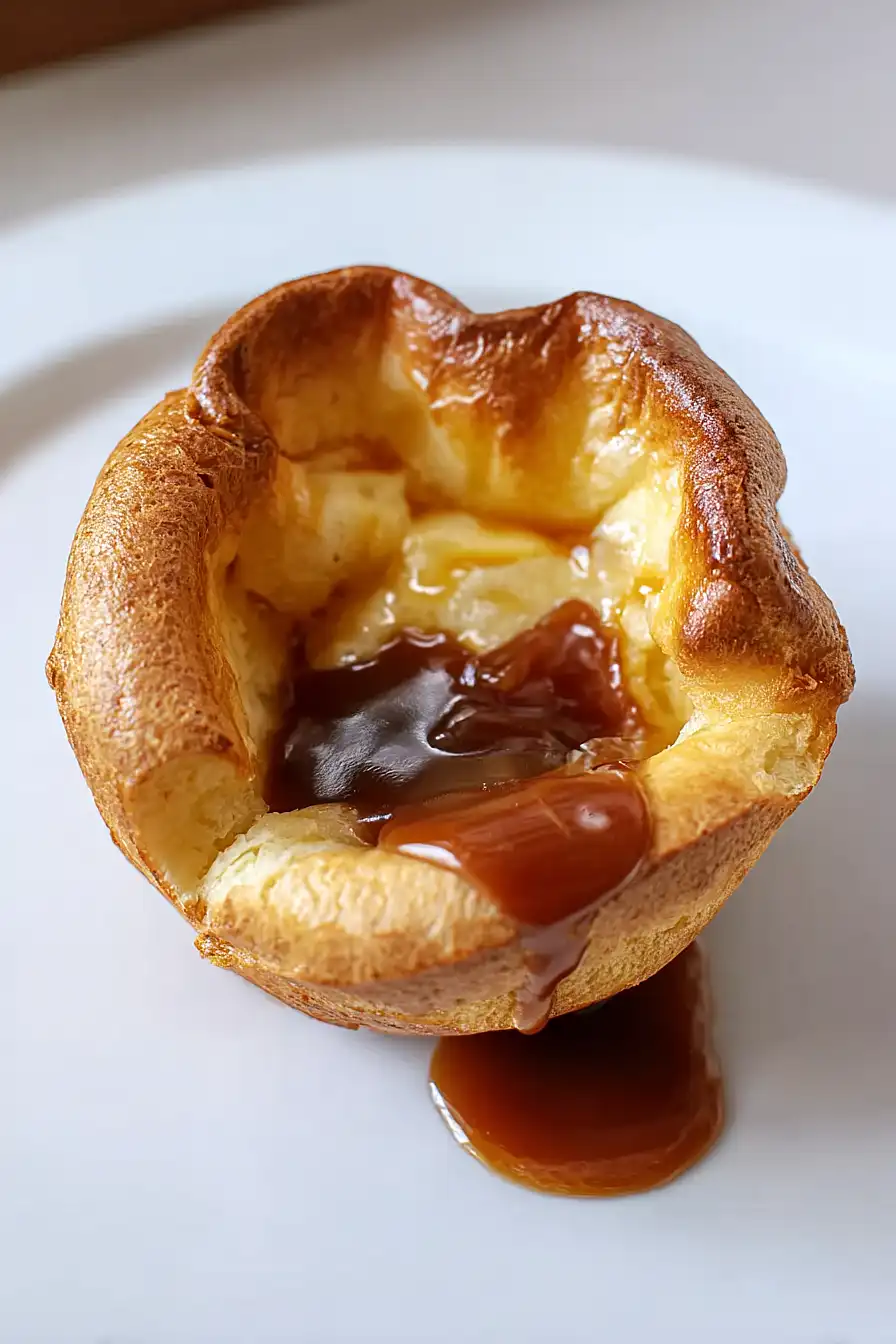
Options for Substitutions
While Yorkshire pudding has a few non-negotiables, there’s still room for some swaps:
- Eggs, milk, and flour: These three ingredients are essential for Yorkshire pudding and shouldn’t be substituted. The equal ratios are what create that signature crispy exterior and fluffy interior.
- Lard or beef dripping: Traditional Yorkshire pudding uses lard or beef dripping for the best flavor, but vegetable oil works fine if that’s what you have. Avoid butter here as it has a lower smoke point and won’t give you the same crispy results.
- Beef stock: For the gravy, you can use chicken stock if beef isn’t available, though the flavor will be lighter. You could also use vegetable stock with a splash of soy sauce to add depth.
- Corn starch: If you’re out of corn starch for thickening the gravy, use twice the amount of all-purpose flour mixed with cold water instead. Just whisk it in slowly to avoid lumps.
- Balsamic vinegar: Red wine vinegar or worcestershire sauce can replace the balsamic in the gravy for that touch of acidity and sweetness.
Watch Out for These Mistakes While Cooking
The biggest mistake people make with Yorkshire pudding is opening the oven door during baking, which causes the temperature to drop and your puddings to deflate instead of puffing up beautifully – resist the urge to peek until at least 20 minutes have passed.
Another common error is not getting your fat hot enough before adding the batter, so make sure the lard or oil is smoking hot in the pan before pouring in the mixture, which creates that signature crispy exterior.
When making the gravy, lumpy gravy happens when you add the cornstarch mixture too quickly or don’t whisk constantly, so mix your cornstarch with cold water first to create a smooth slurry and add it gradually while stirring.
For the caramelized onions, rushing the process by cooking them on high heat will burn them rather than develop their sweet flavor, so keep the heat on medium-low and give them the 20-30 minutes they need to properly caramelize.
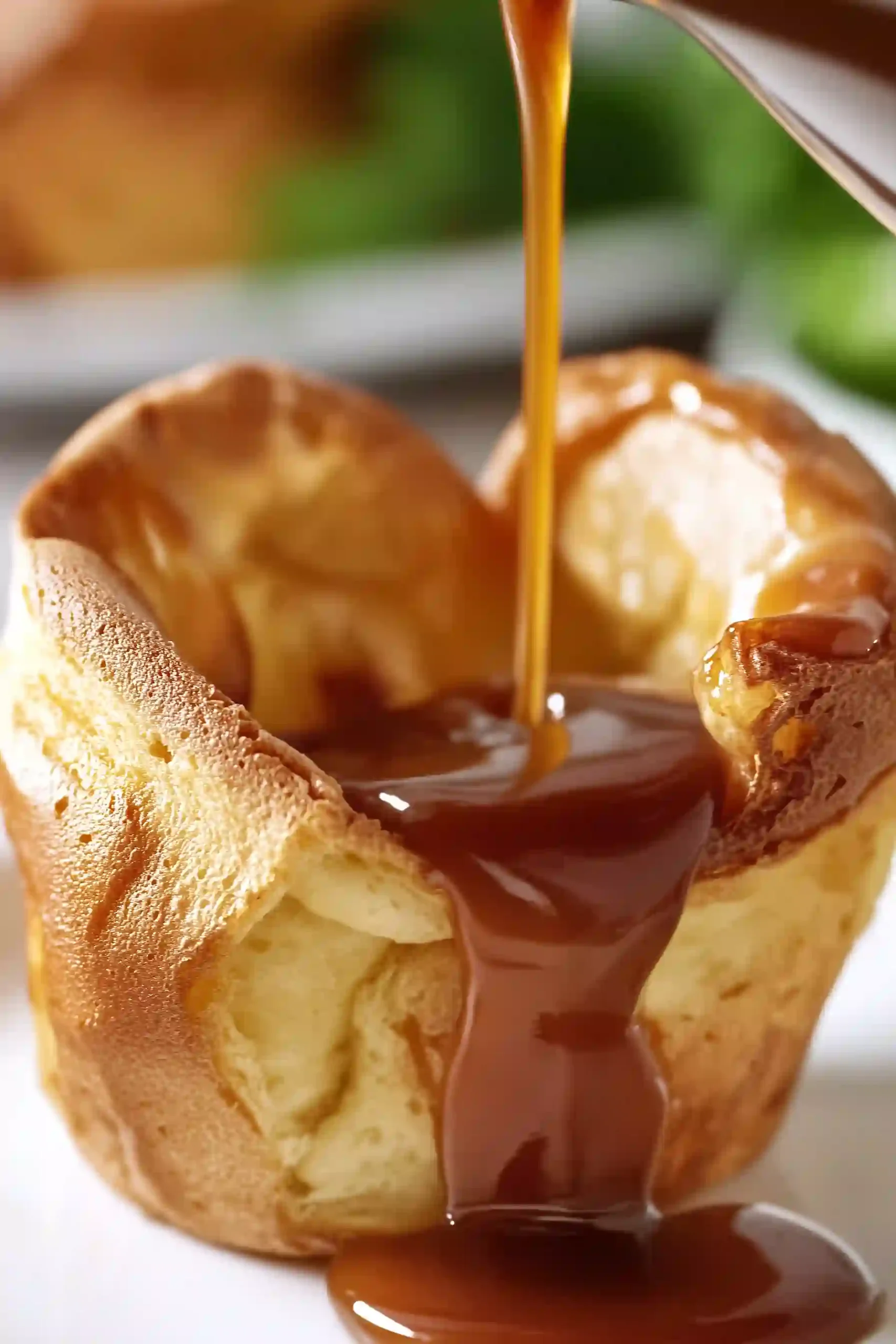
What to Serve With Yorkshire Pudding and Gravy?
Yorkshire pudding with gravy is traditionally part of a Sunday roast, so it pairs beautifully with roasted beef, roasted chicken, or even pork tenderloin. I love serving it alongside roasted vegetables like carrots, parsnips, and Brussels sprouts, which soak up all that rich onion gravy. Mashed potatoes or roasted potatoes are also a great addition if you want to make it a really hearty meal. For a lighter side, some steamed green beans or peas add a nice pop of color and freshness to balance out the richness of the gravy.
Storage Instructions
Store: Yorkshire puddings are best enjoyed fresh and hot from the oven, but you can keep leftovers in an airtight container in the fridge for up to 2 days. The gravy will keep separately in a sealed container in the refrigerator for about 3-4 days.
Freeze: Yorkshire puddings freeze really well! Let them cool completely, then freeze in a freezer bag for up to 1 month. The gravy can also be frozen in portions for up to 3 months, which is great for quick weeknight dinners.
Reheat: To bring back that crispy exterior, reheat Yorkshire puddings in a 350°F oven for about 5-8 minutes until warmed through and crisp again. The gravy can be reheated gently on the stovetop over medium-low heat, stirring occasionally, or in the microwave in short bursts.
| Preparation Time | 40-120 minutes |
| Cooking Time | 20-30 minutes |
| Total Time | 60-150 minutes |
| Level of Difficulty | Medium |
Estimated Nutrition
Estimated nutrition for the whole recipe (without optional ingredients):
- Calories: 1250-1450
- Protein: 35-45 g
- Fat: 68-80 g
- Carbohydrates: 125-140 g
Ingredients
For the pudding:
- 1 pinch salt
- 2 tbsp lard (for authentic flavor)
- an equal volume of whole milk to eggs
- an equal volume of all-purpose flour to eggs (I use King Arthur)
- 4 large eggs (room temperature)
For the gravy:
- salt to taste
- 2 tbsp butter
- black pepper to taste (freshly ground preferred)
- 4 tsp corn starch (mixed with cold water before adding)
- 1 tsp balsamic vinegar
- 2 tbsp vegetable oil
- 1 tsp sugar
- 4 tsp cold water
- 3.5 cups beef stock
- 2 medium onions (thinly sliced)
Step 1: Prepare the Batter Base
- 4 large eggs (room temperature)
- an equal volume of whole milk to eggs
- 1 pinch salt
Crack the eggs into a large mixing bowl and pour in an equal volume of whole milk.
Add a pinch of salt.
Whisk the mixture thoroughly with an electric hand beater or a hand whisk until fully combined, then let it stand for 10 minutes to allow the flavors to meld.
Step 2: Add Flour and Make Smooth Batter
- an equal volume of all-purpose flour to eggs (I use King Arthur)
Gradually sift in an equal volume of all-purpose flour to eggs into the milk and egg mixture.
Whisk using an electric hand beater or hand whisk to ensure the batter is smooth and lump-free.
If any lumps remain, pass the batter through a fine sieve for the best texture.
Step 3: Rest the Batter
Leave the batter to rest at room temperature for at least 30 minutes, or longer if you have the time—this helps develop a better rise and texture.
I’ve found that resting the batter for a couple of hours makes the Yorkshire puddings extra fluffy.
Step 4: Preheat Oven and Prepare to Bake
When you are ready to cook your Yorkshire puddings, preheat the oven to its highest temperature, making sure not to exceed 450°F (230°C) to prevent the fat from burning.
Tasty Yorkshire Pudding and Gravy
Ingredients
For the pudding:
- 1 pinch salt
- 2 tbsp lard (for authentic flavor)
- an equal volume of whole milk to eggs
- an equal volume of all-purpose flour to eggs (I use King Arthur)
- 4 large eggs (room temperature)
For the gravy:
- salt to taste
- 2 tbsp butter
- black pepper to taste (freshly ground preferred)
- 4 tsp corn starch (mixed with cold water before adding)
- 1 tsp balsamic vinegar
- 2 tbsp vegetable oil
- 1 tsp sugar
- 4 tsp cold water
- 3.5 cups beef stock
- 2 medium onions (thinly sliced)
Instructions
- Crack the eggs into a large mixing bowl and pour in an equal volume of whole milk. Add a pinch of salt. Whisk the mixture thoroughly with an electric hand beater or a hand whisk until fully combined, then let it stand for 10 minutes to allow the flavors to meld.
- Gradually sift in an equal volume of all-purpose flour to eggs into the milk and egg mixture. Whisk using an electric hand beater or hand whisk to ensure the batter is smooth and lump-free. If any lumps remain, pass the batter through a fine sieve for the best texture.
- Leave the batter to rest at room temperature for at least 30 minutes, or longer if you have the time—this helps develop a better rise and texture. I’ve found that resting the batter for a couple of hours makes the Yorkshire puddings extra fluffy.
- When you are ready to cook your Yorkshire puddings, preheat the oven to its highest temperature, making sure not to exceed 450°F (230°C) to prevent the fat from burning.