I’ve always loved putting a twist on classic dishes. There’s something fun about taking those deviled eggs everyone knows from potlucks and family gatherings and giving them a little Middle Eastern flair. Za’atar, with its mix of herbs and sesame seeds, has become a regular in my spice cabinet over the years. These za’atar deviled eggs came about one afternoon when I was making a batch for a neighborhood party and wanted to try something different.
The best part? They’re just as easy to make as regular deviled eggs, but the za’atar adds this wonderful savory note that gets people asking, “What’s in these?” I usually make a double batch now because they disappear so quickly at gatherings. Even my kids, who normally stick to plain deviled eggs, grab these up without hesitation.
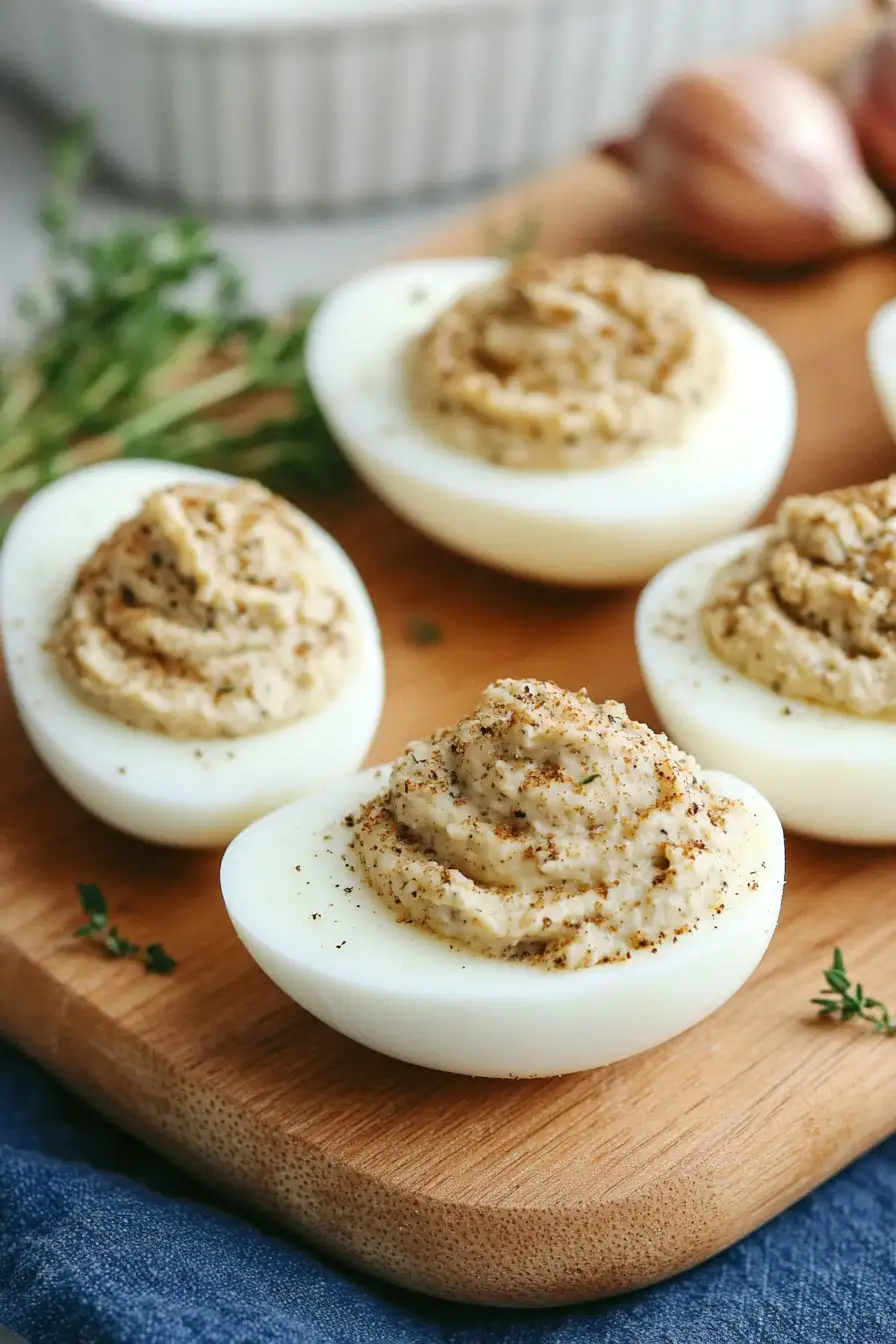
Why You’ll Love These Za’atar Deviled Eggs
- Quick preparation – These deviled eggs come together in just 10-20 minutes, making them perfect for last-minute entertaining or a quick appetizer.
- Middle Eastern twist – The za’atar seasoning adds an exciting herby, nutty flavor that sets these deviled eggs apart from traditional versions.
- Simple ingredients – Besides the za’atar, you’ll only need basic pantry staples that you probably already have on hand.
- Make-ahead friendly – You can prepare these eggs a few hours in advance and keep them chilled until ready to serve, perfect for stress-free entertaining.
- Keto and low-carb friendly – With virtually no carbs and plenty of protein, these eggs fit perfectly into keto and low-carb eating plans.
What Kind of Eggs Should I Use?
When it comes to making deviled eggs, older eggs are actually better than super fresh ones. Eggs that are about 1-2 weeks old will peel more easily than fresh-from-the-farm eggs, saving you from that frustrating experience of eggs that come apart while peeling. For the best results, stick with large grade A eggs – they’re the standard size used in most recipes and will give you the perfect portion for filling. If you’re buying eggs specifically for this recipe, take them home and let them hang out in your fridge for a few days before cooking. Just remember to check the expiration date on your carton and make sure to use eggs well within their safe storage period.
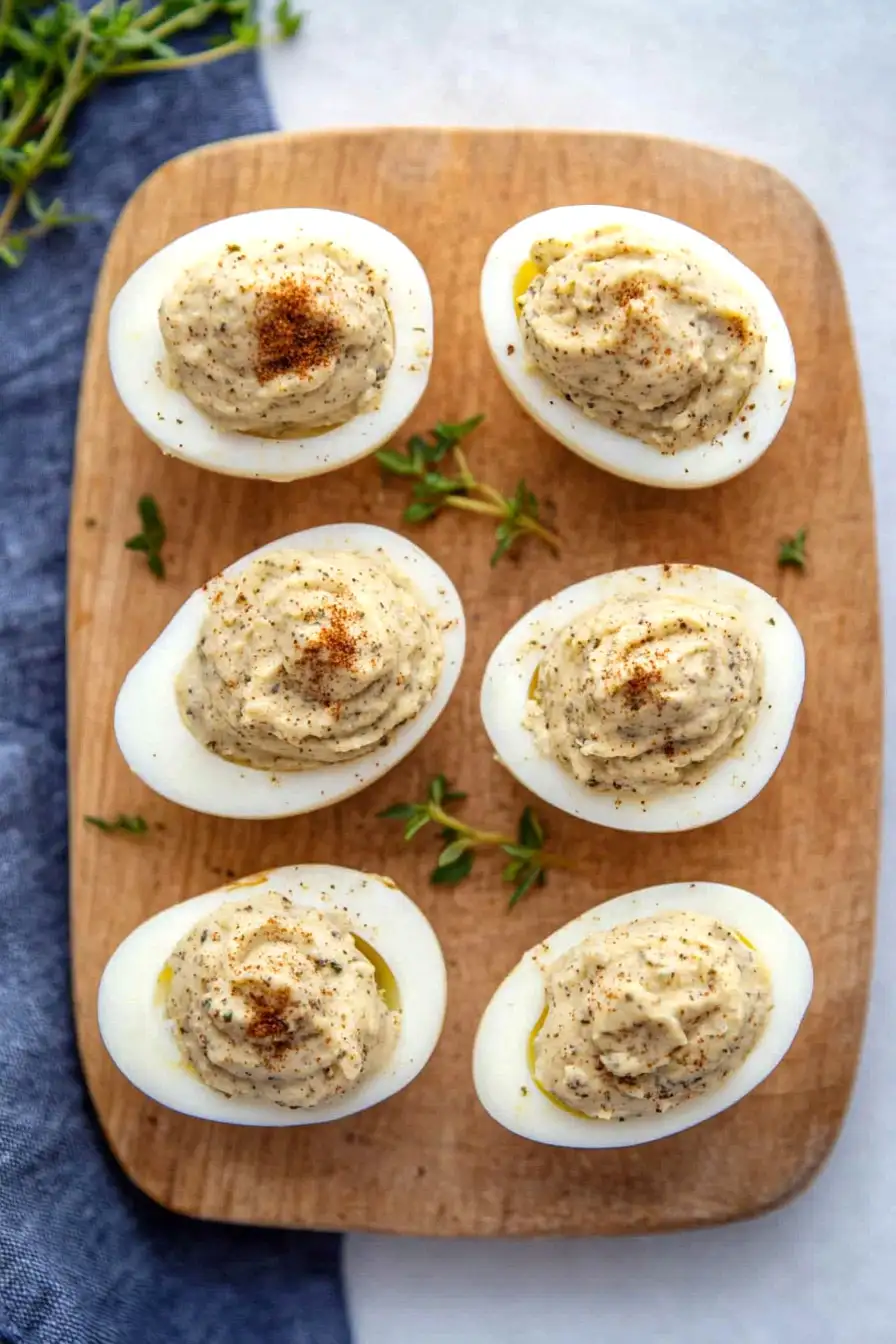
Options for Substitutions
This Middle Eastern twist on deviled eggs can be adapted with several easy swaps:
- Mayo: If you’re not a fan of mayo, Greek yogurt makes a great substitute – just know your filling will be a bit tangier. You could also use mashed avocado for a different spin, though the texture will be slightly different.
- Za’atar: Za’atar is pretty unique and gives these eggs their special flavor, but if you can’t find it, try mixing equal parts dried thyme, sesame seeds, and sumac. In a real pinch, you could use Italian seasoning mixed with sesame seeds, though the flavor profile will change.
- Dijon mustard: Yellow mustard works fine here, or you could use whole grain mustard for extra texture. If you’re out of mustard completely, try horseradish for a different kind of kick.
- Fresh thyme: Dried thyme works too – just use 1/3 teaspoon instead of 1 teaspoon fresh. You could also swap in fresh oregano or marjoram.
- White wine vinegar: Apple cider vinegar or regular white vinegar can step in here. Rice vinegar works too, just add a tiny pinch of salt since it’s typically less acidic.
- Shallot: Very finely minced red onion or green onion can replace shallot. If using red onion, use about half the amount since it’s stronger.
Watch Out for These Mistakes While Cooking
The biggest challenge when making deviled eggs is getting perfectly cooked egg yolks – overcooked eggs will develop that unpleasant grayish-green ring around the yolk and make your filling look unappealing, so place your eggs in cold water, bring to a boil, then remove from heat and let stand covered for exactly 10 minutes.
Another common mistake is not properly chilling your eggs after cooking, which can make peeling difficult and lead to torn whites – plunge them into an ice bath immediately after cooking and let them cool completely before peeling.
The filling texture can make or break your deviled eggs, so avoid rushing the mashing process – take time to thoroughly mash the yolks until completely smooth before mixing in other ingredients, and if needed, press the mixture through a fine-mesh strainer for the silkiest result.
For the neatest presentation, chill your filling for 30 minutes before piping, and remember that room temperature eggs are easier to fill than cold ones.
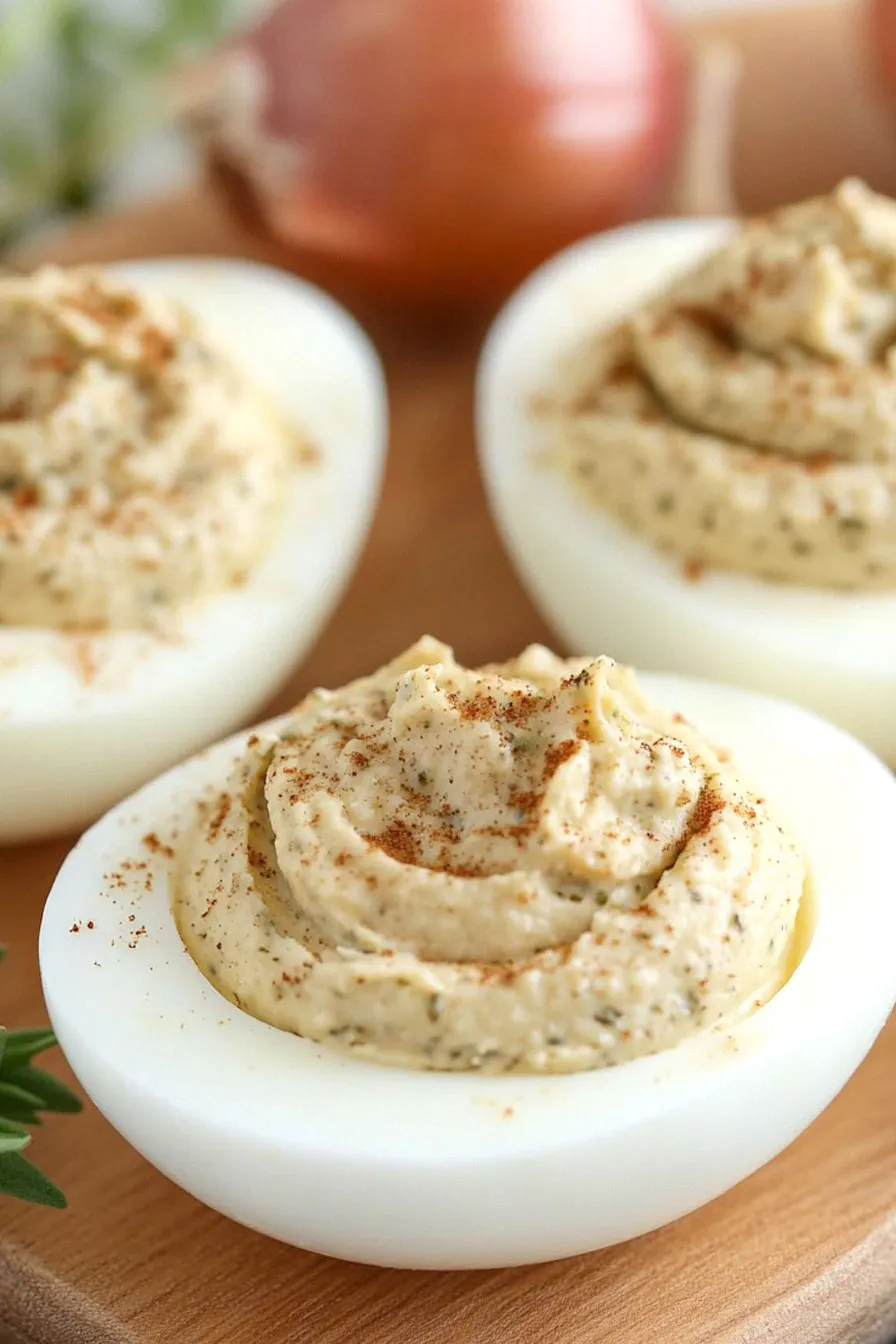
What to Serve With Za’atar Deviled Eggs?
These Middle Eastern-inspired deviled eggs make a fantastic appetizer or party snack that pairs wonderfully with other mezze-style dishes. Try serving them alongside some warm pita bread, fresh cucumber slices, and creamy hummus for a Mediterranean-inspired spread. If you’re hosting a gathering, these eggs go great with other finger foods like stuffed grape leaves, marinated olives, or crispy falafel bites. For a simple lunch spread, I like to add some fresh cherry tomatoes and a handful of fresh herbs like parsley or mint to brighten up the plate.
Storage Instructions
Keep Fresh: These za’atar deviled eggs are best enjoyed the day you make them, but if you need to store them, place them in an airtight container in the fridge. They’ll stay good for up to 2 days. Pro tip: wait to sprinkle the extra za’atar on top until right before serving to keep the garnish looking fresh.
Make Ahead: Want to prep these in advance? You can boil the eggs and make the filling up to 24 hours ahead of time. Keep the egg whites and filling separate in the fridge, then pipe the filling and add the za’atar garnish just before serving. This way, your deviled eggs will look and taste their best when it’s time to serve.
| Preparation Time | 10-15 minutes |
| Cooking Time | 0-5 minutes |
| Total Time | 10-20 minutes |
| Level of Difficulty | Easy |
Estimated Nutrition
Estimated nutrition for the whole recipe (without optional ingredients):
- Calories: 600-700
- Protein: 40-50 g
- Fat: 45-55 g
- Carbohydrates: 10-15 g
Ingredients
- 1/2 tsp lemon juice (freshly squeezed for best flavor)
- 1 tsp za’atar seasoning (gives an authentic Mediterranean taste)
- 1 tsp fresh thyme (finely chopped)
- 1 tbsp minced shallot
- 1/2 tsp white wine vinegar
- 8 hard boiled eggs
- 2 tbsp mayonnaise (I prefer Hellmann’s Mayonnaise)
- 1 tbsp Dijon mustard
Step 1: Prepare the Eggs
Begin by slicing the hard-boiled eggs in half lengthwise.
Carefully scoop out the yolks and place them into a mixing bowl.
Set the egg white halves aside on a platter to be filled later.
Step 2: Make the Yolk Filling
Using a whisk, combine the egg yolks with the remaining ingredients of your choice until the mixture is creamy and well blended.
Feel free to adjust the consistency or seasoning to your taste.
Step 3: Fill the Egg Halves
Transfer the creamy yolk mixture into a ziplock bag, then cut off a small tip from one of the corners of the bag.
Gently squeeze the yolk mixture into each egg white half, one at a time.
If you prefer, you can also use a spoon to fill the egg halves.
Aim to generously fill each half, even if this results in one or two unused egg white halves.
Step 4: Garnish and Serve
Sprinkle each filled egg half with a pinch of Za’atar for an added burst of flavor.
Arrange your stuffed eggs on a serving platter and enjoy them as a tasty appetizer or snack.