There’s something about cabbage rolls that brings me right back to Sunday dinners at my grandmother’s table. The smell of cabbage and tomatoes simmering away all afternoon is pure comfort. But let’s be real—rolling dozens of individual cabbage leaves can feel like a full-time job, especially when you’re trying to get dinner on the table after work.
That’s where this recipe comes in. By adding sauerkraut to the mix, you get that tangy, fermented flavor that takes regular cabbage rolls up a notch. The sauerkraut nestles in with the tomato sauce and creates this sweet-and-sour thing that’s absolutely perfect. Plus, it adds an extra layer of flavor without any extra work.
The best part? This dish actually tastes better the next day. Make it on Sunday, and you’ve got easy dinners for the rest of the week. Just heat it up and serve with some crusty bread. Done.
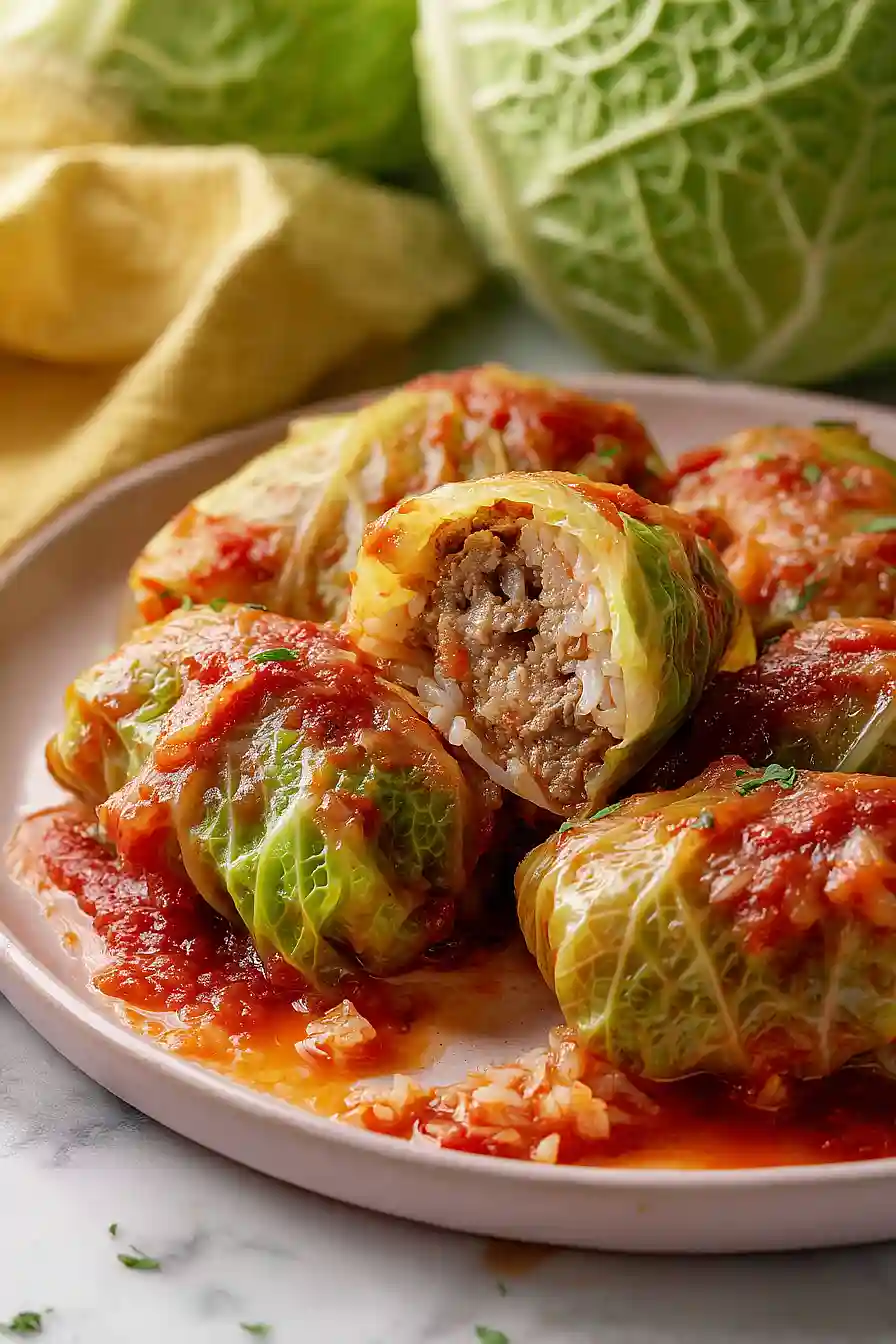
Why You’ll Love These Cabbage Rolls
- Hearty, filling comfort food – These cabbage rolls are packed with seasoned ground beef and rice, making them a satisfying meal that will keep you full for hours.
- Tangy sauerkraut twist – The sauerkraut adds a delicious tangy flavor that sets these apart from traditional cabbage rolls and cuts through the richness of the beef.
- Make-ahead friendly – You can assemble these rolls in advance and pop them in the oven when you’re ready, making them perfect for meal prep or entertaining.
- Feeds a crowd – This recipe makes plenty of cabbage rolls, so it’s great for family dinners or potlucks, and the leftovers taste even better the next day.
- Budget-friendly ingredients – Using affordable ground beef, cabbage, and pantry staples, this recipe gives you a lot of bang for your buck without sacrificing flavor.
What Kind of Sauerkraut Should I Use?
You can use either jarred or bagged sauerkraut for this recipe, and both will give you great results. If you’re sensitive to salt, look for a low-sodium variety or give your sauerkraut a quick rinse under cold water before using it – this will tone down the tanginess without losing that classic fermented flavor. Fresh sauerkraut from the refrigerated section tends to have a better crunch and more complex flavor than the shelf-stable canned stuff, but honestly, whatever you can find at your local grocery store will work just fine. Just make sure to drain it well before adding it to your cabbage rolls so you don’t end up with too much liquid in your dish.
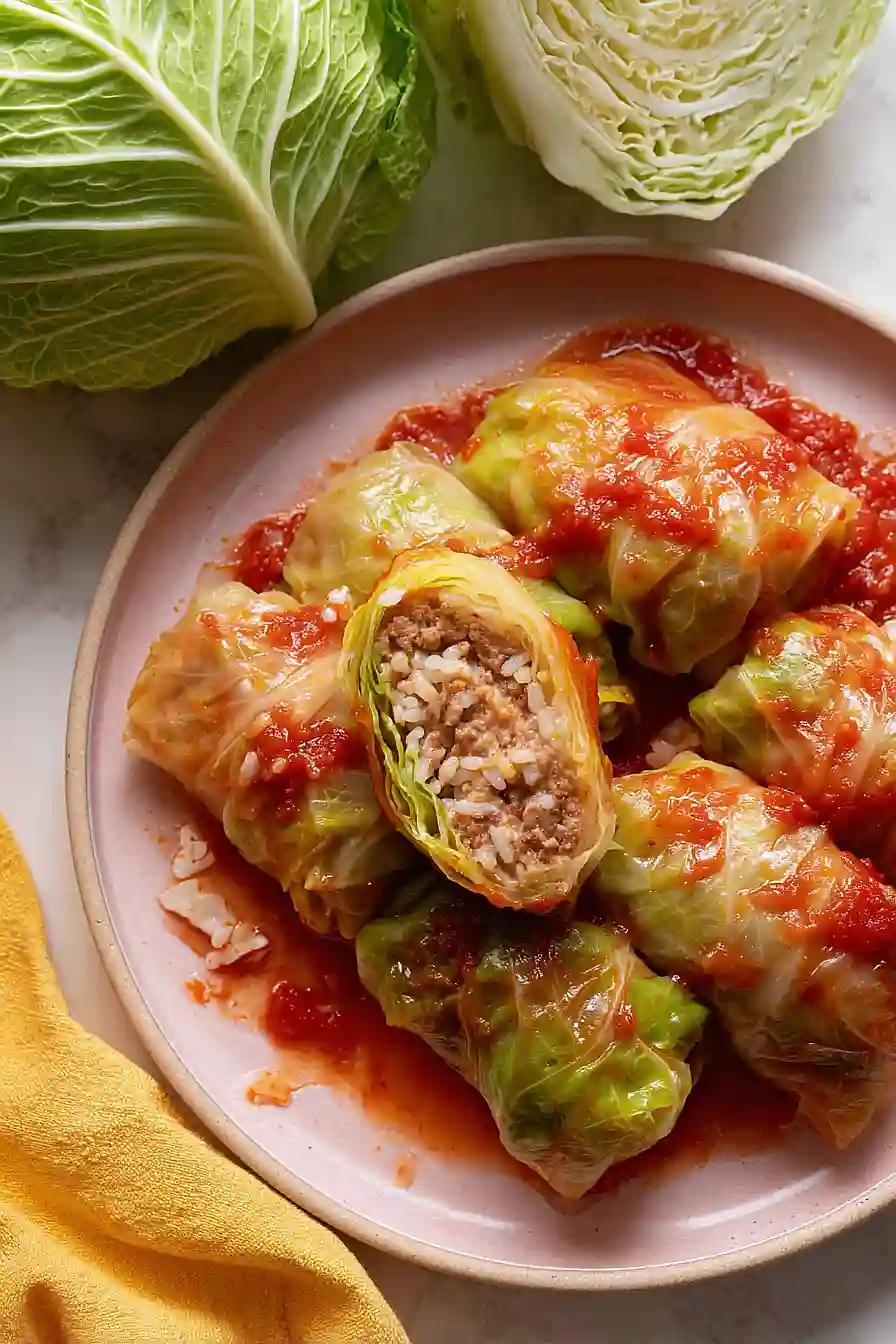
Options for Substitutions
This recipe is pretty forgiving when it comes to swaps, so here are some options if you need them:
- Ground beef: You can use ground pork, ground turkey, or a mix of beef and pork for a different flavor. If using turkey, add a tablespoon of olive oil to the filling since it’s leaner.
- Rice: White rice works best here, but you can use brown rice if that’s what you have. Just cook it about halfway before adding it to the filling since brown rice takes longer to soften.
- Cabbage: Green cabbage is traditional and really shouldn’t be substituted – it’s what holds everything together and gives the dish its signature texture.
- Tomato soup: If you don’t have tomato soup, use an extra can of tomato sauce and add a teaspoon of sugar to balance the acidity.
- Sauerkraut: While sauerkraut adds a nice tangy flavor, you can leave it out if you’re not a fan. Just layer the bottom of your pot with some shredded cabbage instead.
- Green pepper and carrots: These veggies add flavor but aren’t essential. Feel free to skip them or swap in celery or mushrooms if that’s what you have on hand.
Watch Out for These Mistakes While Cooking
The biggest mistake when making cabbage rolls is not steaming the leaves long enough, which makes them crack and tear when you try to roll them – aim for leaves that are pliable and bend easily without breaking. Another common error is using uncooked rice straight from the package, but since the rice expands as it cooks, you only need 1/2 cup for the entire recipe, and it will finish cooking inside the rolls during the long simmer time. Don’t skip adding liquid to your pot, as the rolls need moisture to cook properly – if your tomato mixture seems thick, add a cup of water or broth to prevent burning on the bottom. Finally, resist the urge to crank up the heat to speed things along, because low and slow cooking is what makes the cabbage tender and allows all those flavors to meld together perfectly.
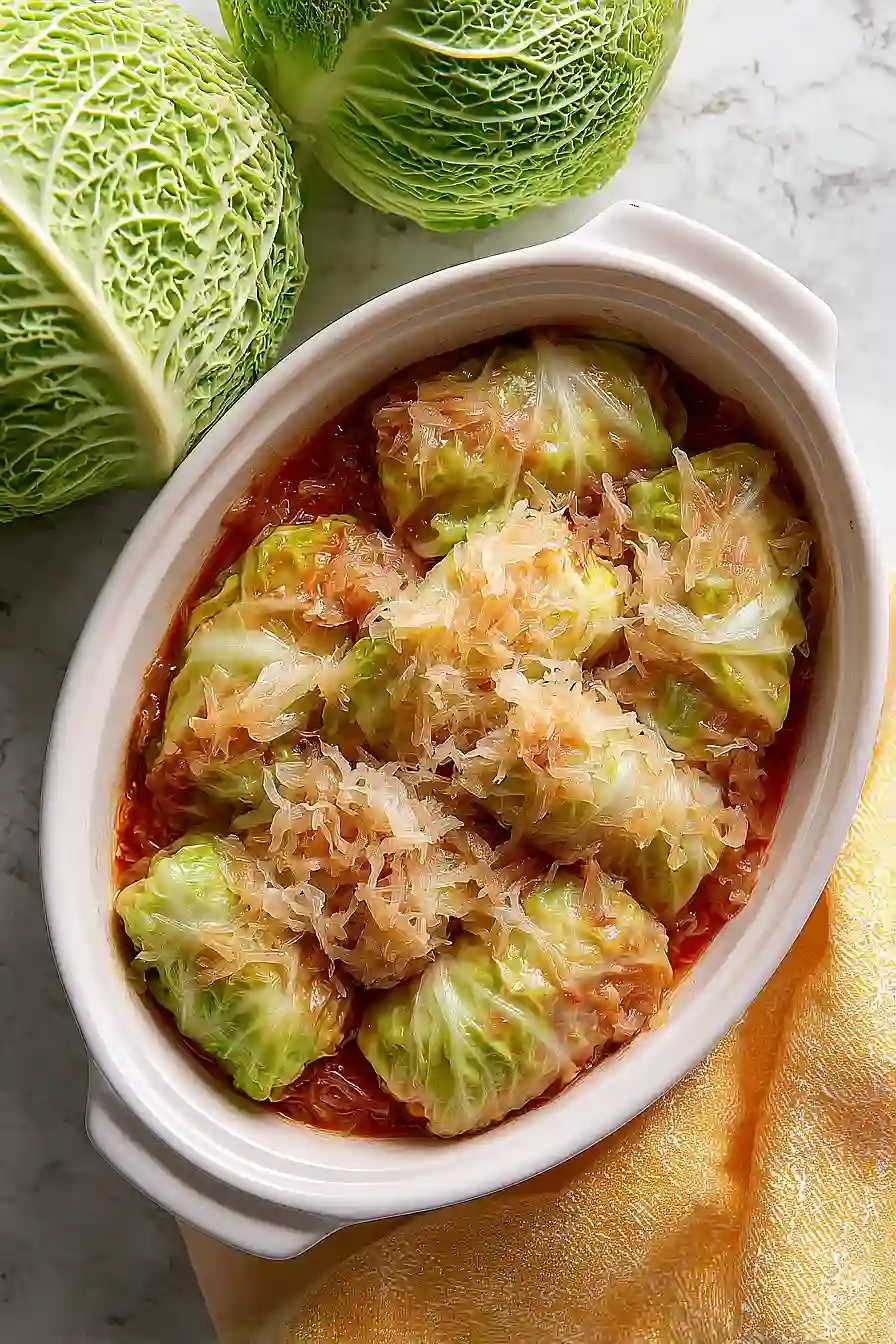
What to Serve With Cabbage Rolls?
Cabbage rolls are pretty hearty on their own, but I love serving them with a dollop of sour cream on top and some crusty rye bread on the side for soaking up all that tangy tomato sauce. A simple side of mashed potatoes or buttered egg noodles works great if you want to make it an even more filling meal. For something lighter, try a cucumber salad with dill and vinegar or some roasted root vegetables like carrots and parsnips. If you’re feeding a crowd, a big bowl of coleslaw adds a nice crunch that balances out the soft, savory cabbage rolls perfectly.
Storage Instructions
Store: Cabbage rolls actually taste even better the next day after all those flavors have had time to meld together. Keep them in an airtight container in the fridge for up to 4 days. I usually make a big batch on Sunday and enjoy them throughout the week for easy dinners.
Freeze: These freeze really well, which makes them perfect for meal prep. Let them cool completely, then freeze in a freezer-safe container with some of the sauce for up to 3 months. You can freeze them individually or in portions, whatever works best for you.
Reheat: Warm them up in a covered dish in the oven at 350°F for about 20-25 minutes, or until heated through. You can also microwave individual portions for 2-3 minutes, adding a splash of water or extra tomato sauce if they seem dry.
| Preparation Time | 30-45 minutes |
| Cooking Time | 60-240 minutes |
| Total Time | 90-285 minutes |
| Level of Difficulty | Medium |
| Servings | 10 servings |
Estimated Nutrition
Estimated nutrition for the whole recipe (without optional ingredients):
- Calories: 2700-3000
- Protein: 160-180 g
- Fat: 140-160 g
- Carbohydrates: 170-200 g
Ingredients
For the filling:
- 2.25 lb ground beef
- 1 head cabbage (boil whole to soften leaves for easier rolling)
- 3/4 cup rice (I always use Mahatma long grain white rice)
- 3 eggs
- 1 large onion (finely minced to blend into the meat)
- 1/2 green pepper
- 1/3 cup carrots (grated fine for subtle sweetness)
- 1 tbsp parsley
- 1/2 tsp smoked paprika
- salt
- pepper
For the sauce and base:
- 15 oz tomato sauce (I prefer Hunt’s for a consistent base)
- 14 oz tomato soup
- 28 oz diced tomatoes
- 1.25 lb sauerkraut (rinse and drain well to control the tanginess)
- 2 bay leaves
Step 1: Prepare the Cabbage and Make the Filling
- 2.25 lb ground beef
- 3/4 cup rice
- 3 eggs
- 1 large onion, finely minced
- 1/2 green pepper, diced
- 1/3 cup carrots, grated fine
- 1 tbsp parsley
- 1/2 tsp smoked paprika
- salt
- pepper
- 1 head cabbage
Bring a large pot of salted water to a boil and carefully place the whole head of cabbage into the water.
Boil for 10-12 minutes until the outer leaves become tender and pliable, then remove with tongs and let cool slightly.
Once cool enough to handle, carefully peel away the softened leaves and set aside on a clean kitchen towel.
While the cabbage cooks, combine the ground beef, cooked rice, eggs, minced onion, diced green pepper, grated carrots, parsley, smoked paprika, salt, and pepper in a large bowl.
Mix gently with your hands until just combined—don’t overmix, as this keeps the rolls tender.
I like to add a pinch extra salt to the filling since the sauerkraut will provide tang; this balance creates a more complex flavor.
Step 2: Roll the Cabbage Leaves
- meat filling mixture from Step 1
- prepared cabbage leaves from Step 1
Pat the reserved cabbage leaves dry and lay them flat on your work surface.
Using a small knife, carefully trim out the thickest part of the center vein from each leaf to make rolling easier without tearing the delicate leaves.
Place about 1/3 to 1/2 cup of the meat filling from Step 1 toward the bottom of each leaf, fold in the sides, then roll tightly away from you to create a compact cylinder.
Arrange the rolled cabbage rolls seam-side down on a clean plate.
I recommend making sure your rolls are snug but not overstuffed—this prevents them from unraveling during the long cooking time.
Step 3: Prepare the Sauce Base
- 15 oz tomato sauce
- 14 oz tomato soup
- 28 oz diced tomatoes
In a large bowl, whisk together the tomato sauce, tomato soup, and diced tomatoes until well combined.
This creates a balanced sauce that’s neither too acidic nor too thick.
Taste and adjust seasoning if desired—remember that the sauerkraut will add significant flavor and saltiness, so season conservatively at this stage.
Step 4: Layer the Cabbage Rolls for Cooking
- cabbage rolls from Step 2
- 1.25 lb sauerkraut, rinsed and drained
- sauce mixture from Step 3
- 2 bay leaves
Rinse and drain the sauerkraut well to control its tanginess and remove excess liquid.
Choose your cooking vessel based on your preferred method: a Dutch oven for stovetop, a slow cooker for hands-off cooking, or a 9×13 inch baking dish for the oven.
Spoon a thin layer of the sauce mixture from Step 3 onto the bottom of your chosen vessel to prevent sticking.
Arrange half of the cabbage rolls from Step 2 seam-side down in a single layer, then scatter half of the drained sauerkraut over them.
Pour about one-third of the remaining sauce over this layer, then arrange the remaining cabbage rolls, followed by the remaining sauerkraut, and finally the remaining sauce.
Nestle the 2 bay leaves into the mixture for subtle flavor throughout.
Step 5: Cook Until Tender (Choose Your Method)
- layered dish from Step 4
For stovetop: Cover the pot, bring to a simmer over medium heat, then reduce to low and cook for 3-4 hours, stirring gently every hour.
For slow cooker: Cover and cook on high for 4-6 hours or on low for 6-8 hours.
For oven: Cover the baking dish tightly with foil and bake at 350°F for 1 hour, checking that the meat reaches 165°F on an instant-read thermometer.
The long, gentle cooking allows the flavors to meld together and the meat to become incredibly tender.
Regardless of method, the rolls are done when the meat is fully cooked, the cabbage is very tender, and the sauce has thickened slightly.
Remove the bay leaves before serving.

Traditional Cabbage Roll with Sauerkraut
Ingredients
For the filling::
- 2.25 lb ground beef
- 1 head cabbage (boil whole to soften leaves for easier rolling)
- 3/4 cup rice (I always use Mahatma long grain white rice)
- 3 eggs
- 1 large onion (finely minced to blend into the meat)
- 1/2 green pepper
- 1/3 cup carrots (grated fine for subtle sweetness)
- 1 tbsp parsley
- 1/2 tsp smoked paprika
- salt
- pepper
For the sauce and base::
- 15 oz tomato sauce (I prefer Hunt's for a consistent base)
- 14 oz tomato soup
- 28 oz diced tomatoes
- 1.25 lb sauerkraut (rinse and drain well to control the tanginess)
- 2 bay leaves
Instructions
- Bring a large pot of salted water to a boil and carefully place the whole head of cabbage into the water. Boil for 10-12 minutes until the outer leaves become tender and pliable, then remove with tongs and let cool slightly. Once cool enough to handle, carefully peel away the softened leaves and set aside on a clean kitchen towel. While the cabbage cooks, combine the ground beef, cooked rice, eggs, minced onion, diced green pepper, grated carrots, parsley, smoked paprika, salt, and pepper in a large bowl. Mix gently with your hands until just combined—don't overmix, as this keeps the rolls tender. I like to add a pinch extra salt to the filling since the sauerkraut will provide tang; this balance creates a more complex flavor.
- Pat the reserved cabbage leaves dry and lay them flat on your work surface. Using a small knife, carefully trim out the thickest part of the center vein from each leaf to make rolling easier without tearing the delicate leaves. Place about 1/3 to 1/2 cup of the meat filling from Step 1 toward the bottom of each leaf, fold in the sides, then roll tightly away from you to create a compact cylinder. Arrange the rolled cabbage rolls seam-side down on a clean plate. I recommend making sure your rolls are snug but not overstuffed—this prevents them from unraveling during the long cooking time.
- In a large bowl, whisk together the tomato sauce, tomato soup, and diced tomatoes until well combined. This creates a balanced sauce that's neither too acidic nor too thick. Taste and adjust seasoning if desired—remember that the sauerkraut will add significant flavor and saltiness, so season conservatively at this stage.
- Rinse and drain the sauerkraut well to control its tanginess and remove excess liquid. Choose your cooking vessel based on your preferred method: a Dutch oven for stovetop, a slow cooker for hands-off cooking, or a 9x13 inch baking dish for the oven. Spoon a thin layer of the sauce mixture from Step 3 onto the bottom of your chosen vessel to prevent sticking. Arrange half of the cabbage rolls from Step 2 seam-side down in a single layer, then scatter half of the drained sauerkraut over them. Pour about one-third of the remaining sauce over this layer, then arrange the remaining cabbage rolls, followed by the remaining sauerkraut, and finally the remaining sauce. Nestle the 2 bay leaves into the mixture for subtle flavor throughout.
- For stovetop: Cover the pot, bring to a simmer over medium heat, then reduce to low and cook for 3-4 hours, stirring gently every hour. For slow cooker: Cover and cook on high for 4-6 hours or on low for 6-8 hours. For oven: Cover the baking dish tightly with foil and bake at 350°F for 1 hour, checking that the meat reaches 165°F on an instant-read thermometer. The long, gentle cooking allows the flavors to meld together and the meat to become incredibly tender. Regardless of method, the rolls are done when the meat is fully cooked, the cabbage is very tender, and the sauce has thickened slightly. Remove the bay leaves before serving.