If you ask me, Irish soda bread is one of those recipes that sounds harder than it actually is.
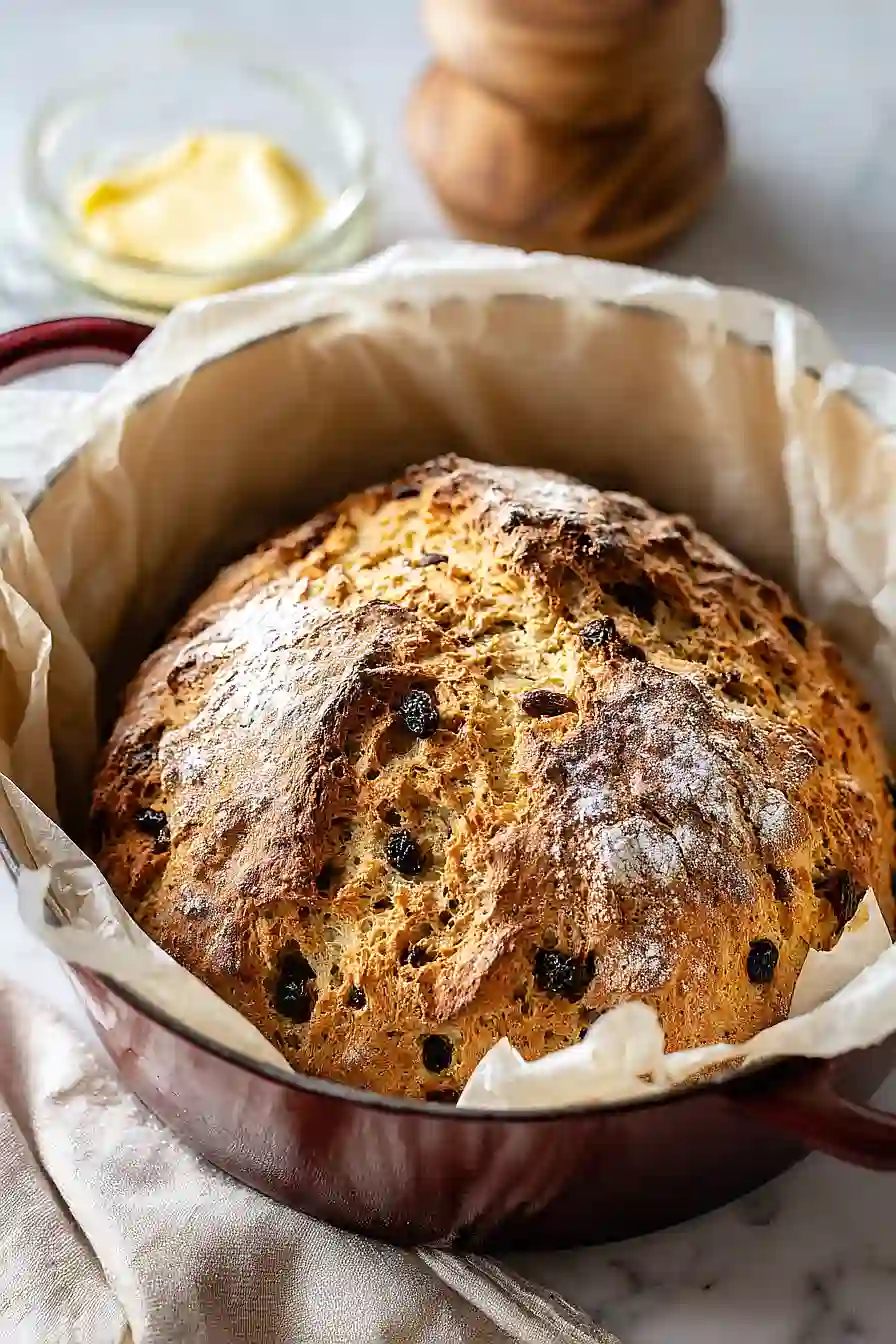
This traditional quick bread comes together in about an hour and bakes up beautifully in a Dutch oven. Sweet raisins and bright orange zest give it just enough flavor without being too fancy.
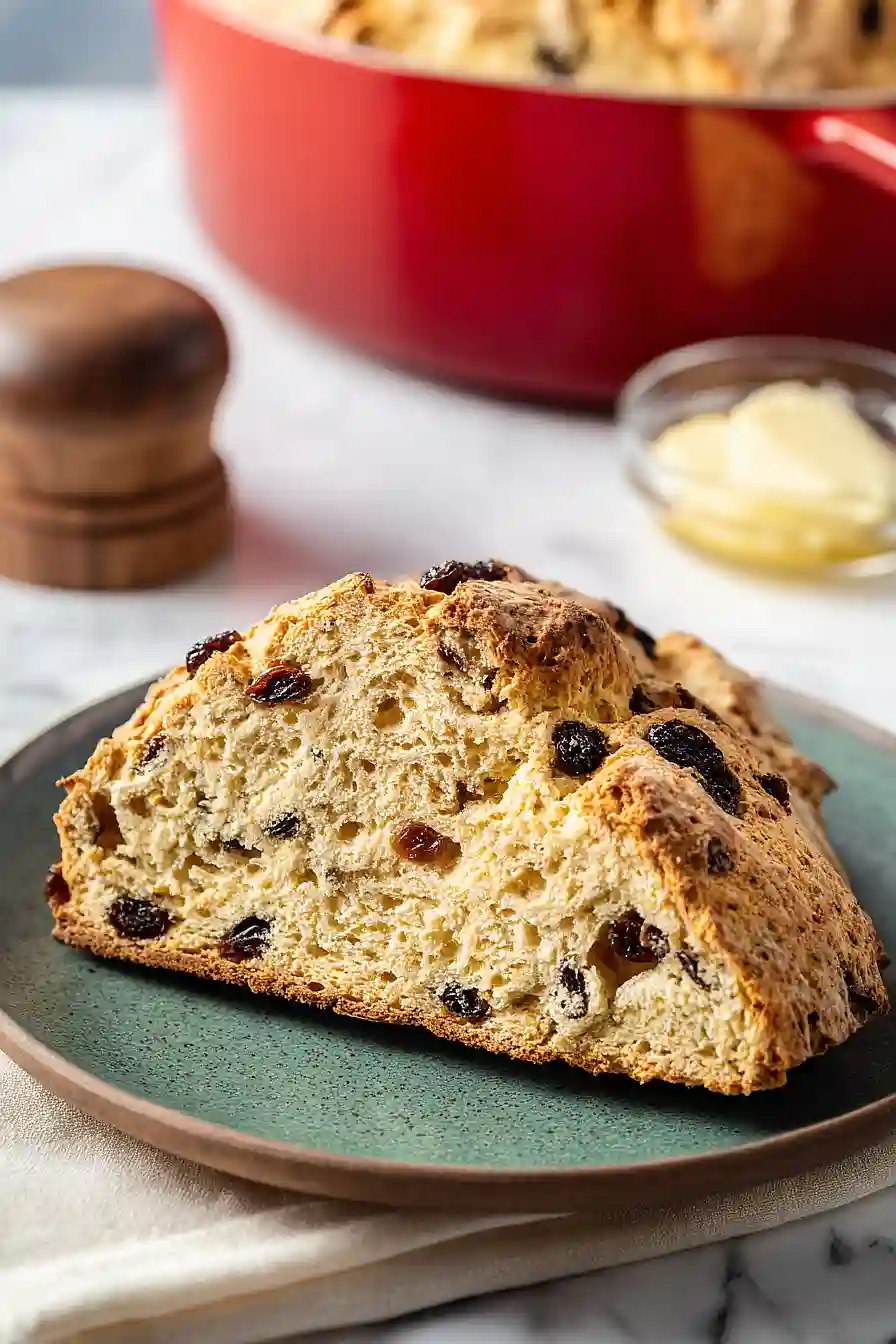
It’s made without yeast, so there’s no waiting around for dough to rise. The buttermilk and baking soda do all the work, creating a tender crumb with that classic crusty exterior.
It’s a comforting bread that’s perfect for breakfast or afternoon tea, and your kitchen will smell amazing while it bakes.
Why You’ll Love This Irish Soda Bread
- No yeast required – This bread comes together without any kneading or waiting for dough to rise, making it perfect for when you want fresh homemade bread without the fuss.
- Simple pantry ingredients – You probably have most of these staples in your kitchen already, so you can whip up a loaf whenever the craving strikes.
- Ready in about an hour – From mixing bowl to table, this bread is done in just over an hour, which is incredibly fast for homemade bread.
- Beginner-friendly – Even if you’ve never baked bread before, this recipe is forgiving and easy to follow, giving you bakery-worthy results on your first try.
- Sweet and satisfying – The raisins add natural sweetness throughout, making this bread delicious on its own or slathered with butter for breakfast or an afternoon snack.
What Kind of Flour Should I Use?
All-purpose flour is your best bet for Irish soda bread and will give you that classic texture everyone loves. You can use bread flour if that’s what you have on hand, but it’ll make your bread a bit chewier and denser than traditional soda bread. If you want to add a little more depth of flavor, try swapping out one cup of all-purpose flour for whole wheat flour – just keep in mind this will make your bread slightly heavier. Whatever flour you choose, make sure it’s fresh since old flour can affect how well your bread rises and can give it an off taste.
Options for Substitutions
This traditional bread recipe works well with a few simple swaps if you need them:
- Buttermilk: Don’t have buttermilk? Make your own by adding 2 tablespoons of lemon juice or white vinegar to 2 cups of regular milk. Let it sit for 5 minutes before using, and you’re good to go.
- Raisins: Not a fan of raisins? Try dried cranberries, currants, or chopped dried apricots instead. You can also leave them out completely for a plain soda bread.
- Butter: You can substitute with the same amount of coconut oil or vegetable shortening if needed. Just make sure it’s cold when you cut it into the flour.
- All-purpose flour: While all-purpose flour is best for traditional soda bread, you can replace up to 1 cup with whole wheat flour for a heartier texture. Don’t go beyond that or the bread might turn out too dense.
- Eggs: In a pinch, you can use 2 tablespoons of ground flaxseed mixed with 6 tablespoons of water (let it sit for 5 minutes) as an egg replacement, though the texture will be slightly different.
Watch Out for These Mistakes While Baking
The biggest mistake people make with Irish soda bread is overworking the dough, which activates too much gluten and creates a tough, dense loaf instead of the tender, slightly crumbly texture you’re after – mix just until the ingredients come together and no more.
Another common error is skipping the X cut on top, which isn’t just decorative but actually helps the bread bake evenly by allowing heat to penetrate the center and letting steam escape.
If you’re using a dutch oven, make sure it’s properly preheated for at least 10 minutes before adding your dough, as this creates a better crust and helps the bread rise properly.
Finally, resist the urge to slice into the bread right away – letting it cool for at least 20 minutes prevents it from becoming gummy and makes cutting much cleaner.
What to Serve With Irish Soda Bread?
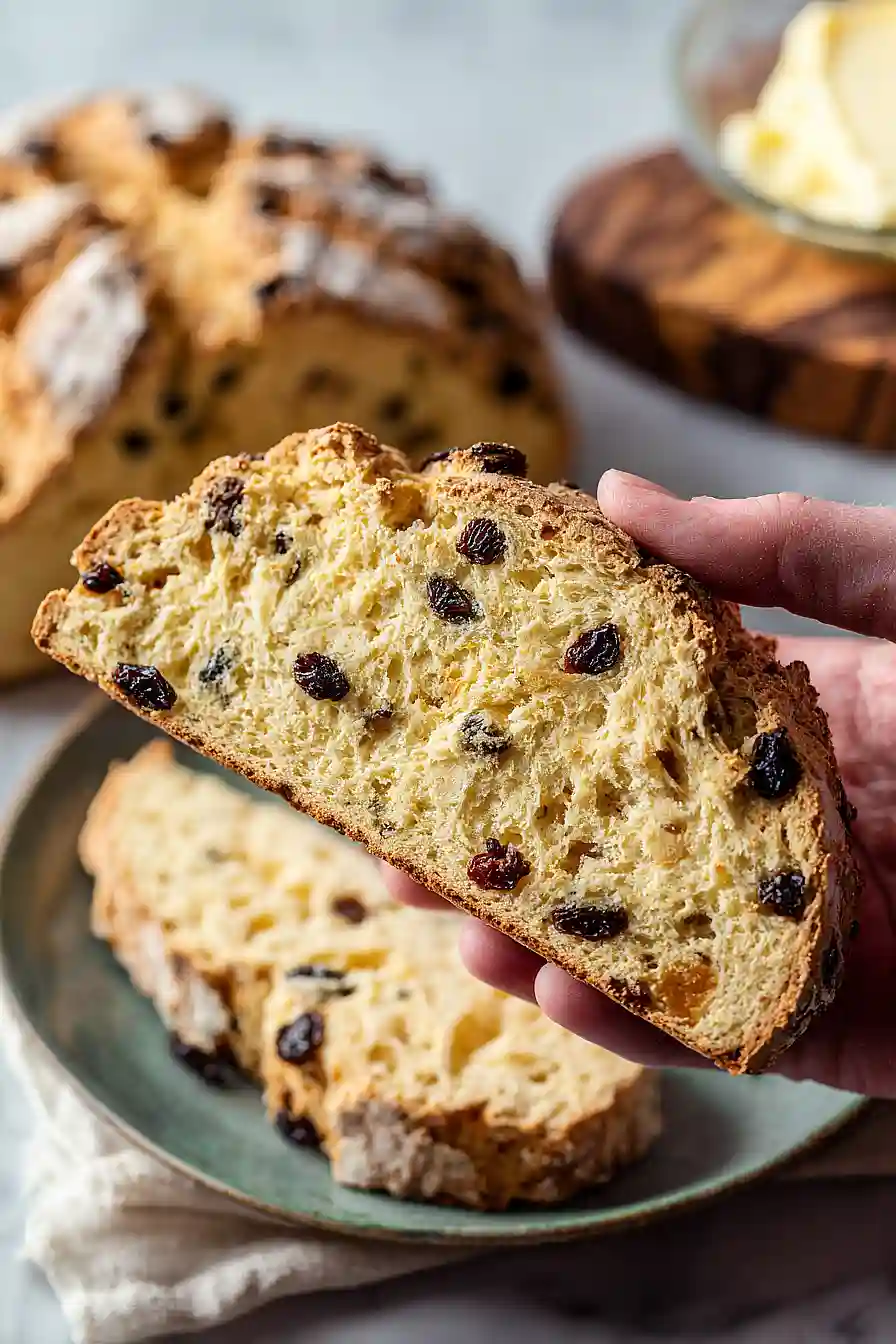
Irish soda bread is perfect alongside a hearty bowl of beef stew or vegetable soup, where you can use thick slices to soak up all the broth. I love serving it at breakfast with plenty of butter and jam, or even toasted with cream cheese for an afternoon snack. Since this version has raisins, it works great as a slightly sweet addition to your morning coffee or tea. You can also serve it with corned beef and cabbage for a full Irish-inspired meal, or just keep it simple with some good Irish butter and honey on the side.
Storage Instructions
Store: Keep your Irish soda bread wrapped in plastic wrap or aluminum foil at room temperature for up to 3 days. If you want it to last a bit longer, store it in the fridge for up to a week, though it might dry out a little faster that way.
Freeze: This bread freezes really well for up to 3 months. Wrap the whole loaf tightly in plastic wrap, then again in foil, or slice it first and freeze individual pieces with parchment paper between them for easy grabbing.
Serve: Let frozen bread thaw at room temperature for a few hours, or pop slices in the toaster straight from the freezer. If you want to warm up the whole loaf, wrap it in foil and heat it in a 300°F oven for about 15 minutes until it’s nice and warm again.
| Preparation Time | 15-20 minutes |
| Cooking Time | 45-50 minutes |
| Total Time | 60-70 minutes |
| Level of Difficulty | Easy |
| Servings | 12 slices |
Estimated Nutrition
Estimated nutrition for the whole recipe (without optional ingredients):
- Calories: 3600-3900
- Protein: 55-65 g
- Fat: 90-105 g
- Carbohydrates: 650-700 g
Ingredients
For the dry mix:
- 5 1/4 cups flour (I always use King Arthur all-purpose flour)
- 3 tablespoons sugar
- 1 teaspoon baking soda
- 1 teaspoon salt
- 7 tablespoons butter (cold and cut into 1/2-inch cubes)
- 2 cups raisins
- 1 tablespoon orange zest
For the wet mix and assembly:
- 2 cups buttermilk (I prefer Marburger for its thick consistency)
- 2 large eggs (room temperature, about 70°F)
- 1/4 cup flour
Step 1: Prepare the Dry Ingredients and Preheat
- 5 1/4 cups flour
- 3 tablespoons sugar
- 1 teaspoon baking soda
- 1 teaspoon salt
Preheat your oven to 450°F if using a Dutch oven, or 400°F if using a baking sheet.
While the oven heats, whisk together the flour, sugar, baking soda, and salt in a large mixing bowl.
This combines all your dry ingredients evenly so the leavening is distributed throughout the dough.
Step 2: Cut in Butter and Add Raisins and Orange Zest
- 7 tablespoons butter
- 2 cups raisins
- 1 tablespoon orange zest
- dry ingredient mixture from Step 1
Add the cold butter cubes to the dry ingredient mixture and use your fingertips or a pastry cutter to work the butter into the flour until the mixture resembles coarse breadcrumbs with some pea-sized pieces of butter remaining.
This creates a tender crumb structure.
Stir in the raisins and orange zest, distributing them evenly throughout the mixture.
I like using fresh orange zest here because it adds a bright, subtle citrus note that complements the richness of the bread beautifully.
Step 3: Combine Wet Ingredients
- 2 large eggs
- 2 cups buttermilk
In a small bowl, whisk together the room-temperature eggs and buttermilk until well combined.
The room-temperature eggs will incorporate more smoothly into the dough and ensure even mixing throughout.
Step 4: Form the Dough
- wet ingredient mixture from Step 3
- butter and raisin mixture from Step 2
- 1/4 cup flour
Pour the wet ingredient mixture into the flour mixture and stir gently with a wooden spoon until a shaggy dough just comes together—do not overmix, as this will make the bread tough.
Turn the dough out onto a surface lightly dusted with flour and gently shape it into a round loaf about 2 inches tall.
Using a sharp knife, cut a shallow X across the top of the loaf, which allows steam to escape and helps the bread rise evenly.
Step 5: Bake in Dutch Oven or on Baking Sheet
- dough from Step 4
For Dutch oven baking (recommended): Place the shaped dough into a preheated Dutch oven, cover with the lid, and bake at 450°F for 25 minutes.
Then remove the lid and bake uncovered for 20-25 minutes until the top is golden brown and the bread sounds hollow when tapped on the bottom.
For baking sheet: Place the shaped dough on a parchment-lined baking sheet and bake at 400°F for 40-50 minutes until golden brown.
I prefer the Dutch oven method because it traps steam, creating a more tender crumb and a beautiful crust—but both methods work well.
Step 6: Cool and Serve
Remove the bread from the oven and let it cool on a wire rack for at least 15-20 minutes before slicing.
This resting period allows the crumb to set properly, making it easier to slice cleanly.
Classic Irish Soda Bread in a Dutch Oven
Ingredients
For the dry mix::
- 5 1/4 cups flour (I always use King Arthur all-purpose flour)
- 3 tablespoons sugar
- 1 teaspoon baking soda
- 1 teaspoon salt
- 7 tablespoons butter (cold and cut into 1/2-inch cubes)
- 2 cups raisins
- 1 tablespoon orange zest
For the wet mix and assembly::
- 2 cups buttermilk (I prefer Marburger for its thick consistency)
- 2 large eggs (room temperature, about 70°F)
- 1/4 cup flour
Instructions
- Preheat your oven to 450°F if using a Dutch oven, or 400°F if using a baking sheet. While the oven heats, whisk together the flour, sugar, baking soda, and salt in a large mixing bowl. This combines all your dry ingredients evenly so the leavening is distributed throughout the dough.
- Add the cold butter cubes to the dry ingredient mixture and use your fingertips or a pastry cutter to work the butter into the flour until the mixture resembles coarse breadcrumbs with some pea-sized pieces of butter remaining. This creates a tender crumb structure. Stir in the raisins and orange zest, distributing them evenly throughout the mixture. I like using fresh orange zest here because it adds a bright, subtle citrus note that complements the richness of the bread beautifully.
- In a small bowl, whisk together the room-temperature eggs and buttermilk until well combined. The room-temperature eggs will incorporate more smoothly into the dough and ensure even mixing throughout.
- Pour the wet ingredient mixture into the flour mixture and stir gently with a wooden spoon until a shaggy dough just comes together—do not overmix, as this will make the bread tough. Turn the dough out onto a surface lightly dusted with flour and gently shape it into a round loaf about 2 inches tall. Using a sharp knife, cut a shallow X across the top of the loaf, which allows steam to escape and helps the bread rise evenly.
- For Dutch oven baking (recommended): Place the shaped dough into a preheated Dutch oven, cover with the lid, and bake at 450°F for 25 minutes. Then remove the lid and bake uncovered for 20-25 minutes until the top is golden brown and the bread sounds hollow when tapped on the bottom. For baking sheet: Place the shaped dough on a parchment-lined baking sheet and bake at 400°F for 40-50 minutes until golden brown. I prefer the Dutch oven method because it traps steam, creating a more tender crumb and a beautiful crust—but both methods work well.
- Remove the bread from the oven and let it cool on a wire rack for at least 15-20 minutes before slicing. This resting period allows the crumb to set properly, making it easier to slice cleanly.